
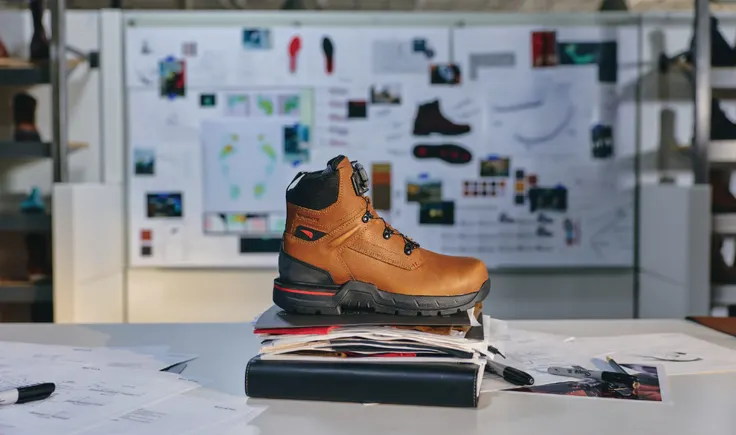
As construction demands evolve, data-driven design is reshaping how work boots support worker safety, comfort and productivity.
Construction work has always been physically demanding, but the nature of that demand is evolving. Today’s trades professionals are balancing traditional hands-on work with new tools, technologies and jobsite expectations that require gear capable of performing across a wider range of conditions.
One area that is experiencing significant change is footwear. Historically, work boots and shoes were judged mainly by their longevity. Now, however, they are seen as an important piece of the worker’s performance and safety, as well as a contributing factor for their long-term well-being and job satisfaction.
In an industry of more than 12 million workers, small changes in fit and comfort can have major impacts. Fatigue and instability not only affect the way a worker feels; they also influence productivity and increase the risk of slips or missteps, which can ultimately affect how well a worker’s job gets done.
The hidden cost of poor fit
For decades, work boots have followed standardized sizing models, with limited ability to account for variation in foot shape across the workforce. While break-in periods and “good enough” fit have long been accepted, that mindset is beginning to shift.
Workers now expect the same level of comfort from jobsite gear as they do from everyday footwear. At the same time, employers are paying closer attention to anything that can improve working conditions and help retain skilled crews.
Poorly fitting boots contribute to fatigue over long shifts, reduce stability on uneven terrain and create friction points that lead to distraction. Over time, these issues can impact individual performance and overall job-site efficiency.
How Red Wing is applying data to rethink fit
In response, companies like Red Wing are rethinking how work boots are designed, starting with data.
Through its Ultimate Fit Experience (UFX), Red Wing has analyzed more than three million real-world foot scans to better understand how workers’ feet vary in shape, volume and movement. These insights, paired with advanced wear testing, are helping change assumptions around sizing and reflect a transition to data-driven decision-making across construction, where better inputs lead to better performance outcomes.
Turning insight into performance: Inside IronFlex
One example of this approach is Red Wing’s newly introduced IronFlex™ work boot, designed for construction and general trades professionals.
IronFlex is built to deliver a more precise fit across a broad spectrum of workers. The line offers a roomier forefoot and toe box and features a proprietary torsional heel stability system built into Red Wing’s FlexForce cement-to-welt construction, which helps reduce pressure without jeopardizing support.
The boot also incorporates features aligned with real jobsite demands. A high-rebound BioSpring midsole provides lightweight cushioning, while FlexForce construction balances flexibility and stability. An engineered outsole enhances slip resistance and ladder grip, supporting safer movement across varied terrain.
While comfort plays a big factor in the development of the boot, durability remains central. Full-grain leather sourced from Red Wing’s SB Foot Tannery, combined with a three-layer waterproofing system, helps protect against the elements while maintaining long-term performance. Select styles include the BOA® Fit System, allowing for micro-adjustable precision fit, even with gloves on, so workers can adapt throughout the day.
What contractors and crews should look for
As expectations for workwear evolve, footwear is becoming a strategic consideration. When evaluating boots, it’s worth looking beyond toughness alone and considering performance across a full shift.
Key factors include:
- Fit for different foot shapes
- Comfort for long-term wear
- Traction and stability in varied conditions
- Ease of adjustment on the jobsite
A work boot designed with these factors in mind will provide support that is tailored to the unique ways workers move throughout the day.
The future of work boots is tied to comfort
As construction continues to modernize, work boots are evolving alongside it. What was once a category defined primarily by toughness is now being reimagined through data, performance and worker experience.
Red Wing is leading this evolution, proving that data-informed designs can bring significant enhancements to comfort, safety and productivity. As more of the industry adopts this approach, innovations like IronFlex point to a future where a better fit is not a preference, but a performance advantage.






