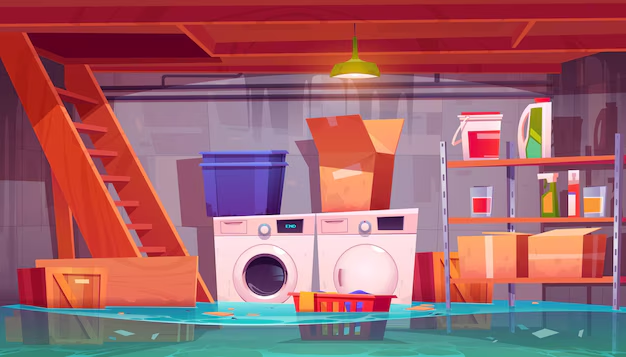
 If you own a home in Milwaukee, you’ve likely dealt with heavy rain, spring thaw, or long periods of wet weather. One storm can soak the ground fast, especially with our clay-heavy soil. Then a few days later, you notice something new—water along the basement wall, damp spots on the floor, or that musty smell starting to build.
This is not random. Water always looks for the easiest path. In Milwaukee basements, that path is usually the weakest spot in your foundation. Understanding where those weak points are can help you catch problems early and avoid bigger repairs later.
Article Summary
- Why water always finds the weakest spot
- Common weak points in Milwaukee basements
- How pressure builds around your home
- Why small issues turn into bigger problems
- Signs your basement has a vulnerable area
- How repairs fix the root problem
- Why quick fixes often fail
- When to call a basement repair expert
- What this means for your home
1. Why Water Always Finds the Weakest Spot
Water follows the path of least resistance. When soil around your home becomes saturated, water builds pressure against your foundation. This pressure pushes water toward any opening it can find.
That opening does not have to be large. Even small cracks or gaps can let water through when pressure is strong enough. Once water finds a way in, it will keep using that same path again and again.
2. Common Weak Points in Milwaukee Basements
Most basements have a few areas that are more likely to let water in.
Floor-to-Wall Joint
This is one of the most common entry points. The seam where the wall meets the floor can allow water to seep in when pressure builds.
Basement Wall Cracks
Cracks form over time as the home settles. Even thin cracks can allow water through during heavy rain. If you’ve ever wondered why these cracks form in the first place, our article on why basement walls start to crack helps explain what’s happening behind the scenes.
Basement Floor Cracks
Water can come up through cracks in the floor, especially when pressure builds under the slab.
Around Pipes and Openings
Any place where something passes through the wall, like a pipe, can become a weak point.
Window Wells
Poorly sealed or clogged window wells can allow water to collect and leak inside.
3. How Pressure Builds Around Your Home
The main force behind basement leaks is hydrostatic pressure.
When soil fills with water, it becomes heavy and pushes against your foundation. Milwaukee’s clay soil makes this worse because it holds water longer than other soil types. Instead of draining away, water stays around your home and keeps pressure high.
This is one of the biggest reasons homeowners in this area deal with recurring leaks. In fact, many local water issues tie back to soil conditions.
4. Why Small Issues Turn Into Bigger Problems
A small crack may not seem like a big deal at first. But once water finds that weak spot, the problem can grow.
Water entering your basement can:
- Widen cracks over time
- Increase pressure on surrounding areas
- Lead to mold and moisture buildup
- Damage flooring and walls
What starts as a small leak can turn into a larger repair if it is not addressed early.
5. Signs Your Basement Has a Vulnerable Area
You may not always see water right away. But your basement will often show warning signs.
Look for:
- Damp spots along walls or floors
- Water stains or discoloration
- Musty odors
- White powder on concrete (efflorescence)
- Cracks that seem to grow over time
These signs often point to a weak spot where water is starting to get in. If you’re noticing musty odors along with these signs, it could be tied to hidden moisture.
6. How Basement Repairs Fix the Root Problem
Fixing a basement leak is not just about sealing the visible spot. The real solution focuses on relieving the pressure and controlling the water.
Repairs often include:
- Managing water around the foundation
- Repairing cracks and weak areas
- Installing or updating drainage systems
- Directing water away before it enters
Instead of chasing the same leak over and over, the goal is to stop water at the source. If you want a clearer picture of how these systems work together, this guide on how basement waterproofing works walks through the full process step by step: How Does Basement Waterproofing Work?
7. Why Quick Fixes Often Fail
Many homeowners try to stop leaks with quick solutions.
These include:
- Sealants or waterproof paint
- Patching cracks without addressing pressure
- Temporary drainage fixes
While these may help short term, they do not stop water from building up outside your foundation. As long as pressure exists, water will find another weak spot.
8. When to Call a Basement Repair Expert
 If you are seeing repeated leaks or signs of moisture, it is time to take a closer look.
A basement waterproofing expert can identify where water is entering and why it keeps happening. Many issues are not visible on the surface. Water may be building up below the floor or behind the walls before it shows up inside.
A professional waterproofing inspection can:
- Locate the true entry points of water
- Identify pressure buildup around your foundation
- Check for drainage issues or failing systems
- Recommend a long-term repair plan
It is especially important to call if the same area keeps leaking or if new spots are starting to appear. This often means water is finding multiple weak points.
The goal is not just to fix one leak, but to stop water from entering your basement at all.
9. What This Means for Your Home
Water will always look for the weakest spot in your basement. That is how it works. The key is finding and fixing those weak points before they turn into bigger problems.
Our team at Zablocki Waterproofing has been helping homeowners across Milwaukee and Southeast Wisconsin since 1985. We understand how local soil, weather, and aging foundations create these issues. If you are dealing with basement leaks, cracks, or ongoing moisture, call us today.
We’ll inspect your home, find the source of the problem, and provide the right solution with trusted Milwaukee waterproofing services and basement repairs.