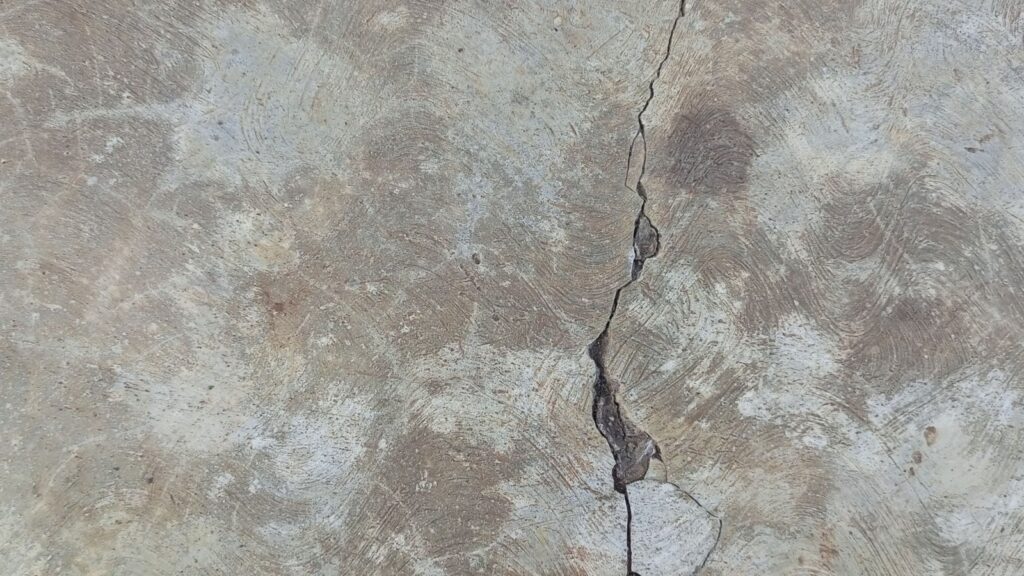
Global infrastructure is confronting a critical turning point as the built environment ages rapidly. Widespread material degradation is jeopardizing public safety and imposing a financial burden on the public and private sectors. Industries have accepted concrete cracking as an unavoidable consequence for too long. However, revolutionary building materials and technologies, like self-healing concrete mixes, are changing how the world approaches modern architecture and engineering.
The Science of Autonomous Repair
Self-healing concrete is an innovative material that can autonomously mend its own cracks, extending structural lifespans and reducing long-term maintenance expenses.
The use of biofibers in building materials—an integration of bacteria and fibers—is the optimal approach to intelligent self-repair, even boosting tensile strength beyond that of conventional concrete. The superior strength stems from a network of interlocking fibers that act as a reinforcing matrix.
Microbial metabolic activities drive restorative mechanisms in an autogenous self-healing process. More specifically, bio-precipitation of calcite uses the urea hydrolysis metabolic pathway, relying on ureolytic bacteria to tolerate concrete’s high alkalinity.
When cracks form, the bacteria transform into carbonate and ammonium, increasing the pH level within the crack and forming calcite crystals to seal the fissure. It is a sustainable and safer alternative to traditional chemicals used to improve concrete’s durability.
Redefining Durability and Structural Integrity With BioFiber
A combination of maintenance backlog, vulnerability to the elements and climate change impacts has left engineers scrambling for durable, cost-effective solutions. Structural materials degradation is among the main causes of reconstruction and restorations, making building resilience a primary challenge and initiative in urban areas. Self-healing building components address this through their ability to repair themselves internally, decreasing the need for human intervention and excess resources.
In 2023, a research team from Drexel University developed a nature-inspired polymeric fiber called BioFiber. The solution helped protect the healing agents from the harsh, alkaline nature of concrete—something earlier bio-concrete failed to do. The team found that enveloping the dormant bacteria in a multi-layered hydrogel shell ensured the microorganisms remained viable and ready to activate when necessary.
The university’s innovation included load-bearing core fibers that actively bridged microcracks as they formed. As the research notes, the technology provided critical control over crack growth, preventing small fissures from becoming larger and causing damaging fractures.
BioFiber fundamentally increases material resilience against environmental stressors, including freeze-thaw cycles and heavy loads. Its self-healing capabilities offer an extended shelf-life and enhanced mechanical integrity to the materials, helping prolong their service life beyond that of traditional concrete.
Its repair efficiency was also notable, with the study showing how each BioFiber produced 40 to 80 milligrams of calcium carbonate within the first 30 hours of activation, enabling rapid restoration of the material’s durability.
A New Era of Sustainable Construction
Self-healing concrete materials like BioFiber provide a path toward a more sustainable building model, which aligns with modern application methods. As the American Shotcrete Association states, natural fibers, such as those derived from hemp, are suitable for use in both wet- and dry-mix shotcrete processes.
Unlike synthetic fibers, natural alternatives are water-absorbing, which enables them to bond with the cement more efficiently. The fibers also serve as an internal curing aid, slowly releasing water to mitigate plastic shrinkage and cracking that often occurs in shotcrete projects.
The synergy is increasingly recognized as the industry adopts robotic applicators to deploy advanced shotcrete. Robotics is critical for repairs in hazardous or remote environments, such as tunnels and slopes, and ensures worker safety.
Additionally, built-in precision in automated systems reduces material waste and provides more durable, long-lasting repairs. Combining intelligent materials with automation is a tremendous leap toward creating self-healing cities and more sustainable infrastructure.
The shift is crucial, given that the construction industry is widely recognized for its energy and resource consumption. Conventional concrete production accounts for a staggering 50% of global demand for energy and natural resources, causes 30% of waste volumes and consumes 15% of freshwater. It is also responsible for 33% of human-induced greenhouse gas emissions.
Practical Applications in Nonresidential Construction
The practical application of BioFiber and other self-healing concrete mixes is extensive in nonresidential construction. For example, bridges, tunnels and parking garages benefit from the material’s autonomous repair of microcracks, helping extend the lifespan of concrete structures and significantly minimizing immense costs associated with maintenance disruptions.
Throughout the industrial sector, bio-integration in building materials can help prevent leaks and improve the stability of heavy machinery and wastewater treatment plants. Large-scale commercial projects—including stadiums and high-rise buildings—can also leverage microorganisms’ biological capabilities to mitigate cracks and enhance safety. Overall, the proactive approach increases structural longevity.
For both applications, self-healing construction reduces carbon emissions by slashing intensive, fuel-driven repairs and the use of new resources. It also prevents the demolition and reconstruction of the built environment.
Navigating the Path to Adoption
As manufacturing continues to scale, self-healing concrete will move from a specialized phase to a more widely available one for large-scale projects. Contractors looking to adopt this approach must conduct a comprehensive cost-benefit analysis.
Transitioning toward greener, durable solutions requires a new perspective, one that shifts from up-front procurement to life cycle costing. Although the initial price tag of these alternatives is much higher than that of conventional materials, they offer longevity with lower maintenance requirements and extended lifespans, thereby lowering total costs.
On-site handling will also be similar to conventional methods, though it will require careful integration of the fibers during mixing to guarantee even distribution. It is also crucial to understand that the technology can only heal cracks up to a specific size, meaning it is not sufficient for large structural damage.
Background knowledge of the practical boundaries is crucial for leveraging the material successfully and responsibly in the construction of future buildings.
The Future Is Bio-Integrated Design
BioFiber has demonstrated what is possible for bio-integrated design in tomorrow’s built world. These self-healing solutions offer radical durability that cuts maintenance requirements and costs and promotes building sustainability. The technology is forward-thinking and practical, answering the call for more resilient, well-preserved and environmentally sound infrastructure.
SEE ALSO: MATURITY MONITORING CONCRETE INCREASES ACCURACY AND KEEPS JOBS ON SCHEDULE