 Skip to content
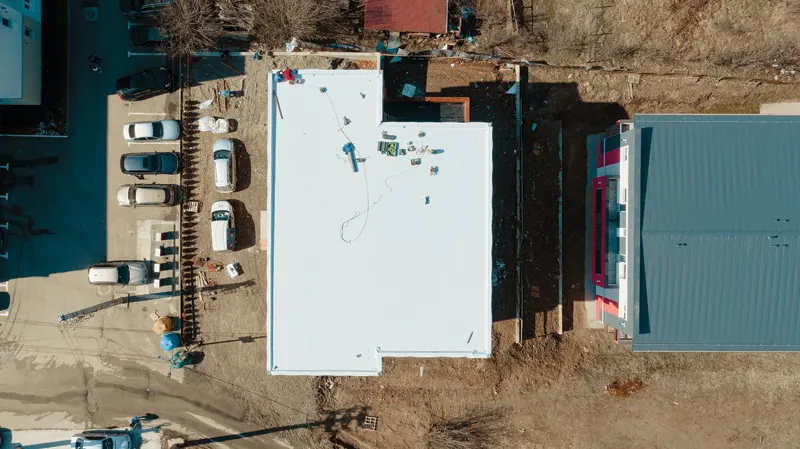

Sustainability is not a niche concern in building construction and related disciplines. It is becoming an expectation. Increasingly, architects and construction specifiers are asked to demonstrate that material choices align with climate goals, corporate responsibility commitments, and green building standards.
Much of the conversation has focused on a finished building’s energy use, embodied carbon, and material transparency, but one critical topic still receives less attention than it deserves: what happens to building materials at the end of their service life.
This is not a question that can be put off until tomorrow. Planning now for the future recyclability of building materials saves money, helps offset carbon emissions, and brings industries closer to the circularity everyone craves.
Starting at the top
As much as 75 percent of the commercial low-slope roofing market involves reroofing, making the opportunity to recycle end-of-life roofing materials significant. For commercial roofing systems, particularly single-ply membranes, polyvinyl chloride (PVC) roofing has emerged as a leader in establishing a credible, scalable pathway to circularity.
Among commercial roofing materials, PVC has the most established and mature recycling infrastructure.
Recycling PVC roof membrane dates back to the late 1990s. The Coated Fabrics and Film Association-Vinyl Roofing Division (CFFA-VRD) started collecting recycling data for both pre- and post-consumer PVC roof membrane in 2014. Within 10 years, CFFA-VRD members had recycled more than 91 million kg (200 million lb) of pre- and post-consumer membrane. This translates to millions of square feet recycled per year.
This is not theoretical or experimental—it is happening at scale, with defined logistics, quality controls, and end markets.
Other single-ply systems, such as ethylene propylene diene monomer (EPDM) and thermoplastic polyolefin (TPO), are exploring recycling pathways, but PVC currently stands apart in terms of proven methods and consistent outcomes. For architects and specifiers evaluating materials through a lifecycle lens, this matters.
From values to viability
Most architects today bring a sustainability mindset to their work. Climate impact, material health, durability, and lifecycle performance are now core components of architectural education and professional culture. Specifiers routinely seek Environmental Product Declarations (EPDs) that assess all aspects of raw material generation, product manufacture, and installation on a building. Comparison of embodied carbon information provided in EPDs should not be the sole focus of product selection, since performance over the life of the product and end-of-life solutions for future carbon avoidance should also be weighed when prioritizing materials intended for decades-long use.
External drivers such as client requirements, regulations, green building rating systems, and corporate environmental commitments can be used as leverage to move sustainability from intent to action.
Roofing systems often fall into a unique gap. Architects are typically focused on new construction, while reroofing decisions tend to involve roof consultants and contractors later in a building’s life. As a result, many architects who care deeply about sustainability may not realize that roof recycling is already possible today. Building design and specification decisions made now can determine whether recycling is feasible 20 or 30 years from now.
Awareness is critical. Landfilling roofing materials will likely become more difficult and expensive over time. Designing roofs today with end-of-life considerations can help project owners improve tomorrow’s environmental outcomes.
The proven pathway of PVC
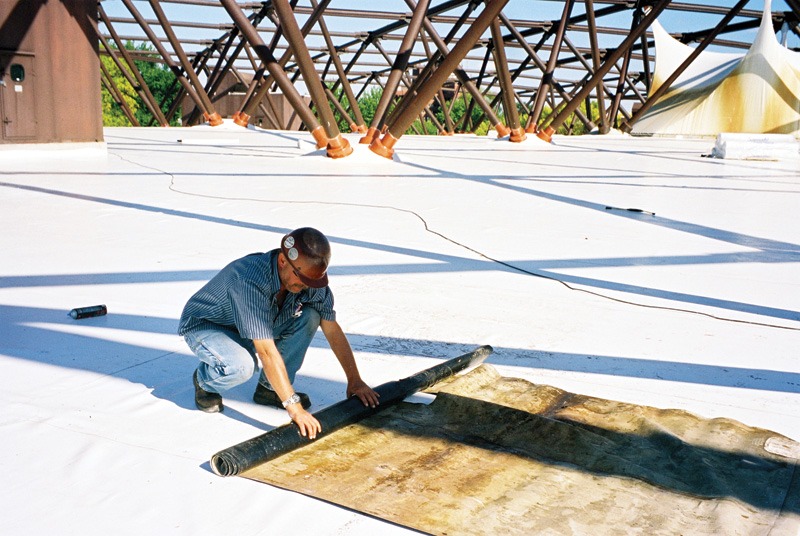
Mechanically fastened or induction-welded PVC single-ply roof membranes are designed for recycling because they can be removed (skinned) without much contamination from other roof components and transported to recyclers. This provides a relatively clean material for recyclers skilled in handling it, eliminates the need to landfill the membrane, and reduces dumpster and roof disposal costs.
In a tear-off situation, the existing PVC roof membrane is already being removed, so all that is needed is for the contractor to bundle and package the membrane for shipment to a recycler. On a reroofing project where it is intended to leave the existing roof system in place and simply install a new membrane over it, it may make sense to remove or skin the original PVC roof membrane to provide additional reroofing options for the next renovation cycle.
The PVC roofing industry has created information to make recycling easier to specify and execute. Contractors now have access to clear guidance on membrane removal, packaging, and transport. Educational tools, FAQs, specification language, bid line-item templates, and documented success stories help reduce the uncertainty, one of the biggest barriers to adoption.
Watch and learn
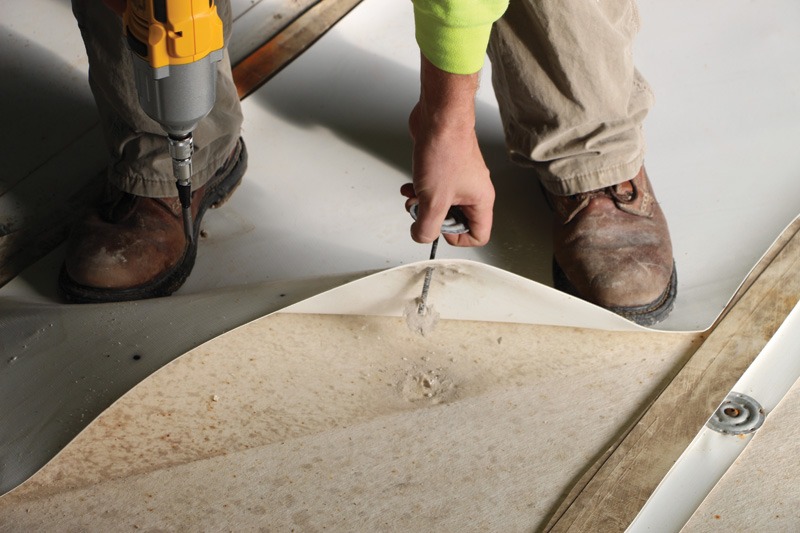
Some building project stakeholders have spoken of reticence to recycle PVC roofing because they either do not know the proper procedure or fear it is prohibitively expensive. CFFA-VRD developed a video to demystify the process. It explains, in detail and using plain language, how to prepare used PVC roofing for recycling.1
With a few extra steps and minimal extra labor, mechanically fastened or ballasted PVC roof membranes can be removed and packaged for recycling. The video walks through the steps for a successful recycling project, from the first meeting to the flatbed driving to the recycling facility.
Building stakeholders will also be pleased to learn that there is no one right way to package and bundle the old roof. The video explains several popular options and notes that recycling takes only up to three more steps than a standard roof removal process.
Why recycling belongs in the specification
CFFA-VRD recommends that roofing contractors include PVC recycling as a separate alternate bid line item, where appropriate, to enable building owners to evaluate costs alongside environmental benefits. The comparison can help project managers understand that, while recycling adds some cost to the overall reroofing project, that cost can be offset by eliminating landfill fees. For building owners seeking or renewing green certifications, recycling roof membranes at the end of their service life can help maintain or even increase building value and occupancy rates.
By incorporating language that requires or allows for membrane recycling, and by calling for a separate bid line item, architects give project managers the ability to make an informed decision at the time of construction or reroofing. Even if recycling is not selected on every project, its inclusion signals intent, creates transparency, and promotes future action.
To encourage PVC roof recycling and make it easier for specifiers to include it in their re-roofing specifications, CFFA-VRD has created a downloadable PVC Roof Recycling Guide Specifications and Suggested Bid Line Item form.2
Roofing contractors are encouraged to coordinate any recycling opportunities directly with the PVC roofing manufacturer. Final project documentation should include confirmation of the amount of material diverted from landfills.
This approach aligns well with how sustainability decisions are actually made. Owners may weigh the incremental cost of recycling against corporate sustainability goals, waste diversion targets, or public commitments. Without that option in the specification, the conversation never happens.
New white paper tells the story
Brian Whelan and Richard Krock are two consultants who have been helping CFFA-VRD hone its sustainability efforts and messaging. Whelan is the owner of Roof Resources and past executive of Sika Sarnafil, Krock is the owner of VyChlor Advisors, LLC, and former senior vice president of the Vinyl Institute. The two have co-authored a paper recently published by the National Institute for Standards and Testing (NIST) titled, “Opportunities for Recycling in Building Cycle Renovations: A Case Study of PVC Roofing Membranes.”3
“With this paper, we want to give property owners something more tangible they can look to and say, ‘this is why we’re choosing to recycle,’” says Krock, who notes the U.S. Environmental Protection Agency (EPA) has set a goal to hit a
50 percent recycling rate for the entire country’s waste materials by 2030.
The paper examines the carbon-reduction potential of recycling PVC roofing membranes during building renovations and compares traditional disposal (landfilling) with three recycling scenarios: closed-loop recycling into new roofing products, open-loop recycling into other products, and a combination of both.
Using EPDs and lifecycle data, the analysis shows that all recycling pathways can deliver significant carbon avoidance compared to business-as-usual practices. Overall, the findings support transitioning from landfilling to recycling PVC roofing membranes as a practical strategy to reduce emissions and advance circularity in the building sector.
“There’s wide diversity in awareness levels about the efficacy of PVC roofing membrane recycling,” says Whelan. “There is value in recycling a roof for all stakeholders, including specifiers and consultants.”
In the push toward more sustainable buildings, industry can no longer afford to think only about how materials perform on day one. True lifecycle thinking begins with the end in mind. By recognizing that PVC roof membranes already have a proven, scalable recycling pathway, and by reflecting that reality in today’s specifications, architects and project teams can turn reroofing from a waste stream into an opportunity.
The choice to plan for recyclability is not a distant ideal; it is a practical, available strategy that reduces landfill use, manages long-term costs, and supports measurable progress toward circularity. When end-of-life is part of the original design conversation, sustainability can move from aspiration to action.

Notes
2 Refer.
3 Review.
Author
Bill Bellico is the vice president of marketing and inside sales at Sika Corporation. He has worked in the commercial construction industry for 22 years as part of Sika’s roofing and flooring divisions. Bellico began his career in sales and eventually evolved into roles in sales and marketing management, as well as leading key digital transformation projects for the company. He is a LEED-accredited professional with a strong background in sustainability. Bellico is the current acting marketing chair for the Chemical Fabrics & Film Association (CFFA)—Vinyl Roofing Division, as well as the Vinyl Sustainability Council, and is also a participating member of the Roofing Technology Think Tank (RT3). Bellico has bachelor’s degrees in English and psychology from Bridgewater State University and completed the business strategy certificate program from Cornell University.
Key Takeaways
Planning for end-of-life material recovery is becoming essential in sustainable building design. Polyvinyl chloride (PVC) roofing membranes offer a proven recycling pathway, enabling reroofing projects to reduce landfill waste and support circular construction practices.







