 Skip to content

Dive Brief:
- Nonresidential construction spending slipped 0.2% in March, according to an analysis by the Associated Builders and Contractors of U.S. Census Bureau data.
- Both public and private nonresidential spending fell 0.2% month to month in March, including drops in nine of the 16 nonresidential subcategories, according to the report.
- The ongoing slowdown in spending, initially concentrated in manufacturing work, has started to hit other sectors. “While a large portion of the ongoing decline is due to steadily falling manufacturing-related construction activity, weakness is becoming more widespread,” said Anirban Basu, ABC chief economist, in the release.
Dive Insight:
The downturn now stretches across both public and private construction activity, according to ABC. Private construction, in particular, has dropped more than 2% on a year-over-year basis, said Basu.
“With the exception of the ongoing boom in data center construction, there are few sources of momentum,” said Basu.
Spending on manufacturing projects dropped 1.1% month to month in March and is down 17% over the past year. Expenditures on highway and street construction dropped as well, down 0.2% month to month in March, according to the data. Overall commercial spending also ticked down 0.2% during the same period.

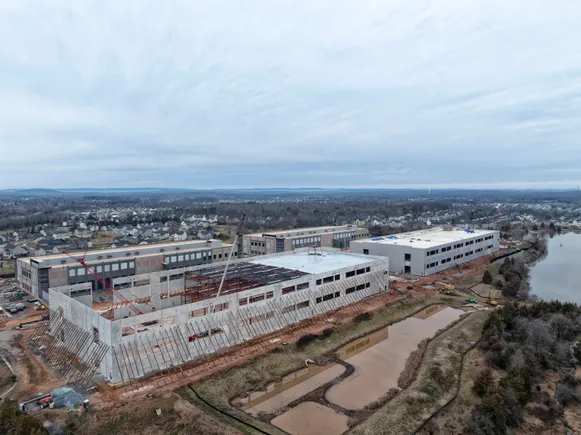
But slowdowns elsewhere haven’t affected the pace of data center construction, noted the report. In fact, spending on data center construction jumped 34.3% year over year, according to Basu. Many contractors in the space expect that level of activity to continue.
“Despite this ongoing weakness, however, contractors remain optimistic about the outlook,” Basu said.
Projects related to data centers, such as those in the power sector, also posted strong numbers, said Macrina Wilkins, director of market insights for the Associated General Contractors of America. Spending on power construction ticked up 4.6% compared to March 2025, according to the AGC report.
“Construction growth remains concentrated in a narrow set of categories,” said Wilkins. “Investment tied to data centers and power projects continue to support activity, but several traditional nonresidential segments, including manufacturing and commercial construction, continue to lag.”







