

Repair of existing brick masonry must address a seemingly simple yet often difficult conundrum: finding new brick. Matching the size, color, and texture of an existing brick can be surprisingly complex. Part of the appeal of brick to a designer is the tremendous variety of colors, textures, and geometries it can achieve. Bricks can be highly uniform in surface appearance or provide a variegated range of colors or textures, sometimes in a single application. But the aesthetic considerations that make a masonry design appealing can pose a substantial challenge during repair, since bricks produced to current standards likely do not exactly match older bricks. When new bricks do not match the existing in size or texture, custom bricks may be required. When new bricks that match the existing in color are not available, several options can be considered.
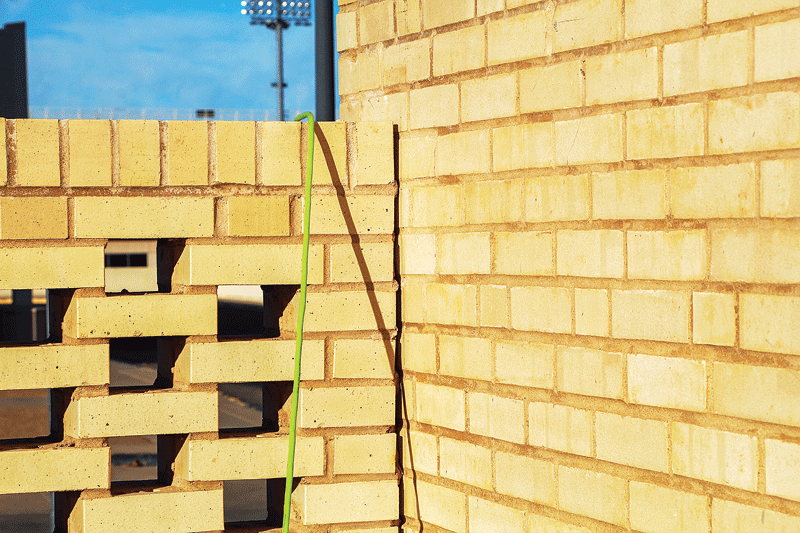
If only a few bricks in a wall are being replaced, one effective strategy is to salvage original bricks from an unobtrusive or architecturally separate location (such as a penthouse, chimney, the reverse face of a parapet wall, or a site wall) for repairs, and to install new bricks where they will be minimally visible. For example, in one recent project, an original garden wall partially collapsed and required reconstruction. The original bricks from the garden wall were salvaged for repairs to the building, while entirely new bricks similar to the originals—though not an exact match—were used for the rebuilt garden wall (Figure 1).
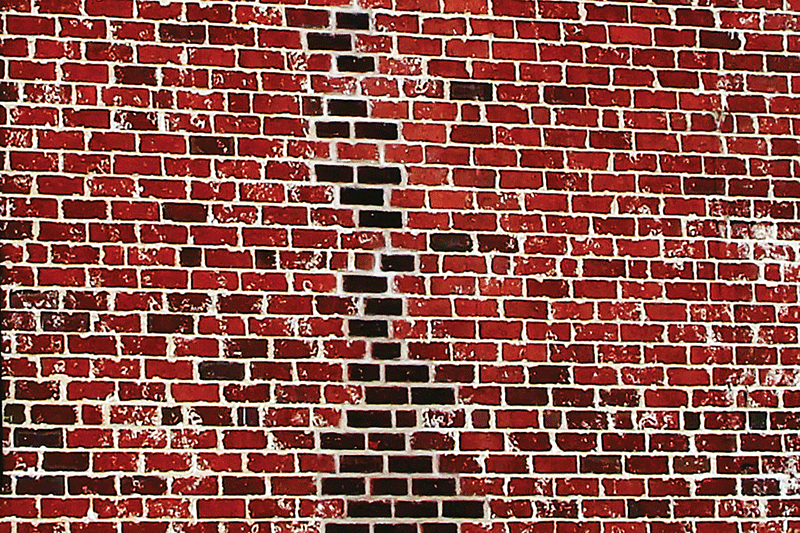
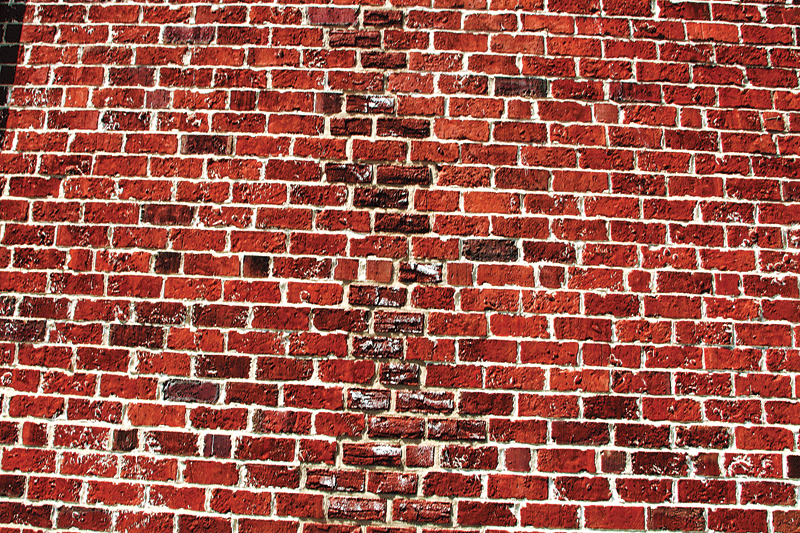
Staining brick can be a viable option if new mass-produced bricks that match the size and texture of the existing bricks are available, even if the color is not a good match. In one recent project, replacement bricks of appropriate size and texture were installed to repair cracks. Based on initial samples, the color was approved (since it was close to the dark end of the original brick color range), but when installed in a continuous row, the new bricks were visually obvious (Figure 2). Staining the individual new bricks with a mineral stain provided a much closer color match that blended in with the original masonry (Figure 3). Varying the stain color also allowed for a variegated appearance that matched the original brick.
Custom-produced bricks are an option, albeit one with cost and schedule constraints. Specifiers should be aware that custom brick may not have test data available for the exact combination of size, color, and texture that is desired. For large, critical repairs, project-specific testing of the custom brick may be required.
Author

Kenneth Itle, AIA, is an architect and associate principal with Wiss, Janney, Elstner Associates, Inc. (WJE) in Northbrook, Ill., specializing in historic preservation. He can be reached at kitle@wje.com.






