 Skip to content
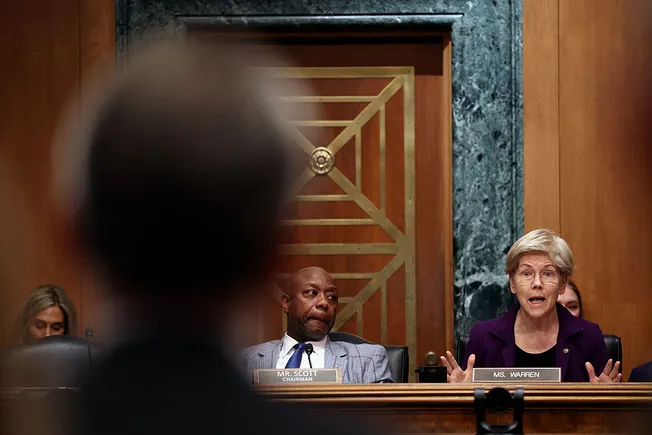
The Senate on Thursday passed a major housing bill 89-10 that aims to bolster the housing supply and improve affordability. However, multifamily groups are sounding the alarm over a provision that they say would effectively eliminate the production of build-to-rent single-family housing and ultimately increase rent and home prices.
The bipartisan 21st Century ROAD to Housing Act, which would be the largest housing package signed into law in about 30 years, contains a number of measures designed to increase the supply of homes in order to advance its goal of improving affordability. While it is broadly supported by the housing industry, advocates warn the recently added Section 901 would have a chilling effect on the sector.
That section restricts institutional investors, defined as those that directly or indirectly own at least 350 single-family homes, from purchasing more SFHs. It exempts large investors that significantly overhaul or build new single-family homes specifically for the rental market — but critically, it still requires these properties to be sold to an individual homeowner after seven years. The renter would have first dibs to purchase.
Investors of this size own about 0.7% of the country’s 92 million single-family homes, and they have been scaling back acquisitions in recent years, making 1% of all U.S. home purchases, down from a 4% peak in 2022, according to analysis from John Burns Research and Consulting.
“Because BTR developments require large-scale investment and benefit from economies of scale, most firms operate beyond that threshold. They cannot invest under the risk of forced sales and potential losses driven by arbitrary deadlines,” per a March 5 letter from dozens of housing groups. The cosigners want to build-to-rent homes to be fully exempt.
The measure is billed as a way to “promote homeownership opportunities for American families, not corporations,” echoing President Donald Trump’s recent push to restrict institutional investors from buying up single-family homes. A Feb. 9 statement indicated that he wouldn’t sign the housing package without a single-family investor ban. However, Trump’s Jan. 20 executive order to that end had a clearer carveout for build-to-rent housing.
The new seven-year disposition requirement would be damaging to the legislation’s stated goals, according to Greg Brown, senior vice president of government affairs at the National Apartment Association.
“In practice, the disposition provision would stifle any meaningful investment into build-to-rent, ultimately removing a flexible and affordable living option for many Americans and their families, lowering rental supply and upending an important part of our nation’s housing affordability solution,” Brown told Multifamily Dive in an email.
BTR ban complications
Build-to-rent single-family homes are underwritten, financed and constructed as multifamily housing, according to a March 10 open letter from housing industry groups, and it is not possible to sell individual units as single-family homes as the provision requires. Plus, selling off BTR homes would require paying off the entire loan at the same time.
The provision brings up a slew of practical challenges, according to National Multifamily Housing Council President Sharon Wilson Géno, and “honestly, we don’t think it’s constitutional. It’s not even legal.”
“I don’t even know how you would do it, because many of these properties are built on large parcels, you know, one, two, maybe three contiguous parcels. They’re not even platted for sale. So to go back in, it’s like putting a square peg in a round hole. The utilities are structured for rental,” Wilson Géno told Multifamily Dive.
There’s a tremendous misunderstanding about what institutional investment in multifamily is or does, according to Wilson Géno.
“There’s this idea that there’ll be this housing and at the end of seven years, it can be sold. At this stage of the game, that housing is never going to be built, because no one’s going to invest in it,” she said. “This is a really important conversation that we in the multifamily space need to have with the public, that institutional investment is… what helps build housing.”
In addition, many renters of BTR single-family homes — such as members of the military and retirees — do not have the ability or desire to purchase a house, according to Wilson Géno.
“[Build-to-rent SFHs are a] really important growing source of housing supply, and to cut it off means we have less homes available, less freedom to choose housing options at different times in people’s lives to meet their needs and less affordability,” Wilson Géno said.
What’s next
The bill, spearheaded by Senate Committee on Banking, Housing, and Urban Affairs Chair Tim Scott,R-S.C., and Ranking Member Sen. Elizabeth Warren ,D-Mass., now heads back to the House, where the House Financial Services Committee has introduced its own package, the Housing for the 21st Century Act. A Thursday release from the Committee says that 84% of the House’s housing provisions are included in the Senate’s version.
The bill still faces hurdles before it can be signed into law: House Majority Leader Steve Scalise, R-La., told lawmakers that the bill will need to go through further negotiations, CNBC reported.
Although the president had previously backed the bill, last weekend he declared that he won’t sign any new laws unless Congress passes legislation that would require voters to show proof of citizenship and end most mail-in voting, The Guardian reported. House leaders indicated that they are unlikely to accept the Senate version and may launch a formal conference process to negotiate a deal between the chambers, which could take months.
Click here to sign up to receive multifamily and apartment news like this article in your inbox every weekday.







