 Skip to content

Scott Taylor is the dean of workforce development and continued studies at Stephens College in Columbia, Missouri. Opinions are the author’s own.
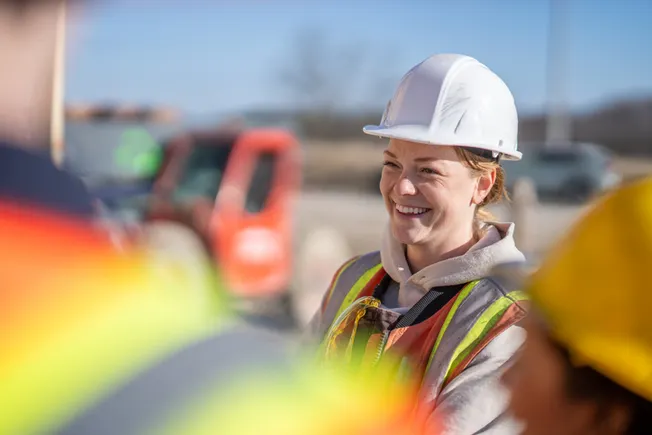
Careers in construction, carpentry and highway infrastructure have been more challenging for women to access. Limited training opportunities, childcare challenges, jobsite culture and unclear paths have all played a role.
While the skilled trades industry faces a labor shortage, women remain underutilized. Women make up just over 11% of the U.S. construction workforce, according to the National Association of Home Builders. That’s the highest percentage in 20 years, but still showcases an untapped population.
Expanding women’s roles in construction could strengthen the field, alleviate labor shortages and address industry shifts. A more balanced jobsite also provides a greater perspective and more problem-solving. But moving the needle from 11% to a sustainable workforce requires intentional, structured pathways and pre-apprentice programs. Higher education is beginning to help make that happen.
Building a construction pre-apprentice program
Even as a small, women’s liberal arts school in Missouri, Stephens College’s Workforce Development Program recognized the need and the opportunity for training construction workers.

Scott Taylor
Permission granted by Stephens College
Stephens looked at the massive infrastructure projects slated for Missouri — specifically the expansion of I-70 — and asked: Where are these workers going to come from? How can we help the workers and the construction industry? How do we build a pipeline that is culturally and technically ready for day one on the job? How can our students help?
The college realized that for a workforce program to succeed with its students, it must be designed by industry, not just for it. The college collaborated with industry leaders, including women in construction, to integrate their perspectives into the workforce curriculum. Stephens taught skills and talked about the culture of the jobsite.
This collaboration helped address the specific barriers that often deter women from working in the trades: a lack of mentorship, insufficient support networks and a male-dominated environment. Alongside its partners, Stephens ensured that learning, mentoring, childcare, transportation and even gender-specific portable toilets were included in the collective training process.
One student’s story
Avery, a 2024 graduate of the pilot program, was among the first students to complete all requirements. She loved seeing the project move from plan to implementation, working with her hands and being part of a welcoming team. Through a pre-apprenticeship with local firm Reinhardt Construction — a collaborator on the curriculum — she transitioned from a student to a union-carpentry apprentice. Today, she works full-time for Reinhardt. Avery’s success is an example for all young women who might not have considered construction as an option.
By pairing financial support and higher education with hands-on mentoring from construction firms, this model removes barriers to entry and prepares workers like Avery for real-world demands. It is an approach that can be applied in any state.
Why women in construction matter
Women bring labor, perspective and stability to construction teams. They expand the workforce during a severe shortage and help strengthen the industry. When programs are designed intentionally with mentorship, support networks and partnerships, women are more likely to stay.
Clear pathways for women — especially in skilled trades and leadership roles — help rebrand the industry as professional, forward-looking and viable for everyone. That perception matters to young people deciding where to build their careers.
A model for what’s next
The Stephens College Construction Pre-Apprentice Program is just five cohorts old. Still, the demand for the program is well-timed — and serves as a model for higher-education institutions and construction firms nationwide. It’s a powerful example of how industry and education can partner to close the labor gap and bring more women to the jobsite.
Here’s how:
- Invest in pre-apprenticeship programs that reduce challenges for women and other underrepresented populations.
- Create pathways for women in leadership who want to consider construction as a long-term profession.
- Partner alongside construction firms, unions, community organizations and funding sources to keep up with training and mentoring.
Workforce development is an investment in our industry. When we design pathways that intentionally include women, we don’t just close the labor gap — we build a smarter, more professional and more stable industry.
The next generation of skilled women workers is out there. They are simply waiting for a clear path to the jobsite. Let’s get rid of the barriers.







