June 5, 2024
A new NATO command structure
The 2014 Russian annexation of Crimea and Russian aggression in the Donbas brought home to NATO the need for a relook of the NATO Command Structure (NCS), resulting in the creation of Joint Force Command Norfolk and the Joint Support and Enabling Command, both in 2018. The Russian invasion of Ukraine in February 2022 and the accession of Finland and Sweden to NATO have once again altered the security landscape in the North Atlantic treaty area. These dramatic events suggest an urgent need for a revised NATO Command Structure, better suited to the security needs of allies and better organized to deter and defend in light of these new realities.
The current structure consists of two strategic military commands: Allied Command Operations (ACO) based in Mons, Belgium, and Allied Command Transformation (ACT) based in Norfolk, Virginia. These are supported by three “operational” commands: Joint Force Command Brunssum, oriented to the east; Joint Force Command Naples, oriented to NATO’s southern flank; and Joint Force Command Norfolk, oriented to the North Atlantic sea lanes of communication. In addition, there are three “tactical” commands: Allied Air Command, based in Ramstein, Germany; Allied Land Command, based in Izmir, Turkey; and Allied Maritime Command, based in Northwood in the United Kingdom. While suitable for peacetime requirements, these arrangements are not optimized for major theater war against Russia. What has changed, and why do these changes require new command structures?
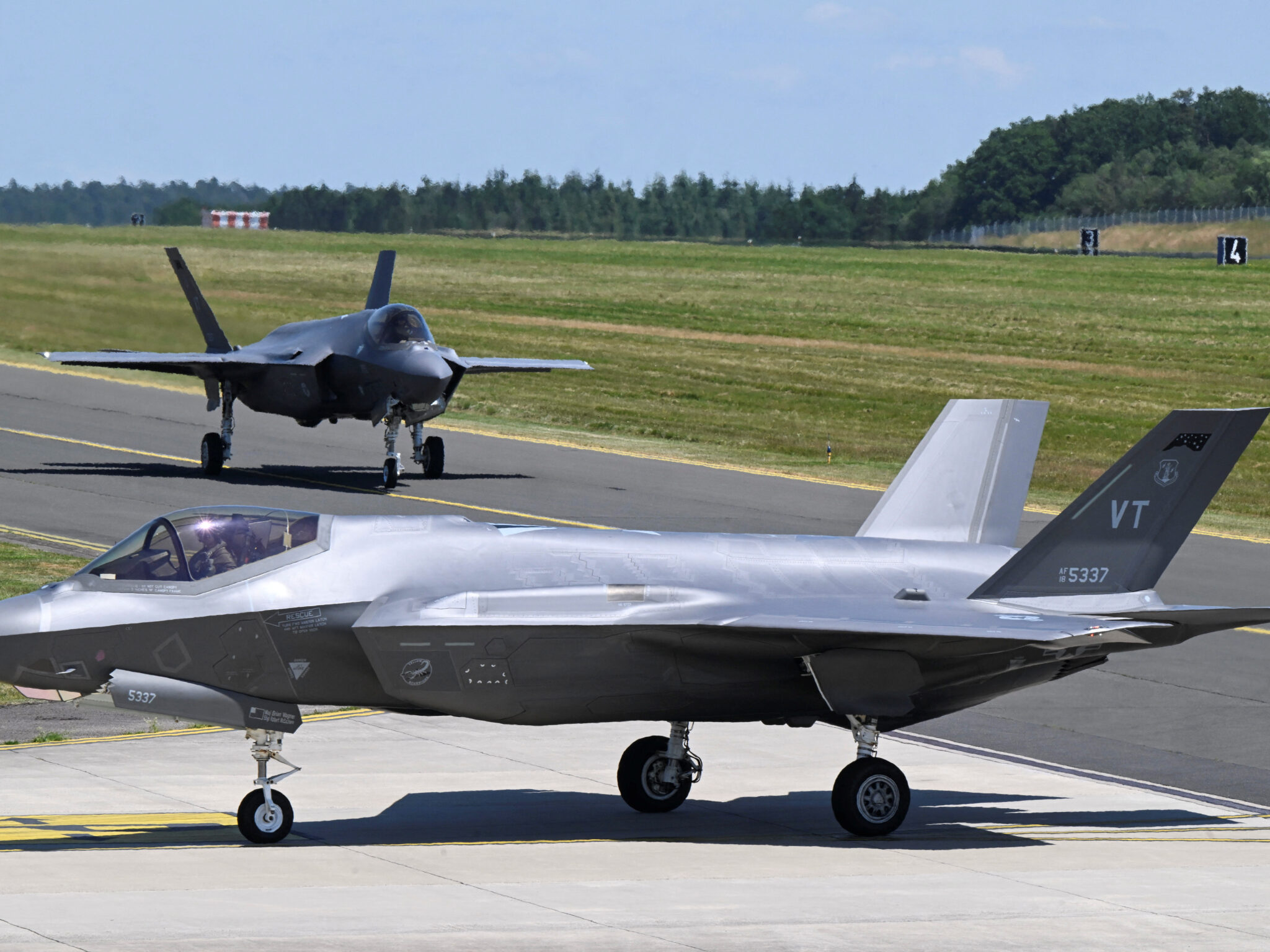
The obvious answer is that Russian aggression in the European security space has brought the possibility of direct confrontation with Russia closer to NATO than at any time since the fall of the Soviet Union. For allies bordering Russia, in particular, the threat level is perceived as high, driving major changes in force structure, defense spending, operational planning, and foreign and security policy. For Finland and Sweden, accession to NATO even a decade ago was considered unlikely. Today it is a reality, accentuated by efforts to establish unified air forces and steep increases in defense spending. Poland has emerged as one of the strongest military powers in Europe, exceeding France, Germany, and even the United Kingdom in conventional capability and spending nearly 4 percent of GDP on defense. Romania has also embarked on a remarkable military buildup. The Baltic States have responded as well; all three spend at least 2 percent of GDP on defense. Latvia has reintroduced conscription, while Estonia transferred all its 155 mm howitzers to Ukraine and ordered more modern replacements. Lithuania is moving to equip an entire infantry division with tanks. For its part, NATO has moved to double the size of the four battle groups established in 2017 on the eastern flank, and added four more, matched by five air policing missions. The United States has added an additional brigade set of prepositioned equipment in Europe, forward-based two additional F-35 squadrons in Europe, and increased its presence on the eastern flank from brigade to division size, augmented by a corps forward headquarters with enablers.
These moves demonstrate that allies are deeply concerned about the prospect of further Russian aggression. Some argue that Russia’s losses in Ukraine have negated the threat, but an increasingly likely frozen conflict in Ukraine suggests that “a wounded, vengeful Russia will remain a threat as long as Vladimir Putin, or like-minded successors, are in power.” Two years into the conflict, the Russian economy is actually experiencing modest growth despite doubling its defense budget, while leaky international sanctions and support from China, Iran, and others continue to prop up Russian industry and economic performance. Putin’s ambitions to restore Russian imperial greatness and recover lost Russian territories are well documented. The threat of more Russian aggression is real and may well transpire unless deterred.
How should the NATO Command Structure evolve? The first step should be to acknowledge a changed security environment and the importance and contributions of new members. (The current NCS dates to a time when Russia was viewed as a partner, and major theater war in the North Atlantic region was considered unlikely.) To achieve consensus for change, political realities must be taken into account; major NATO powers should occupy key posts that reflect their roles and influence in the Alliance. Existing infrastructure and staffs should be leveraged to avoid unnecessary expense. Finally, as much as possible, changes to the command structure should not add bloat or generate waste.
Lean, high-performing command arrangements are best suited to both peacetime economy and wartime stresses.”
With these concerns in mind, a revised NATO Command Structure should retain ACO and ACT as strategic headquarters, with some caveats. ACO should focus first and foremost on its responsibilities as a trained and ready battle staff, thoroughly exercised and ready to provide theater command and control of joint and multinational forces in time of war across the vast NATO area of responsibility. Historically, ACO planning and intelligence functions were subject to a degree of politicization in order not to “provoke” the Russian Federation. In recent years, these functions have been strengthened and those trends should continue. Its traditional leadership—a US four star as supreme commander with a UK deputy—is sound and should be retained.
Formally established in 2003, ACT is charged with contributing to “preserving the peace, security and territorial integrity of Alliance member states by leading the strategic warfare development of military structures, forces, capabilities and doctrines.” It executes this mission through four principal functions: strategic thinking; development of capabilities; education, training and exercises; and cooperation and engagement. ACT serves as the higher headquarters for NATO’s Joint Warfare Center in Stavanger, Norway; the Joint Analysis and Lessons Learned Center in Lisbon, Portugal; and the Joint Force Training Center in Bydgoszcz, Poland. ACT shares responsibility for NATO’s exercise program with ACO and is also responsible for the “establishment, accreditation, preparation of candidates for approval, and periodic assessments” of NATO’s twenty-nine Centers of Excellence.
Though one of only two strategic commands in NATO, ACT has struggled to establish itself on an equal footing; according to some observers, ACT is not sufficiently staffed with “the best and brightest” and is held in less regard by the North Atlantic Council (NAC) than legacy units and commands. Struggling to make its voice heard in Brussels, it has been termed “the forgotten command.” Part of ACT’s “second class” status has to do with geography. Initially commanded by US Admiral Edmund Giambastiani, ACT was the successor to Allied Command Atlantic, located in Norfolk (Giambastiani was the last Supreme Allied Commander Atlantic, or SACLANT, disestablished in 2002). ACT is commanded by a French four star with a four-star German deputy and three-star UK chief of staff. The command would benefit by relocating to Paris or Washington, enhancing its prestige and enabling closer cooperation with the US Department of Defense and Joint Staff and defense industries as well as ACO and NATO headquarters. Given persistent challenges with interoperability and standardization across the Alliance, as well as the great potential of advanced technologies in the form of artificial intelligence, unmanned air and sea vehicles, robotics, quantum computing, ACT can only increase in importance for the Alliance. Accordingly, it should receive priority for staffing on a par with ACO.

Relocating ACT to Paris or Washington is also advisable given the new Joint Force Command (JFC) headquarters, which is located in Norfolk. Clearly established as a response to the reemergent Russian threat, JFC Norfolk is primarily a maritime headquarters that closely resembles the former Allied Command Atlantic in form and purpose. Currently commanded by a US vice admiral (dual-hatted as commander US 2d Fleet), its mission is to “protect the Strategic Lines of Communication across all domains, protect sea-lanes between Europe and North America, and enable the reinforcement of Europe.” In a revised NATO Command Structure, JFC Norfolk would be redesignated “JFC West,” with geographic responsibility for the North Atlantic up to the Greenland-Iceland-UK gap. Given its vast area of responsibility, and the fact that the commanders of the other JFCs are four stars, the JFC West commander should be a US four-star admiral, dual-hatted as commander US Fleet Forces command (the lineal successor to the former US Atlantic Fleet, also currently based in Norfolk), with three-star UK and French officers as deputy and chief of staff. JFC West should not be tasked with the conduct of land or air operations in the Nordic region.
The accession of Finland and Sweden to NATO this year suggests that establishing a new “JFC North” is both appropriate and opportune. The Nordic region is enormous, encompassing 3,425,804 kms, larger than the territory of all other European allies combined. With a total strength of more than 360,000 troops (active and reserve), 250 combat aircraft, 2,000 armored vehicles, and 290 naval combatants (including 11 submarines), the Nordic allies represent a formidable and modernized deterrent force. Collectively, their size, population, geographic importance, and economic heft deserve a strong voice and senior representation inside NATO. Perhaps based at Bodo in Norway (the site of the current Norwegian Joint National Headquarters), or in Stockholm (the site of Sweden’s Joint Forces Command), JFC North should be commanded by a Swedish four star, with rotating Finnish and Norwegian three-star deputies and a Danish chief of staff. Its geographic responsibilities would include the North, Norwegian, Barents, Greenland, and Baltic seas, as well as the airspace and land territories of NATO members Sweden, Finland, Norway, Denmark, and Iceland.
The most imminent threat lies along NATO’s eastern flank, presumably the province of JFC Brunssum in the Netherlands under an Italian or German four star. Established in 2004, its stated mission is “to foster an open and active family of headquarters based on enduring relationships focusing on issues of common interest in order to enhance coordination, cooperation and situational awareness.” The lack of a specific geographic area of responsibility and precise mission statement arguably do not focus the command on defense and deterrence, while Brunssum is very far from the most likely scenes of Russian aggression (it is some 2,200 kms from Brunssum to Narva in eastern Estonia, for example). The growing capabilities of Poland, the importance of geographic proximity, and the reality of large scale combat operations just across its border with Ukraine strongly suggest that JFC Brunssum should be replaced with a “JFC East,” possibly located at Szczecin near the German-Polish border.
As the preponderance of forces would likely come from Poland, JFC East should be commanded by a Polish four star with a Romanian deputy and Baltic chief of staff. Its geographic area of responsibility should include the Baltic States, Poland, Slovakia, Hungary, Romania, and Bulgaria.”
NATO’s southern flank has traditionally been the responsibility of JFC Naples, commanded by a US four-star admiral dual-hatted as commander US Naval Forces Europe and Africa. This bifurcation pulls that officer and staff between NATO’s southern flank and maritime operations far to the north. The JFC Naples mission statement, like that of JFC Brunssum, is vague and imprecise and reads “to prepare for, plan and conduct military operations in order to preserve the peace, security and territorial integrity of Alliance member states throughout the Supreme Allied Commander’s Area of Responsibility (AOR) and beyond.” In a revised NATO Command Structure, JFC Naples would be redesignated as “JFC South” under the command of an Italian four star, with a three-star Greek deputy and two-star Spanish or Portuguese chief of staff. Its geographic AOR would include Spain, Portugal, Italy, Greece, and Turkey as well as NATO’s Balkan allies (Albania, North Macedonia, Croatia, Montenegro, and Slovenia). As described below, US Naval Forces Europe and Africa would relocate to the UK.
To ensure the right kind of mission focus, the mission statements of these four JFCs—North, East, West, and South—should be recast as “provide command and control of assigned joint and combined forces in order to deter and defend against aggression by opposing forces in the assigned geographic area of responsibilities; be prepared to execute other military tasks as assigned by SACEUR.” General and flag officers (GOFOs) assigned to these headquarters should come principally from the nations present in their geographic AORs. Given their missions, they are more properly referred to as “geographic” commands.
In response to Russian aggression in Ukraine in 2014, NATO established the Joint Support and Enabling Command (JSEC) in Ulm, Germany, in 2018. Commanded by a German three star, JSEC’s mission is “to contribute to enablement and help the Alliance set the theatre for reinforcement by forces, if and when required.” During crisis and conflict, JSEC will coordinate reinforcement by forces and their subsequent sustainment. Solving the problem of military mobility across national boundaries in wartime is a prime task, along with the reception, staging, onward movement, and integration (RSOI) of reinforcing forces and their theater-level support and sustainment. Theater-level, high-altitude air defense against ballistic and cruise missiles in central Europe may also fall to this command. To execute these tasks efficiently, the JSEC commander should have equal rank and status with the other JFC commanders. Accordingly, JSEC should be renamed “JFC Center” with a German four star as commander. Given the importance of prepositioned equipment storage sites in Eygelshoven, Netherlands, and Zutendaal, Belgium, those nations should rotate at the three-star level as deputy commanders, with a two-star French chief of staff.
NATO’s three “tactical level” commands—Allied Air Command (AIRCOM) in Ramstein, Germany; Allied Land Command (LANDCOM) in Izmir, Turkey; and Allied Maritime Command (MARCOM) in Northwood in the United Kingdom—have several responsibilities. The first is to serve as principal advisors to SACEUR for operations in the land, sea, and air domains. Next, these commands are tasked to monitor the readiness and interoperability of NATO’s land, sea, and air forces. They are also responsible for providing wartime component command headquarters. As they do not actually operate at the tactical level, they are more properly referred to as “functional” commands.
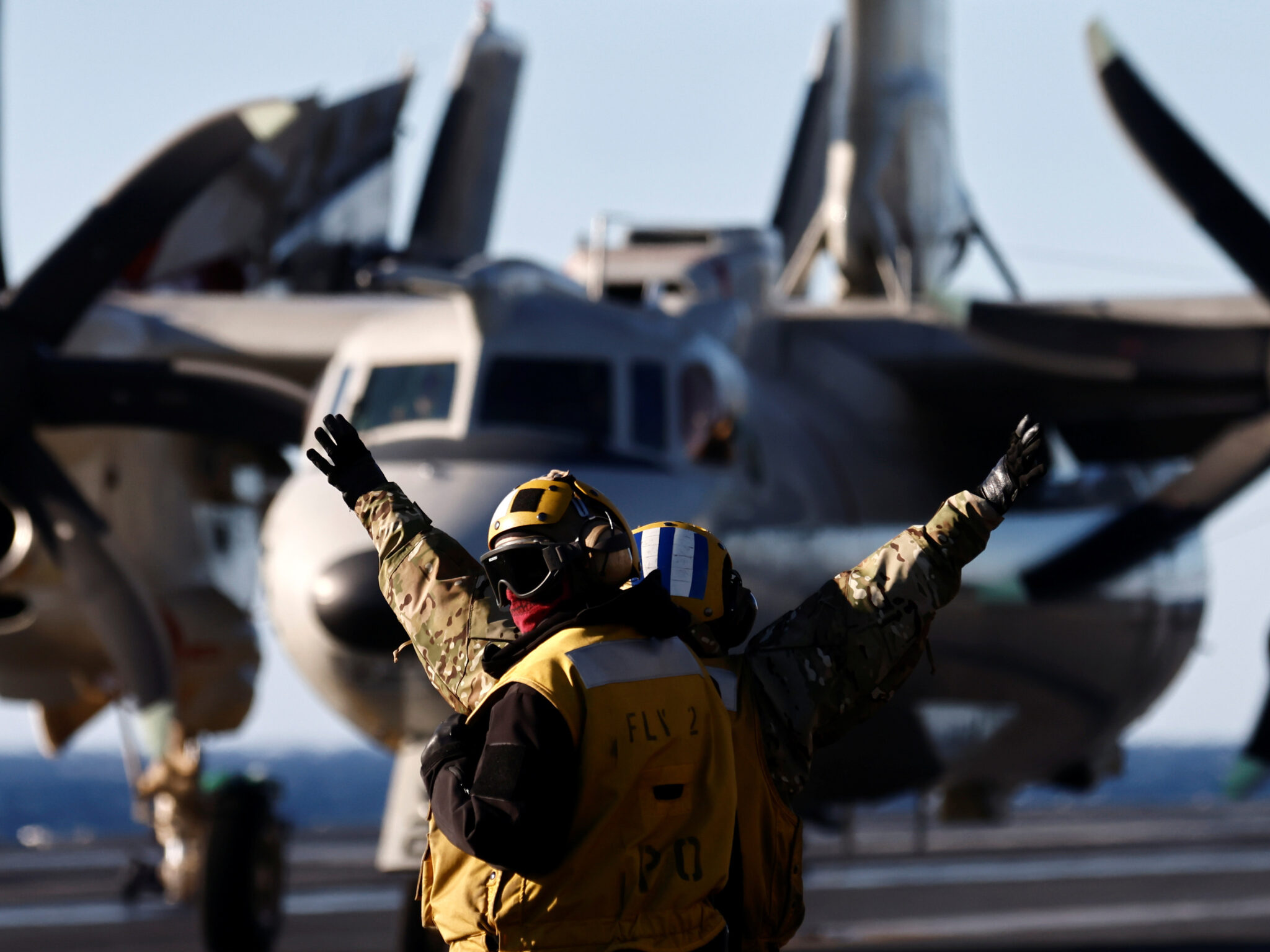
AIRCOM in Ramstein is tasked “to provide air and space power to the Alliance” and is commanded by a US four star, dual-hatted as commander US Air Forces Europe and Africa. That officer therefore commands the air component for both USEUCOM and ACO. The Combined Air Operations Center (CAOC) at Uedem in Germany manages air operations north of the Alps, while a second CAOC in Torrejón, Spain, covers NATO airspace south of the Alps. There is also a deployable or “flyaway” CAOC based in Poggio Renatico in northern Italy. All three report to AIRCOM, along with some fifty control and reporting centers. This organization is sound, well-resourced, and resilient and requires no significant reorganization.
LANDCOM in Izmir is commanded by a US four star, dual-hatted as commander US Army Europe. Its mission is “on order, serve as Land Component Command in support of Joint Force Commands and as a Combined Force Land Component Command to provide theater-wide domain expertise to SACEUR; as SACEUR’s principal land advisor, LANDCOM coordinates AOR-wide activities to effectively deter Russia and Terror Groups and ensure a trained, ready, and lethal land force for NATO.” Reporting suggests that, while LANDCOM can effectively monitor and flag readiness and interoperability shortfalls, its ability to field a fully staffed and trained battlestaff as an effective land component command for SACEUR remains a work in progress. One solution is to reactivate US Seventh Army as an operational field army headquarters, akin to US Central Command’s Third Army, on the backbone of US Army Europe and Africa. This would provide a trained and ready Land Component Command able to command two or more NATO corps. LANDCOM would retain its current functions and location and be prepared, when augmented, to provide an additional land component command for lesser or alternate contingencies. Because the commander LANDCOM is often in Wiesbaden performing duties as commander USAREUR and AF, and also because of Turkey’s size and importance, the LANDCOM deputy commander should be a Turkish four-star general.
MARCOM in Northwood serves as “the central command of all NATO maritime forces” and the MARCOM commander is the primary maritime advisor to the Alliance. Currently commanded by a UK vice admiral, MARCOM serves as the maritime headquarters for Standing NATO Maritime Groups 1 and 2 and Standing NATO Mine Countermeasures Groups 1 and 2. Naval Striking and Support Forces NATO (STRIKEFORNATO), built around the US 6th Fleet, reports directly to SACEUR and is headquartered in Oeiras, Portugal. MARCOM is also host to the NATO Shipping Centre (NSC), which links NATO and the merchant shipping community. For challenging contingencies, such as maritime operations against the Russian Northern Fleet in the North Atlantic and Norwegian Sea, US naval forces would certainly predominate. As the Russian Northern and Baltic fleets represent the primary maritime threat, US Naval Forces Europe and Africa should accordingly relocate from Naples, Italy, to London (its former headquarters through 2005) as the naval component of USEUCOM. Its four-star commander could then be dual-hatted as commander MARCOM, placing MARCOM on a par with LANDCOM and AIRCOM. The MARCOM headquarters would remain in Northwood under a UK three-star deputy. For maritime operations north of the GIUK Gap, MARCOM should command, reporting directly to ACO, with JFC West exercising command of the sea lanes of communication in the North Atlantic.

These recommended changes to NATO’s Command Structure offer several advantages. They acknowledge the importance of the US as leader of the Alliance but provide four-star representation for NATO’s largest and most important military contributors, both old and new (the US, UK, France, Germany, Italy, Sweden, Turkey, and Poland)—important for achieving consensus for any adaptations. They represent a more rationalized and practical geographic approach to command and control, recognizing the addition of important new members and far more territory to the Alliance. They provide flexible options for SACEUR, particularly for two or more campaigns that may occur simultaneously within NATO’s area of responsibility. They align component commanders between NATO and USEUCOM, simplifying SACEUR’s command arrangements in times of fast-moving crises and for sustained multi-domain warfare. Most importantly, they modify and adapt the command structure to more effectively address a changed security environment in the North Atlantic Treaty area, now facing its most serious military threat since 1945.
To be sure, change is hard—and nowhere more so than in NATO. Political sensitivities and equities will be hotly contested, and the gears of the NATO bureaucracy may wind slowly. But the need is urgent. Europe finds itself in the largest shooting war since 1945, and it is right on NATO’s doorstep. Russian aggression and imperialism are not going away. As presently constituted, the NATO Command Structure is not fit for purpose in a post-2022 NATO. The time is therefore right to consider improvements—both to deter and, if necessary, to contain and defeat a dangerous adversary.
About the author
Related content
The Transatlantic Security Initiative, in the Scowcroft Center for Strategy and Security, shapes and influences the debate on the greatest security challenges facing the North Atlantic Alliance and its key partners.
Image: US Navy sailors operate onboard aircraft carrier USS Harry S. Truman, in the Adriatic Sea, February 2, 2022. REUTERS/Yara Nardi