

Steven Rathbone is vice chairman and Nick Dreps is head of infrastructure and industrial services at Chicago-based global corporate finance advisory firm Stout. Opinions are the authors’ own.
The numbers are staggering: Over the next three years, the United States faces a shortfall of approximately 44 gigawatts of electrical capacity, equivalent to New York State’s entire summertime electricity consumption. This “electron gap” represents more than an infrastructure challenge. The gap is catalyzing a fundamental transformation in the electrical contracting industry, driving merger and acquisition activity and a shift in how these businesses operate.

Steven Rathbone
Courtesy of Stout
This is not speculative like the dot-com bubble. There are significant dollars behind real infrastructure projects that have been earmarked and approved, estimated to reach $3 trillion through 2030, led by key U.S. hyperscalers through investments like the $500 billion Stargate project. This means for contractors — particularly electrical contractors — the cash flows are there for the taking.
AI infrastructure boom
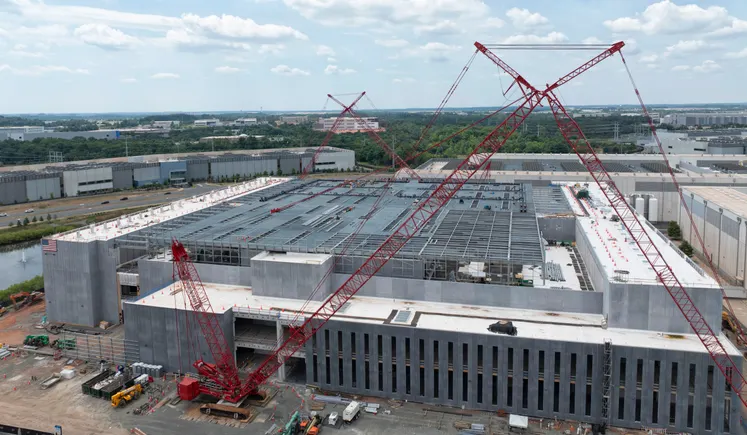
The convergence of artificial intelligence demands and lagging electrical infrastructure has created an unprecedented opportunity for electrical contractors. Tech giants including Oracle and Amazon are committing hundreds of billions of dollars to data center buildouts, and these are essential to keeping pace with AI’s computational requirements.
Oracle recently faced shareholder pushback over massive data center capital expenditures, but the company’s response was unequivocal: These investments are planned and necessary.
For electrical contractors, data centers represent the perfect storm of opportunity. These facilities require extensive high-voltage transmission and distribution work, complex electrical systems, sophisticated control panels, custom switchgear and ongoing maintenance. Unlike some traditional construction projects, data centers create multiple revenue touchpoints throughout their lifecycle.
Infrastructure beyond data centers
While AI-driven data center construction captures headlines, electrical contractors are benefiting from two additional powerful tailwinds: grid modernization and energy transition investments.
Nick Dreps
Courtesy of Stout
The aging U.S. power grid was never designed to handle current demand levels, let alone the exponential growth that AI and electrification are driving. Utilities are investing heavily in transmission and distribution upgrades, expected to reach $1.1 trillion in grid investments by 2029, creating sustained work for contractors with the right capabilities.
These installations require sophisticated electrical contractors capable of handling complex system design, integration and installation.
Capacity crunch and consolidation
The industry’s fragmentation is both a challenge and an opportunity. Large projects increasingly require prime contractors to partner with smaller subcontractors not just for specialized work or risk mitigation but also to simply mitigate capacity constraints.
You might see multiple electrical contractors on the same jobsite: a large prime and two smaller contractors either helping fulfill capacity or doing something more specialized and custom.
This capacity crunch is driving aggressive M&A activity. Buyers are seeking multiple objectives: acquiring proven data center expertise and resumes, gaining presence in regions with active data center construction and, most importantly, adding human capital to scale operations. In an industry constrained by skilled labor availability and evolving rapidly, buying capacity and expertise is materially faster than building it organically.
The consolidation trend also reflects strategic sophistication. Buyers are accumulating projects and they’re seeking capabilities that can convert large builds into recurring revenue streams.
Converting projects to ongoing profits
The most valuable electrical contractors are those demonstrating the ability to transform project work into ongoing service contracts. Depending on size, data centers often require nested crews of three to 12 people permanently on site to maintain and service electrical systems and control panels.
The logic is compelling. The contractor who built the electrical system understands the engineering, installation challenges, equipment and potential failure points better than any third party. This institutional knowledge makes them naturally suited for ongoing maintenance and creates high switching costs for clients.
Service contracts also provide margin stability and revenue visibility that pure project work cannot. As projects are only increasing in size and complexity, recurring revenue through post-commissioning service contracts help smooth performance variability and quell investors’ project-based concerns, driving valuations up.
Beyond the bubble debate
Skeptics worry about a bubble, but industry participants see fundamental differences from past speculative manias. The spending is anchored in real infrastructure needs, backed by both private sector capital and government investment. Even if demand softens eventually, the near-term pipeline is measured in years, not quarters.
The electrical contracting industry is experiencing a rare alignment: surging demand from multiple sources, capacity constraints creating pricing power, specialized labor conditions and strategic consolidation enabling platforms to capture both project work and recurring revenue.
For contractors with the right capabilities and scalability, the electron gap represents a generational opportunity. For investors and buyers, it’s driving some of the richest valuations the sector has ever seen. Both are flowing over into professional services businesses serving infrastructure, and participants are betting those valuations are justified by cash flows that will continue long after the current AI boom matures.
The prevailing question isn’t whether this is a bubble that will pop in the coming years. It’s whether contractors can scale fast enough through organic growth, strategic acquisitions or both to capture the opportunity at hand.






