The companies that stand out in NE Ohio combine local soil and weather know-how with proven moisture-control systems, clear warranty terms, and straightforward inspection practices. They design solutions that address hydrostatic pressure, freeze–thaw cycles, and lake-effect precipitation — stopping water where it enters and directing groundwater safely away from the foundation.
Homeowners get the best results when contractors pair a careful diagnosis with targeted fixes — interior perimeter drains, exterior excavation and membranes, reliable sump pumps with battery backup, and foundation stabilization. That combination reduces repeat damage, lowers mold risk, and protects finished spaces.
This guide walks through top local services, how to vet contractors, common foundation repairs, realistic cost ranges, and the warning signs that should trigger prompt action.
Read on for side-by-side method comparisons, easy-to-scan tables to simplify choices, short inspection checklists, and a concise look at Ohio Basement Waterproofing as a local example of services and warranty options.
What waterproofing services do NE Ohio companies typically offer?
NE Ohio waterproofing contractors usually provide a mix of services for surface leaks, groundwater infiltration, and structural moisture problems. Interior systems — like perimeter drains, interior sump setups, and vapor-control coatings — relieve hydrostatic pressure inside the foundation. Exterior options — excavation to the footing, waterproof membranes, and exterior footing drains — keep water from reaching the wall in the first first place. The most reliable packages combine proper drainage, a sump pump with battery backup, and crawl space moisture control so humidity and intrusion are addressed together. Knowing which approach matches your home’s failure mode is key before agreeing to work; the sections below map methods to common causes and explain how pumps and drains work together.
What interior and exterior methods do top companies use?
Interior waterproofing focuses on catching and redirecting water that reaches the basement — interior perimeter drains, channel systems, and vapor-retardant coatings are common. These systems intercept water where it appears, move it to a sump basin, and pump it away, restoring a dry space with minimal yard work. Exterior methods — digging to the footing, applying membranes, and installing exterior footer drains — stop water before it reaches the foundation wall. Exterior work is often more permanent but also more disruptive. Each path has trade-offs: interior systems are less invasive and typically cheaper up front; exterior excavation addresses root causes more fully. Soil conditions and warranty coverage should guide your decision.
Quick comparison: the table below summarizes common methods by expected disruption and what intrusion they handle best.
In practice, combining drainage, pumping, and wall protection usually delivers the most durable result. Balance the short-term disruption against long-term effectiveness when choosing a plan. The next section explains how sump systems and drainage components work together to lower hydrostatic pressure and prevent flooding.
How do sump pumps and drainage systems protect NE Ohio basements?
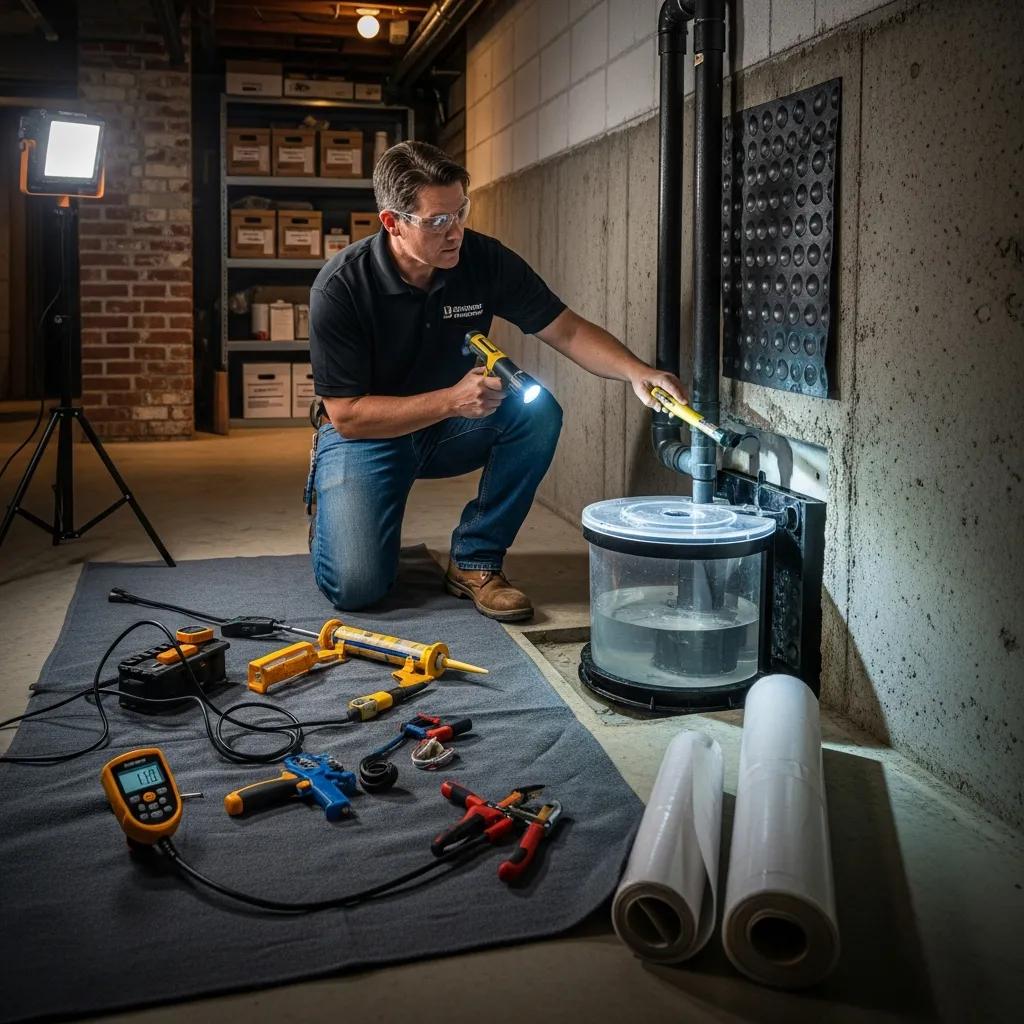
Sump pumps collect groundwater funneled by perimeter drains into a sump basin and eject it away from the house, which reduces hydrostatic pressure and cuts the chance of repeat intrusion. Battery-backed pumps and systems with protected power keep running during outages — critical during storms when utility power often fails. Newer units offer smart monitoring and backup packs that alert homeowners to problems and maintain operation when the grid goes down. Regular maintenance — checking float switches, testing backups, and clearing discharge lines — keeps pumps dependable. Paired with proper interior or exterior drainage, a sump system is the active defense that keeps finished basements dry. Once you understand these systems, you’ll need criteria to spot reputable local contractors.
How do you identify top-rated basement waterproofing contractors in NE Ohio?
Spot top contractors by looking for measurable credentials, proven local experience, clear warranty language, and a transparent inspection process. A strong provider will explain the diagnosis, offer multiple repair options with pros and cons, and give a written estimate based on a physical inspection rather than a ballpark number. Look for reviews and case examples that show consistent problem resolution and responsiveness to warranty issues. Lifetime or transferable warranties indicate confidence in workmanship. The sections below break down the credentials to request and how to read customer feedback so you can shortlist reliable firms.
What credentials and experience should NE Ohio waterproofing companies have?
Ask contractors about licensing, insurance, product warranties, and sample project portfolios — these reduce project risk and clarify accountability. Local experience matters: NE Ohio’s clay soils, freeze–thaw cycles, and lake-effect weather create moisture challenges that require tailored solutions. Lifetime and transferable warranties add long-term protection and resale value; confirm conditions and required maintenance to keep them valid. Ask for before/after photos, references from nearby projects, and an itemized scope of work to validate claims and avoid surprises. Use the short checklist below during contractor interviews.
- Request written warranty terms and confirm whether warranties transfer to new owners.
- Ask for proof of insurance and any trade certifications or manufacturer authorizations.
- Look for local project photos and references showing similar soil and home types.
- Confirm the estimate is based on a physical inspection and includes an itemized scope.
Using this checklist helps you separate companies that sell quick fixes from those that diagnose and guarantee performance. The next section explains how to interpret online reviews and ratings.
How do customer reviews and ratings reflect company reliability?
Reviews reveal patterns: response time, communication, workmanship, and how a company handles follow-up or warranty claims. Give extra weight to recent feedback and note whether the company replies to negative reviews with corrective actions — that shows accountability. Check review authenticity by looking for project details, timelines, and before/after photos. A range of project types suggests broader capability. Use reviews alongside credentials, inspection clarity, and warranty terms to form a balanced view before comparing proposals side-by-side.
What foundation repair services do leading NE Ohio companies provide?
Top foundation repair firms offer fixes that match visible symptoms — settlement, vertical or horizontal cracks, bowing walls, and uneven floors — so homeowners get the right mechanical solution. Options range from epoxy or polyurethane crack injections for nonstructural leaks to helical piers and underpinning for active settlement, and carbon fiber straps or wall anchors for lateral movement and bowing. The correct method depends on the root cause: soil settlement, hydrostatic pressure, or structural overload. The table below links common repairs to typical use cases and expected benefits to help you decide.
Reference table: this chart maps repair methods to symptoms and likely outcomes so you can match observed issues with professional remedies.
Matching symptoms to these techniques helps you evaluate contractor recommendations and set realistic timelines. The next section explains specific repair approaches for cracks and bowed walls.
How do companies repair foundation cracks and bowed walls in NE Ohio homes?
For cracks, contractors choose engineered injections — epoxy for structural restoration or polyurethane for active leaks — depending on crack type and movement. When settlement affects load-bearing members, underpinning with helical or driven piers moves load to stable soil and can lift and re-level foundations; these fixes need engineered plans and careful load calculations. Bowed or laterally displaced walls are treated with wall anchors, carbon-fiber straps, or partial reconstruction depending on severity. Less invasive options like carbon fiber offer long-term restraint without excavation, while pier work and full replacement are more involved and require longer timelines.
What role do carbon fiber wall stabilization systems play?
Carbon fiber systems (for example, StablWall-style products) are high-strength strips bonded to masonry or concrete to resist inward movement and stabilize bowing without excavation. They’re popular for moderate bowing because they’re low-profile, minimally invasive, and often cost-effective compared with full wall replacement or exterior anchoring. Properly installed carbon fiber provides permanent strengthening and is usually paired with drainage fixes to address the moisture that drives wall movement. Note the limitation: severe settlement or active lateral pressure beyond carbon fiber’s design calls for wall anchors or underpinning.
How much does basement waterproofing cost in NE Ohio and what affects pricing?
Costs in NE Ohio vary by method, damage extent, basement size, and site conditions. The sample local ranges below are planning estimates; accurate pricing requires a free, on-site inspection. Major cost drivers include whether work is interior or exterior, foundation access, soil saturation and type, permits, and any structural repairs like piers. Financing options, lifetime warranties, and product quality also affect project value and long-term return. The table that follows lists common solutions, typical price ranges, and notes specific to the NE Ohio market to help you set expectations before scheduling inspections.
Pricing reference: the table below shows example NE Ohio price ranges for common waterproofing and repair solutions; treat these as planning figures only.
These ranges reflect common local scenarios; homeowners should get a tailored estimate after a physical inspection.
Primary cost drivers — use these to guide questions during estimates:
- Basement size and whether it’s finished or unfinished.
- Extent and type of water intrusion or structural damage.
- Soil type, site access, and grading around the foundation.
- Choice of interior solutions, exterior excavation, or a combined approach.
- Warranty coverage, permitting needs, and restoration of finishes or landscaping.
Understanding cost drivers helps you compare proposals and weigh long-term value versus short-term price. The next section outlines typical price ranges for different solution types.
What are typical price ranges for different waterproofing solutions?
Smaller repairs — localized crack sealing or minor wall patching — sit at the low end of ranges. Whole-basement systems and exterior excavation are at the high end due to labor, materials, and restoration. Interior perimeter drainage with a single sump pump commonly starts in the low thousands and increases with finished basements, ejector pumps, or multiple discharge locations. Exterior excavation and membrane systems push costs higher because of excavation and landscape repair; they’re often justified for continuous exterior saturation. Structural repairs like piers or underpinning are separate line items and can be the largest costs when settlement is severe.
How can free inspections help homeowners get accurate estimates?
A free professional inspection records symptoms, measures moisture and structural movement, and evaluates grading, downspouts, and soil saturation. That information produces a scoped, itemized estimate rather than a rough guess. Inspectors usually provide photos, a root-cause diagnosis, recommended solutions with alternatives, and warranty details so you can compare offers objectively. Free inspections also reveal hidden issues — buried downspouts or interior finishes that complicate installation — that materially affect price. Scheduling multiple reputable inspections lets you compare system designs, warranty terms, and maintenance needs before deciding.
Why choose Ohio Basement Waterproofing among NE Ohio’s top companies?
Ohio Basement Waterproofing is a local, full-service provider of basement waterproofing and foundation repair with clearly stated customer offers and product options. Their services cover interior and exterior waterproofing, foundation repair and replacement, crawl space encapsulation, mold prevention/removal, and concrete leveling — paired with free inspections and patented solutions. The company advertises lifetime warranty coverage that is 100 percent transferable and promotes products such as SmartPower battery-backup sump pumps and StablWall carbon fiber stabilization systems. Homeowners should compare these claims to independent inspection findings and warranty documents to determine the best fit.
What unique benefits does Ohio Basement Waterproofing offer NE Ohio homeowners?
Ohio Basement Waterproofing highlights value propositions you can verify during inspection and proposal review. The company uses the slogan “Protecting Homes, Keeping Families Happy Since 1978!” and cites “90,000 plus satisfied customers” — prompts to request project references and case details. Practical offers include FREE Inspections, patented solutions, vetted product lines, and a Lifetime Warranty stated to be fully transferable, which can support resale value. When comparing providers, weigh these advertised features against inspection reports, warranty paperwork, and the recommended scope of work.
How do testimonials and case studies show Ohio Basement Waterproofing’s expertise?
Good case studies include measurable results, photos, and clear timelines — before-and-after images, documented moisture or settlement improvements, and any follow-up service notes. Ask for local NE Ohio examples that match your soil type and home era so you can see how solutions performed under similar conditions. Testimonials signal customer satisfaction, but verified case studies and transparent warranty terms provide stronger proof of consistent results. Request sample inspection reports and project write-ups to compare actual scopes and outcomes rather than relying solely on promotional claims.
What are the signs of basement water damage and when should NE Ohio homeowners act?
Catching water damage early helps you avoid mold, structural decline, and rising costs. Watch for standing water, persistent musty odors, efflorescence on walls, peeling paint, visible mold, and new or widening foundation cracks — each points to different causes, from condensation to active groundwater intrusion. If signs continue after basic fixes (better ventilation, cleaned gutters) or if water appears during storms or after snowmelt, schedule a professional inspection. The sections below map symptoms to likely causes and explain why delay is risky.
Signs checklist — items that warrant monitoring or an immediate inspection:
- Standing water or active leaks in the basement after rain events.
- Musty odors or visible mold on walls, insulation, or stored belongings.
- White, powdery deposits (efflorescence) or peeling paint on foundation surfaces.
- Horizontal or stair-step cracks in masonry, or new and widening foundation cracks.
These signs range from nuisance to urgent; persistent or worsening indicators deserve a professional diagnosis to prevent escalation. The next section explains how symptoms translate into repair urgency.
How do wet basement symptoms indicate the need for waterproofing or repair?
Different symptoms point to different problems: condensation and high humidity often show up as dampness and mold and may be solved with dehumidifiers and ventilation. Visible seepage, pooling, or damp stains after storms usually indicate penetration or hydrostatic pressure that requires waterproofing. Efflorescence and salt deposits point to slow, chronic moisture migration through masonry and suggest drainage or wall treatments. Cracks with water entry or movement signal structural concerns that may need foundation repair in addition to waterproofing. Quick homeowner steps — move stored items out of wet areas, photograph conditions, and schedule an inspection — help prioritize short-term mitigation while planning permanent fixes.
What are the risks of delaying basement waterproofing in NE Ohio homes?
- Immediate Health Risks: Mold and humidity-related allergens can harm indoor air quality.
- Structural Risk: Ongoing hydrostatic pressure and soil movement can cause settlement and wall failure.
- Financial Impact: Repair costs typically rise over time; early intervention usually reduces total expense.
Bottom line: timely inspection and remediation cut health, structural, and financial risks. Use free inspections and checklists to move from diagnosis to a defensible repair plan.