Skip to content

The Hudson Bay Rail Line To Churchill
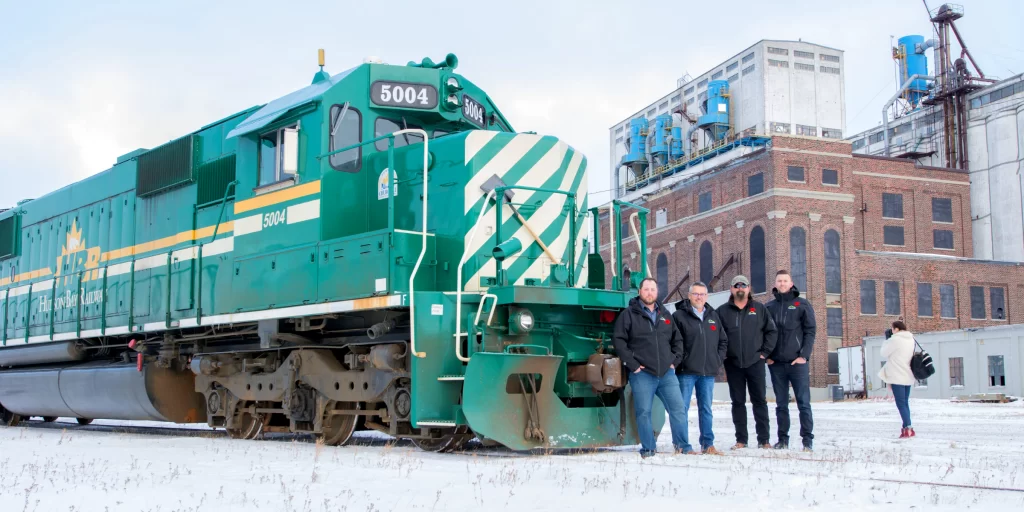
Paradox Access Solutions is proud to have worked on restoring the Hudson Bay Rail Line to Churchill in northern Manitoba with our engineering partner, Stratum Logics. Here’s an overview of this epic project.
The Allure of Churchill
In the most northern corner of Manitoba lies the quiet, quaint town of Churchill, a port city on the Hudson Bay 156 miles from the nearest town. Popular for its polar bears, beluga whales, and pristine view of the Aurora Borealis, the town relies heavily on visitors to stimulate its economy as a tourist destination.
Restricted Access Due to Rail Damage
Consider enduring 18 months with limited or no access to the outside world. This rural community of Churchill, home to approximately 1000 residents, faced these perils after their major route of entry and exit was severed in the spring of 2017.
Excessive flooding damaged approximately 2km of the track, creating 30 areas along the track for repairs. The impact extended beyond Churchill, affecting over 40 nearby First Nations communities that heavily depended on the railway for goods and services. With traditional transportation options unavailable, residents were forced to rely on infrequent helicopter deliveries for necessities such as food and medical supplies. This led to increased costs and a significant decline in their quality of life due to limited contact and restricted movement. As a result, a solution to remediate the rail line was imperative for the community.
Project Overview
Contracted by the project owner, Arctic Gateway, Paradox was chosen as part of the team tasked with reconstructing the Hudson Bay Rail Line to reconnect the town and its neighbouring communities. Since 1929, this railway has been the only mode of transportation to Churchill. In the spring of 2017, severe flooding damaged multiple sections of the rail line where it crossed streams, highlighting the urgent need for repairs and a long-term solution capable of withstanding harsh environmental conditions.
Paradox Access rose to the occasion by implementing repairs in under 60 days using Tough Cell® NPA geocell technology. The project kicked off in September 2018 and was completed by November 2018.
Paradox’s NPA geocells presented the perfect option for the challenging landscape where the Churchill rail line traversed. Challenges included building on a soft subgrade, permafrost, and erosion. Tough Cell® provided a unique solution to environmental challenges that would protect against natural ecosystem degradation. Additionally, this geocell remediation was cost-efficient, costing the client a fraction of the price estimated by other contractors- 20-25%.
The success of this project restored access within two months for the communities affected, restoring normalcy to the residents affected. Furthermore, this project demonstrates the viability of Tough Cell® as an infrastructure solution that is implementable in permafrost regions. “
This is state-of-the-art technology has never really been tried before in Canada. It’s been utilized worldwide, but not in Canada,” said Marc Breault, President at Paradox Access Solutions, in an interview with CBC News.

WATCH: Paradox on CBC National—Trains Rolling in Churchill Again
READ: Brandon Sun—Cando awarded a contract to repair Churchill rail line
Challenges of the Repair
Being a port city on the Hudson Bay 156 miles from the nearest town, Churchill is a remote community. This presented a significant accessibility challenge for the Paradox crew in accessing the rail line and transporting materials for reconstruction.
As the railway line was the sole transportation method, a linear construction schedule had to be followed. This meant that the areas of the line that needed repair had to be completed in sequence for the train to access the subsequently damaged areas- the process followed an end-to-end construction schedule.
Other challenges faced during the job were primarily because of its geographic location. Its northern latitude posed environmental problems regarding the instability of the ground due to permafrost. The same flood that washed away the railway line also impacted the permafrost layer beneath, calling for additional stability reinforcement to provide enough structural strength to withstand railway traffic. The Paradox team sought to mitigate risks of further flood damage in the future, so erosion control was also essential.
The Solution
The Paradox team decided to use Tough Cell® Technology for the unique circumstances of the Hudson Bay Rail Line. These high-strength novel polymeric alloy (NPA) geocells offer a sustainable, long-term solution for permafrost cycles and unpredictable weather conditions and could act as a degradation safeguard. A typical railway must be able to withstand the most challenging demands—weather combined with the weight, speed and frequency of loads. Add in a curveball like permafrost or muskeg, and you could have a nightmare on your hands.
That’s where Paradox’s Tough Cell® technology provides a great solution. Tough Cell® is uniquely suited to constructing a railway in permafrost and muskeg areas, where an unstable substrate can lead to lateral spreading of ballast and differential settlement of the railbed.
Tough Cell®’s honeycomb structure provides lateral restraint of ballast and leads to the entire track settling together. This extends the life of the railbed and lowers the cost of maintenance. It can undergo cycles of extensive load due to its better weight distribution capabilities. The structural layers of geocells reduce the stress transferred to soft subgrades by improving the reinforcement of the sub-ballast. In this way, geocell technology guards against the degradation of soft subgrades and improves structural stability, making it ideal for infrastructure development in permafrost regions.
Our implementation of Tough Cell® technology allowed for the use of locally sourced aggregates. Rather than transport heavy materials by train, the geocell design could be reinforced by utilizing locally available infills, simultaneously reducing environmental impact and cutting costs. Its long-term durability and low maintenance requirements also make it a cost-effective solution.
For this project, our team followed a linear construction schedule because Tough Cell® Technology can be folded for transport. This allowed the Paradox team to easily transport and install it, saving transport costs and reducing construction time.
Proper application of Tough Cell® in permafrost conditions can also prevent melting, which further preserves railbed integrity. Compared to conventional ground stabilization methods, Tough Cell® requires less construction time, is more cost-effective, and has a significantly smaller carbon footprint.
The Benefits
Combining the expertise of world-class geotechnical engineering with Tough Cell®’s proven track record of success in railways under all conditions—including permafrost, Paradox builds safe, stable railways that lower costs and offers:
Advantages
- Reinforces track substructure and stabilizes ballast layers
- Provides lateral restraint (versus the lateral spread of traditional railbed construction)
- Reduces settlement of ballast materials and fouling by subgrade attrition
Benefits
- Increases strength and resilience
- Reduces maintenance
- Lowers total cost of ownership
The Results
Paradox completed the project in under two months—ahead of schedule, on quality, and budget. If you have questions about our Tough Cell® solutions for rail (or any other access solution), contact info@paradoxaccess.com.
WATCH: Mission Possible—Paradox Restores Rail Line in Under 60 Days
We’re also excited to share some additional media coverage we’ve received over the past few years.
From The Archives
Our president, Marc Breault, has authored editorial content for industry publications and below you’ll find some of his most recent published articles. We’ve also dug deep into our archives to share some vault worthy stories with you here:
President’s Articles
- READ: NA Clean Energy Magazine—Conquering the Sub Layer Paradox
- READ: A Better Future Demands Better Roadbuilding Techniques Today
From the Vault
The post The Hudson Bay Rail Line Repair Story (and Other Good News) appeared first on Paradox Access Solutions.