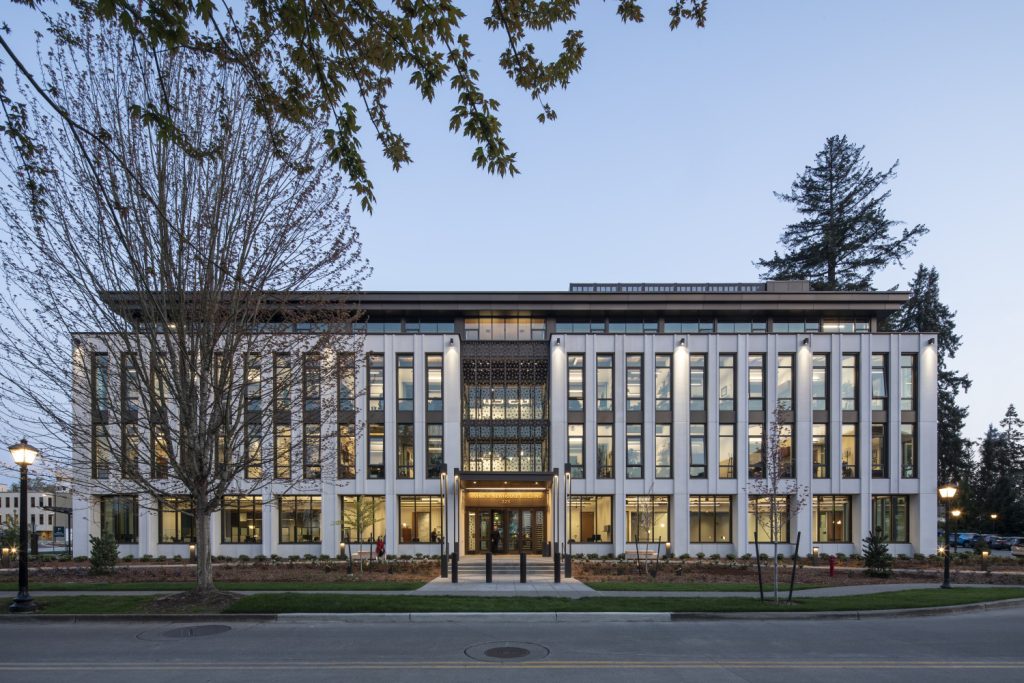
The Newhouse Replacement Building (Newhouse), designed by The Miller Hull Partnership as part of the Legislative Campus Modernization (LCM) initiative, creates a civic workplace where the past meets the present.
The new structure honors the campus’s architectural legacy and historic significance while integrating sustainability, ecological stewardship, and functional efficiency.
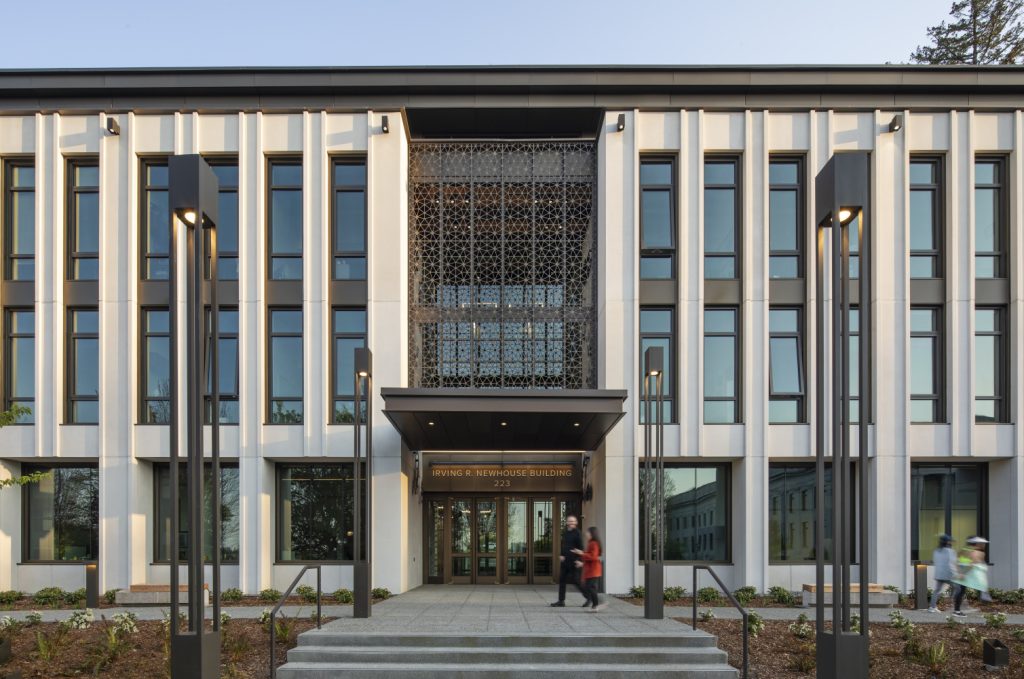
Originally built in 1934 as a temporary structure, Newhouse became a critical part of the Capitol Campus but outlived its intended use.
Miller Hull took a sustainable approach to salvaging historic materials by sourcing locally manufactured mass timber.
With LEED Platinum certification, Newhouse is a beacon of sustainable design. It is net-zero ready, with a roof-mounted photovoltaic (PV) array that accounts for 20 percent of the building’s energy demand. Operable windows in every office enhance energy efficiency while providing natural ventilation, and a green roof elevates the views from the fourth floor.
The design team prioritized local vendors, trades, and materials, ensuring state funds were directed toward both Washington’s economy and its environmental priorities. Additionally, nearly all building materials, from exterior cladding to interior finishes, were sourced within the state.
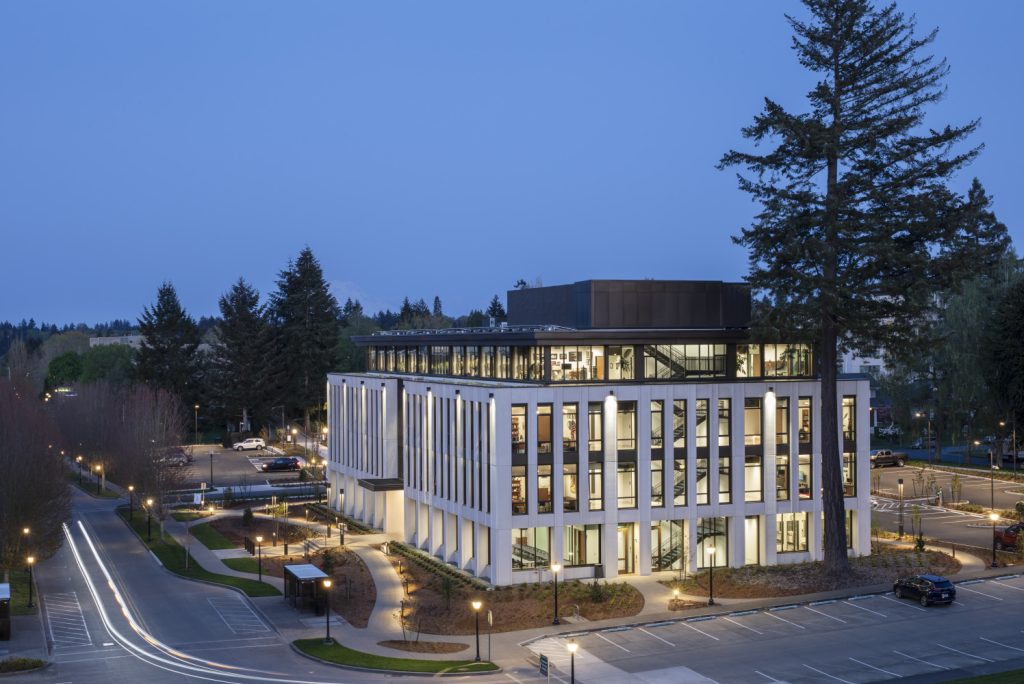
Newhouse showcases locally sourced Douglas Fir, one of Washington’s most valuable resources, as mass timber is central to the building’s low-carbon strategy.
Steel columns and beams are paired with Acoustic Dowel Laminated Timber (ADLT) floor decks, an innovative assembly of doweled wood members with acoustical insulation inserted into precision-milled grooves to enhance sound absorption.
With this strategy, Newhouse establishes itself as the first known building to feature an ADLT assembly that eliminates all known chemicals of concern.