Bam is replacing two ageing schools with one impressive 1,800-pupil institution featuring a spacious ‘street’-based design that requires steel frame and concrete slabs to meet its long-span demands.
Bam is replacing two ageing schools with one impressive 1,800-pupil institution featuring a spacious ‘street’-based design.
Project: Levenmouth Academy
Client: Fife Council
Contract value: £42.5m
Contract type: Design and build
Region: Scotland
Main contractor: Bam Construction
Architect: AHR
Structural engineer: Aecom
Start date: February 2014
Completion date: July 2016
On the Firth of Forth coast near the mouth of the River Leven, an ultra-modern £42.5m secondary school is arising on the playing fields of Buckhaven High School.
The new Levenmouth Academy, situated halfway between Dunfermline and St Andrews, will see the replacement of the existing Buckhaven School and nearby Kirkland High School.
However, with its spacious ‘street’-based layout, huge spans and column-free levels, the new school is as far from a like-for-like replacement as can be imagined.
Work got under way on the site in February last year, with Bam Construction the main contractor and hub East Central Scotland the delivery partner for client Fife Council.
Hub East Central Scotland is a joint partnership between public and private sector organisations.
The new facility was designed by architect AHR in collaboration with both existing schools and with structural engineer Aecom.
Levenmouth Academy is now structurally complete and is currently being clad and fitted out.
It will accommodate 1,800 pupils when the doors are open in August next year, in time for the 2016/17 academic year.
Typically three storeys in height, the new school building’s design is based on the principle of a main corridor ‘street’ running the full length of the building with teaching wings sprouting either side.
At ground floor, the road-facing main entrance and administration block is at one end of the street, with the gymnasium and sports hall block at the other.
Classrooms and workshops occupy the south side of the street at ground floor, while a dining hall, assembly hall and drama studio make up the north side. Upper levels are occupied by classrooms and laboratories.
At first floor, a double-height library is situated at a corner of the building nearest the main entrance.
The design and construction method of Levenmouth Academy builds on Bam’s experience of building two other schools in Auchmuty and Dunfermline, both also in Fife.
Is it a mall? Is it an office? No!
The building covers a vast plan area that adds up to a gross internal floor area of 18,000 sq m.
It also gives an extra sense of space as a result of roof and ceiling apertures that allow the corridors, break-out areas and communal halls to be naturally lit and ventilated.
“The building is so modern, airy and refreshing. Light floods the building through windows, skylights and voids in the floor slabs to allow light from the roof to penetrate the building”
Mark McCall, Bam Construction
Were it not for the school playing field location, the modern building could easily be mistaken for a swanky new shopping centre or office block.
“The students are in for a real treat,” says Bam Construction project manager Mark McCall. “The building is so modern, airy and refreshing.
“Light floods the building through windows, skylights and voids in the floor slabs to allow light from the roof to penetrate the building.”
To maintain the wow-factor of the overall design, economies have be found in other areas to deliver the school within Bam’s £39m design-and-build contract.
“A lot of areas, for example, have ‘open’ ceilings so that services are exposed in classrooms with bare concrete soffits,” Mr McCall says. “Ceiling panels are only present in the corridors. It’s utilitarian, but it keeps costs down.”
Levenmouth Academy: Key facts
- The academy is part of Fife Council’s Building Fife’s Future programme – a £200m-plus investment to improve schools in the area.
- The building will use natural ventilation and lighting where possible to reduce reliance on mechanical solutions.
- A mixture of high-frequency and LED lighting, along with a biomass boiler as the primary heat source, will help to minimise running costs for the new school.
- Permeable surfaces that drain to attenuation and through a SUDS pond will reduce the impact of the building on sewer systems in the local area.
- The building will be flexible enough to offer accommodation for community learning and development outside of school hours.
Superstructure construction was split into six build phases, with phase one (the assembly hall, dining hall and drama studio wing) progressing ahead of the others.
The aim of phasing the scheme was to get the building watertight as quickly as possible. This was achieved in March this year.
The structure comprises a simple beam and column-braced steel frame. Columns are typically 203 mm sections in teaching wings, increasing to 254 mm in the portal framed sports hall.
Floorplates are formed using ultra shallow floor beams from steelwork fabricator Westok. These members are asymmetric Westok cellular sections, designed and detailed to permit the floor slab to sit on the beams’s outstand bottom flange.
The floor slabs for the school are 275 mm-thick prestressed precast concrete hollowcore floor slabs with a 75 mm-thick structural topping.
Heavily serviced areas with significant slab penetrations, such as in the plant room and around the lift shafts, are formed using profiled metal decking and 150 mm-thick in-situ concrete slabs.
Cantilever conundrum
“There were particular challenges in forming the large span bridge structures in the street,” explains Aecom project engineer John McCluskey.
“In this area we adopted a structural arrangement that hung the bridge slabs and supporting steelwork from the roof steelwork, thereby providing a column-free street space at ground-floor level.
“The front entrance and library structure was also a challenging structure to form, as it incorporates several cantilevered projections, so composite metal deck construction was used here also.”
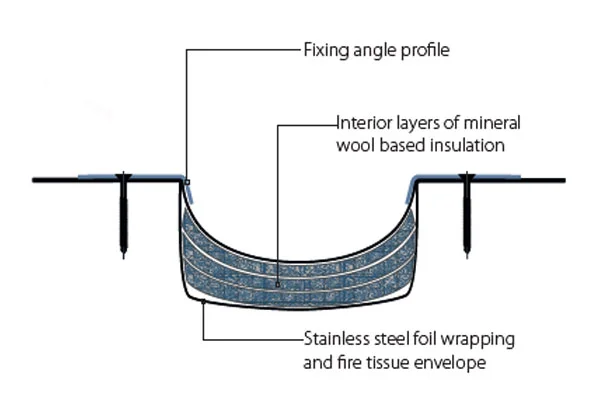
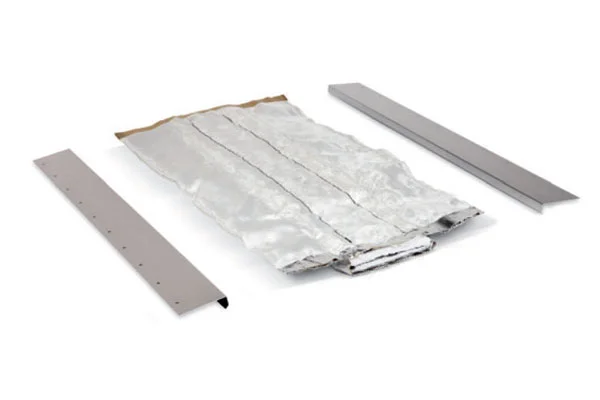
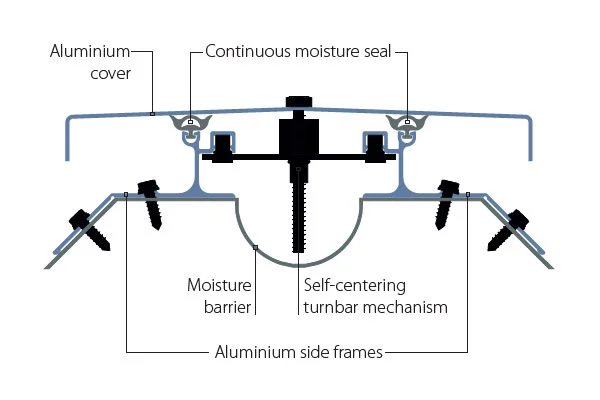
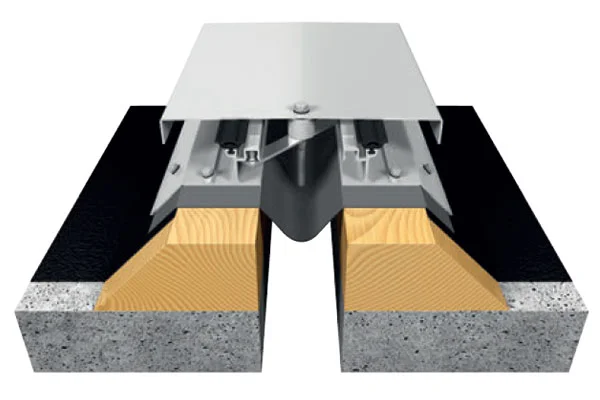
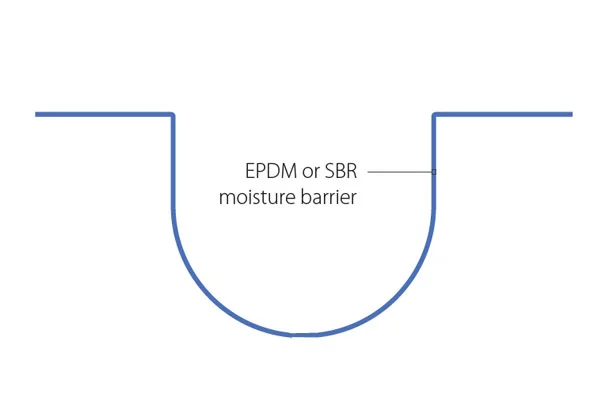
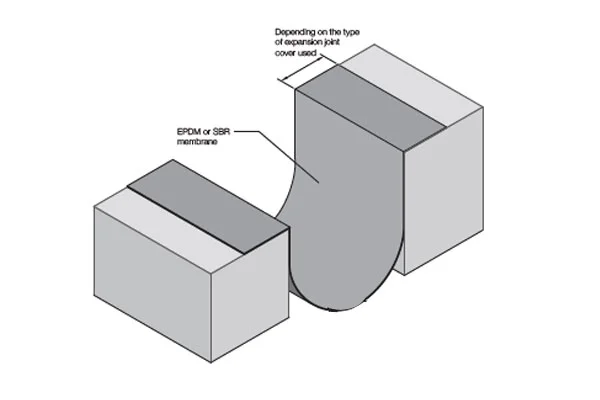
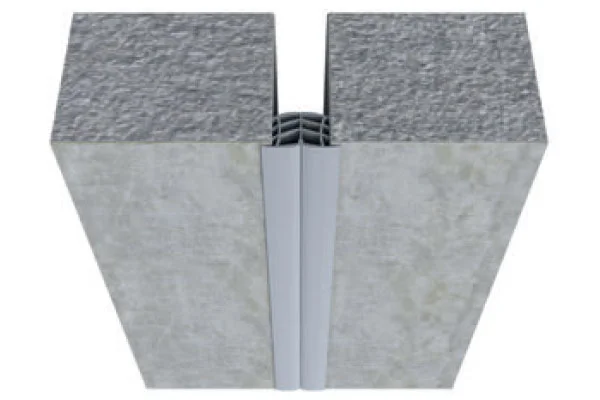
The sheer size of the structure and its configuration created further design challenges to accommodate thermal movement. Structural movement joints split the full height of the building into isolated structures to accommodate it.
“The joints are typically located at the interfaces between wings and the street structure and take the form of slotted connections or double column arrangements,” Mr McCluskey adds.
The steel and precast concrete solution was favoured due to its cost, its ability to meet client and architect’s aspirations, being straightforward to build, and its capacity to accommodate building services and future alterations.
“The steel and precast concrete solution provided a quick form of construction with a high level of quality and good acoustics at an acceptable cost,” says Bam construction manager Malcolm Keillor.
Working around not one but two schools
With an operational school on the site, construction methods also had to be considerate of students’ daily activities.
Deliveries, for example, could not be made for 45 minutes from 8.15am and from 3.15pm when students arrived and left.
“We have weekly meetings with the school business manager to coordinate our work with the school programme,” Mr Keillor explains.
“During enabling works, drilling clashed with exams, so we started as far away from the school as possible. It’s mostly common-sense stuff.”
The site will also be home to a satellite campus for Fife College, which began on site in July. The intension is to create a vibrant learning environment that forges closer links between secondary and further education.
Bam is working towards completing Levenmouth Academy in July 2016, after which the contractor will remain on site for another year to demolish the original school and reinstate rugby pitches in its place.
The new Fife College campus building and Levenmouth Academy will open in August 2016.
Ground improvement demands
Work began on the former coalworks site in February 2014 by stabilising the ground using pressure grouting every 3.5 m.
A compacted ‘earthworks platform’ comprising virgin quarry stone and recycled concrete (designed by URS, now Aecom) was also created to support the school’s ground-floor slab and lightly loaded strip foundations around the building.
Reinforced concrete pad and strip foundations and a 150 mm-thick ground-floor slab were constructed from September 2014 onwards.