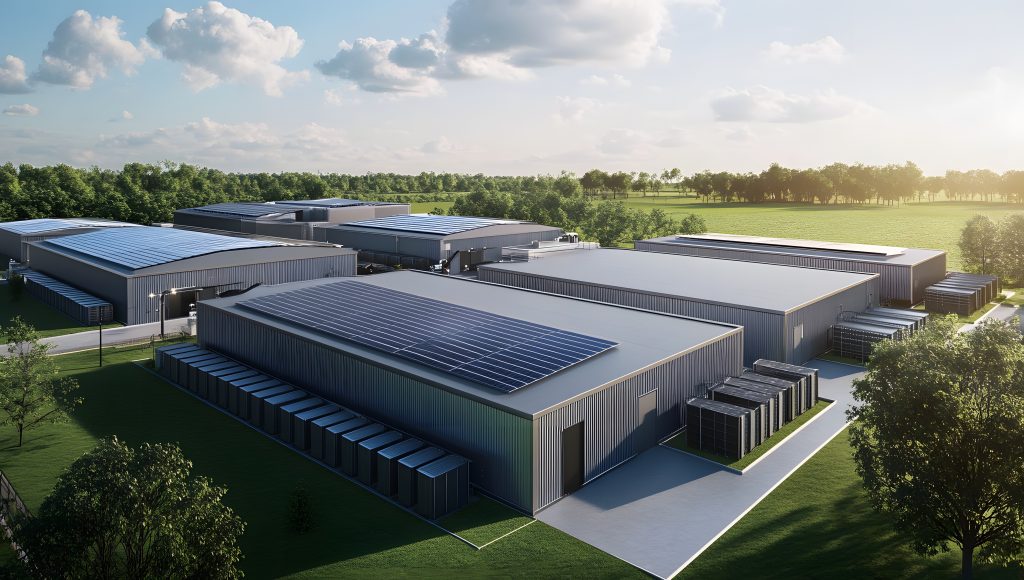
Data center projects require a lot of support: a power supply, a steady workforce and proper materials.
Launching a data center on time amid the ongoing construction boom is increasingly difficult. More than half of all data center projects in 2025 experienced delays of three months or more. The biggest threat to staying on schedule is rarely a single design or field issue—it’s execution risk.
Keeping data center projects on track requires a roadmap that addresses risk in three critical areas: power, people and procurement.
These risks include schedule disruptions, procurement delays and coordination breakdowns that can derail a launch. They stem primarily from power availability and grid capacity constraints, skilled labor shortages, supply-chain disruptions and growing project scale and complexity.
POWER FIRST
Power availability is a top risk driver for nearly every data center project.
Owners and operators are increasingly moving beyond traditional hubs such as Northern Virginia’s “Data Center Alley” in search of abundant energy. Markets including Wyoming and the Permian Basin in Texas are emerging as new data center destinations because of their energy resources.
Even where power is available, site selection and power planning must be treated as early workstreams. Construction performance depends on upstream power feasibility, which can hinge on factors such as acquiring land for transmission lines and related infrastructure. In mature markets, the timeline from land acquisition to transformer delivery can stretch up to six years.
In some emerging markets, owners and developers are building their own power plants to reduce reliance on strained grids. Others are exploring alternative generation sources, including renewables paired with battery storage, to create more predictable and resilient energy strategies.
Public outreach is also critical. Misconceptions about data centers persist in many communities. Residents and local officials need clear information about the efficiency of modern facilities, their sustainability initiatives and their economic impact.
Transparent communication early in the process can accelerate permitting, reduce opposition and prevent costly delays later in the development cycle.
THE LABOR GAP
Skilled labor shortages are intensifying as demand for data centers grows and the technology inside them becomes more complex. The challenge is even greater in remote regions without an established workforce capable of delivering large, multi-gigawatt facilities.
Competition for electricians, fiber technicians, commissioning agents and specialized trades has driven up wages and extended hiring timelines. At the same time, compressed project schedules leave little room for onboarding and training.
Many owners and operators mitigate labor constraints by partnering closely with supply chain and service providers.
Some deploy structured supply-chain services programs to streamline gray space and white space build-outs. Others implement just-in-time inventory strategies to better manage the flow of materials to the site and reduce congestion. Modular construction strategies—including prefabricated electrical rooms and skidded equipment—also help shift labor offsite, where work can be completed in controlled environments with more predictable staffing.
In some cases, partners augment onsite teams by managing product installation and post-installation commissioning. Services such as rack-and-roll solutions—delivering preassembled racks ready to move into place—can accelerate deployment and reduce field labor demands.
Support often continues after construction. Remote monitoring tools track infrastructure health and performance, while embedded personnel can supplement onsite teams facing staffing gaps. These approaches help ensure operational reliability even when labor markets remain tight.
PROCUREMENT PRESSURE
With data center construction forecast to grow significantly in the next three years, ensuring availability of critical components—including fiber cabling, medium-voltage wire and cable, transformers and switchgear—will be one of the industry’s greatest challenges. Lead times for some materials now approach two to three years.
Global manufacturing bottlenecks, geopolitical instability and rising demand from other sectors have compounded procurement risks. A single delayed transformer can halt commissioning and push back revenue generation by months.
Building supply-chain resilience must begin in the design phase. Owners and operators need proactive contingency strategies based on continuous evaluation of component and material requirements. When constraints arise, alternative sourcing or design adjustments should already be in place. Early procurement of long-lead items and strategic bulk purchasing agreements can also help secure critical materials before shortages intensify.
Rural builds, often pursued to secure power access, introduce additional logistics hurdles. Limited warehouse capacity and transportation infrastructure can complicate just-in-time delivery strategies. Leveraging established supplier relationships and distribution networks can help address sourcing, storage and transportation challenges.
Security is another growing concern. High-value materials stored onsite can attract theft. Fencing, controlled access and advanced surveillance—including video analytics and drone detection—can deter losses and enable rapid response to potential threats.
EXECUTIVE WITH DISCPLINE
The challenges associated with delivering data centers on schedule will intensify as demand accelerates. In a market where speed is a competitive advantage, reducing risk is not just about preventing disruptions—it is about building resilience to absorb and navigate them.
That resilience requires disciplined coordination across owners, contractors, utilities and suppliers. Clear communication channels, integrated project controls and real-time visibility into schedule and procurement status are essential. Teams that identify risks early and respond decisively are far more likely to protect critical milestones.
Owners and operators that prioritize power planning, strengthen labor strategies and fortify supply chains will be better positioned to turn over projects on time. Relentless execution across these three fronts—power, people and procurement—is essential to meeting today’s demand and sustaining tomorrow’s growth.
SEE ALSO: DATA CENTERS, INTEREST RATES AND MORE PRIMED TO EXACERBATE LABOR SHORTAGE