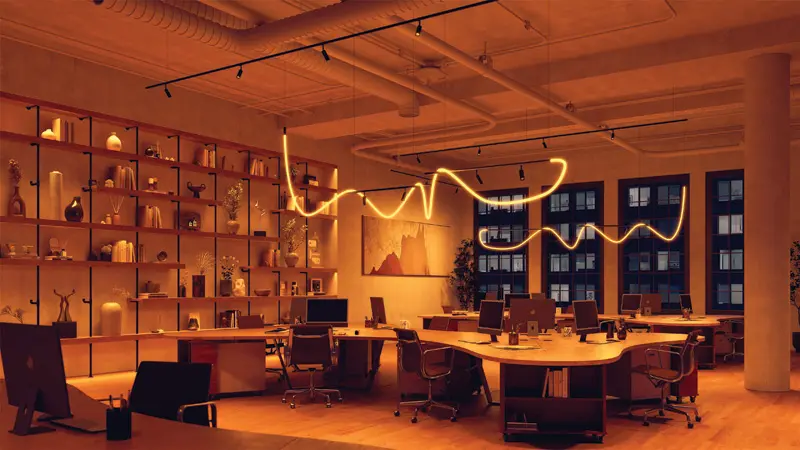

In an era where well-being is as valued as aesthetics, lighting design has transcended its traditional role of mere illumination. Today’s designers are tasked with creating environments that nurture people’s natural biological rhythms. Integrating circadian-friendly lighting into built spaces is not just a trend, it is a holistic approach to health. Recent advances in lighting technologies have enabled luminaires to more closely match the natural light of the sun, enabling health and wellness benefits through LED lighting previously unavailable. By harnessing dynamic lighting that adjusts color temperature throughout the day and adopting advanced technologies such as red, green, blue, tunable white (RGBTW) lighting, lighting professionals are at the forefront of a wellness revolution.
The science of light and life
Understanding circadian rhythms
Circadian rhythms are the body’s internal clock, a 24-hour cycle that regulates sleep, hormone release, eating habits, and even mood. This system is primarily influenced by light, particularly the natural progression of daylight. The white light of the midday sun (5,500–6,500 K) encourages activity and alertness, while the warm glow of the sunset (1,500–3,000 K) promotes relaxation and prepares the body for sleep.
Research has shown that disruptions to these rhythms, whether through irregular sleep patterns or exposure to artificial light at inappropriate times, can lead to chronic health issues such as sleep disorders, metabolic problems, and even mood disturbances. For lighting designers, this means the way environments are illuminated has profound implications for overall well-being.
The role of dynamic lighting in health
Dynamic lighting systems offer a transformative approach by mimicking the natural progression of sunlight. Instead of static, unchanging light levels, these systems adjust brightness and color temperature in real-time, aligning indoor lighting with circadian needs. This synchronization with nature not only supports better sleep and improved mood but can also boost productivity1 and cognitive function during the day. The ability to tailor the spectral output of lighting systems to specific times of day is a game-changer in environments such as offices, schools, and healthcare facilities, where the quality of light is directly linked to performance and health. Various studies have been conducted to compare the effects of different lighting conditions on health, productivity, well-being and alertness level.2 Based on the studies conducted in recent decades, good illumination conditions modulate human needs regarding working, economic, environmental, and design-architectural requirements. Human performance, apparent space, safety, health, and well-being are improved by taking advantage of good lighting conditions.3
Dynamic lighting: Designing with nature in mind
Tailoring the light spectrum
The key to dynamic lighting is its spectral flexibility. Traditional lighting solutions often rely on fixed-spectrum bulbs that do not change with the time of day. In contrast, circadian lighting systems are designed to modulate their spectral output, providing a range of color temperatures that emulate natural sunlight.
For designers, this approach requires a thorough understanding of spectral power distributions (SPDs) and the effects of different wavelengths on human physiology. By carefully selecting and programming light sources, designers can create environments that are not only visually appealing but also biologically supportive.
Integrating dynamic systems in design
Successful implementation of circadian lighting requires an integrated design approach:
- Control systems—Advanced control systems such as DMX or DALI allow for granular adjustments in light intensity and color temperature throughout the day. This integration can be automated based on time or adjusted manually to suit the specific needs of a space.
- Sensor integration—Incorporating sensors that monitor ambient light, occupancy, and even biometric feedback can help fine-tune the lighting environment in real time, ensuring the system always aligns with the occupants’ needs.
- Software and scheduling—Customizable scheduling software enables designers to program lighting scenes that change dynamically, providing the right spectrum of light at the right time, all while ensuring energy efficiency.
A closer look at lighting technologies
Traditionally, many LED systems have used RGBW configurations, comprising red, green, blue, and a dedicated white LED, to produce a wide range of colors and add a layer of neutrality with white light. While RGBW systems have served the industry well, the evolution toward RGBTW lighting represents a significant advancement in both performance and flexibility.
Why the ‘T’ matters
The “T” in RGBTW stands for “Tunable white.” Unlike a static white LED that offers a fixed color temperature, tunable white provides both cool and warm white light. This additional degree of control is critical for circadian applications where the quality of white light can greatly impact physiological responses.
Advantages of RGBTW lighting
Enhanced color rendering
With tunable white channels, RGBTW systems can produce a broader and more accurate color gamut. This means the light not only adapts to the time of day but also renders colors more naturally, which is particularly important in spaces where color selection is critical, such as galleries, retail, or healthcare environments.
Optimized circadian performance
Michael Siminovitch, PhD, director of the California Lighting Technology Center (CLTC) and associate director of the Energy Efficiency Center at UC Davis, and an expert in lighting technology and design, leads research as to the science of circadian lighting and how it impacts our biological health, including the effects of different light colors and intensities on melatonin and overall well-being. As noted by the Journal of Circadian Rhythms, the ability to shift the white light from a cool daylight hue to a warm evening glow makes RGBTW systems inherently more aligned with circadian principles. In the morning, cooler white light enhances alertness and productivity, while in the evening, warmer tones reduce blue light exposure, supporting the natural production of melatonin and preparing the body for rest.
Increased design flexibility
For lighting designers, RGBTW systems provide the versatility to create a wide range of lighting scenes without sacrificing either aesthetics or function. Whether the goal is to highlight architectural features, set a specific mood, or optimize health and performance, the tunable white channels offer unparalleled control.
Energy efficiency and integration
Dynamic, tunable systems can be more energy-efficient because they adjust their output based on actual needs rather than operating at a fixed intensity all day. This not only reduces energy consumption but also minimizes the potential for over-illumination, which can be a source of glare and discomfort.
This table illustrates that while tunable white and RGBW systems provide a solid foundation for many applications, RGBTW lighting represents the next step in creating environments that are not only visually engaging but also supportive of human health.
Practical applications and design considerations
Workplaces
Offices benefit from dynamic lighting that adjusts to the natural workday. In the morning, cooler white light can boost alertness, while in the late afternoon, a shift towards warmer hues can help employees unwind, leading to reduced stress and improved overall productivity.
Healthcare facilities
Hospitals and clinics are increasingly adopting circadian lighting to enhance patient recovery and staff performance. For patients, exposure to appropriate light spectra can regulate natural sleep cycles, reduce delirium, and even improve mood.
For healthcare workers, the right lighting environment can effectively mitigate the effects of shift work, which is known to disrupt circadian rhythms.
Hospitality and retail
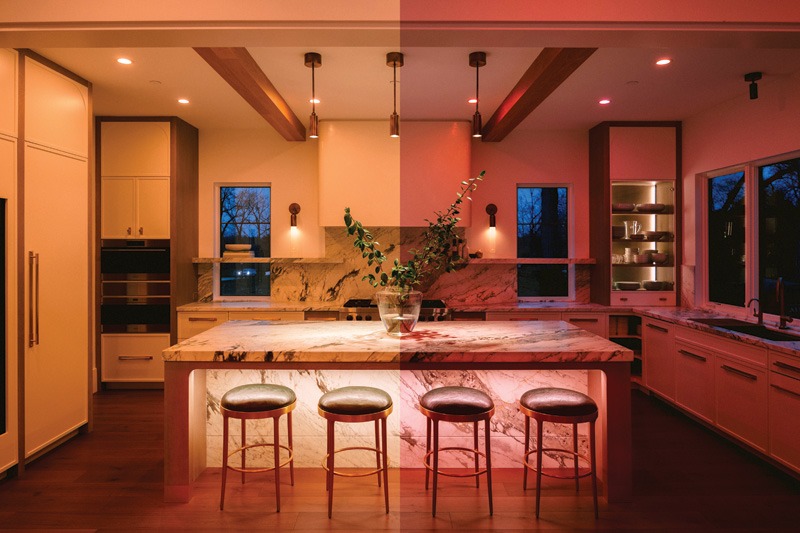
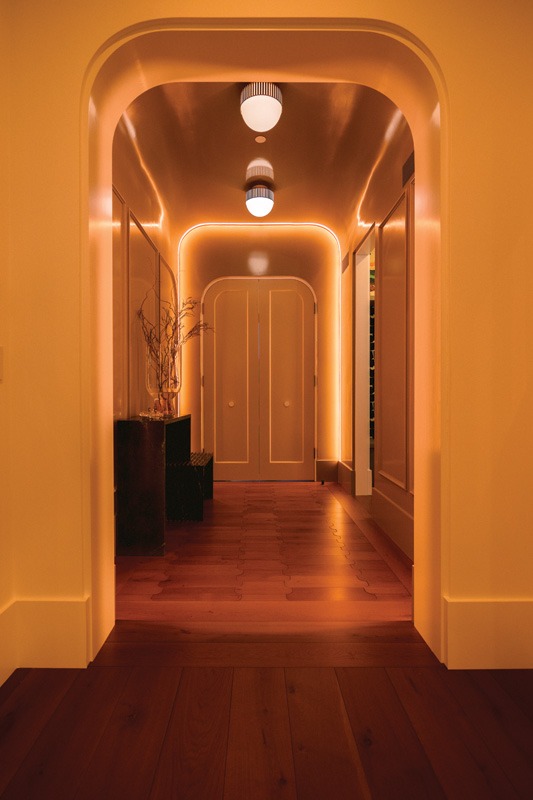
In spaces like hotels and retail stores, the ability to create dynamic lighting environments adds an extra layer of ambiance. By using RGBTW systems, designers can craft experiences that not only captivate the senses but also subtly influence the mood and behavior of guests and customers.
Educational institutions
Classrooms and study areas that mimic natural daylight conditions can enhance concentration and learning outcomes. By adjusting the lighting to reflect the natural progression of the day, educators can help students maintain optimal alertness and reduce eye strain.
Technical and aesthetic integration
When incorporating dynamic circadian lighting into designs, consider the following best practices:
- Spectral tuning—Ensure the lighting system can accurately reproduce the desired spectrum at each phase of the day. While manufacturers will use expensive spectrometers to calibrate the lights, inexpensive mobile apps such as LightSpectrum Pro are available for lighting designers to measure and dial in the settings for designs.
- User control—While automation is a key benefit, providing occupants with the ability to manually override or adjust lighting scenes can enhance user satisfaction and accommodate individual preferences.
- Aesthetic consistency—Dynamic lighting should enhance, not detract from, the overall design concept. Work closely with architects and interior designers to ensure the transition between different lighting scenes is seamless and aesthetically coherent.
- Integration with building systems—Modern buildings are often equipped with smart systems that manage HVAC, security, and energy usage. Integrating circadian lighting controls with these systems can lead to a more holistic building management strategy, optimizing energy usage and improving occupant comfort.
Looking to the future: Trends in circadian lighting
As the demand for healthier indoor environments grows, so does the technology behind circadian lighting. Future trends include:
- Artificial intelligence and machine learning—Advanced algorithms can predict and adjust lighting based on user behavior, environmental sensors, and even weather patterns, ensuring the lighting environment is always optimal.
- Personalized lighting solutions—Imagine a workspace where each employee’s lighting environment is tailored to their specific circadian rhythm. Emerging technologies and medical studies are exploring the feasibility of personalized lighting, which could revolutionize how we think about indoor environments.
- Expanded spectrum capabilities—Ongoing research in LED technology may soon allow for even more nuanced control over spectral output, further refining the relationship between light and human biology.
- Sustainability—As energy efficiency remains a critical consideration, dynamic circadian lighting systems are likely to become even more energy-efficient, integrating renewable energy sources and smart grid technology to minimize environmental impact.
Dynamic circadian lighting systems reduce total energy consumption by intelligently matching light output to human needs, time of day, and available daylight. By combining high-efficiency LED luminaires, advanced occupancy, daylight harvesting and dimming controls, and smart grid responsiveness, facilities typically see significantly lower lighting energy costs compared to legacy systems. As utilities increasingly implement time-of-use pricing, smart lighting that can automatically dim or shift loads during peak demand further reduces energy spend without compromising visual comfort. For lighting designers, the fusion of science and art in circadian lighting represents a profound opportunity to enhance human well-being. By dynamically adjusting lighting to mirror natural daylight and leveraging the superior capabilities of RGBTW systems, designers can create environments that not only dazzle the eye but also support health and wellness.
As we move toward a future where the built environment is as attuned to our biology as it is to our aesthetics, embracing these technologies is not just an option, it is an imperative.
The next time someone steps into a space bathed in light that seems to change and breathe with the rhythm of the day, they should consider the innovation behind it. With RGBTW lighting and circadian principles at the helm, the industry is lighting the way to a healthier, more vibrant future.
Notes
1 See.
2 Refer.
3 Read.
| Feature | Tunable white | RGBW | RGBTW |
| White light control | Good range of cool to warm white light |
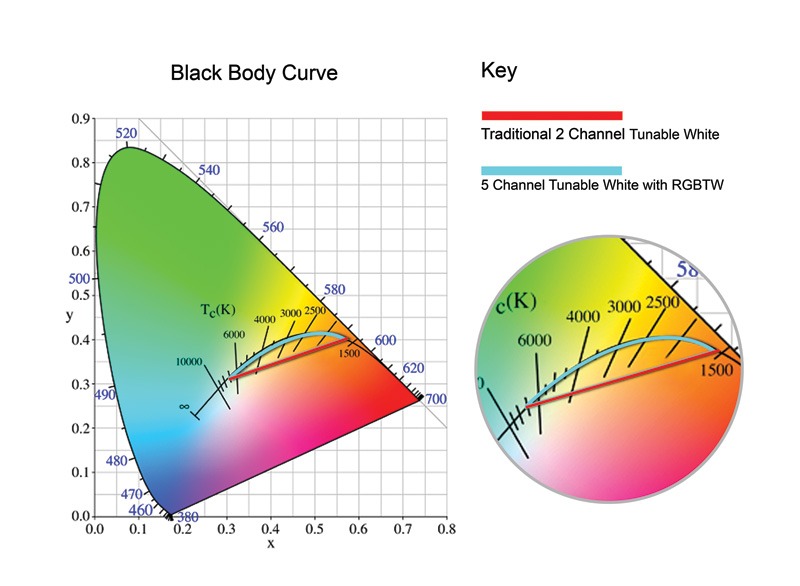
Fixed white LED with a set color temperature | Tunable white LEDs, offering a range from cool to warm together with RGB LEDs, allow for best recreation of sunlight conforming to the Black Body Curve (page 39) |
| Color rendering | Limited to cool and warm white light temperatures | Good for basic applications | Superior color rendering with a broader spectrum |
| Circadian alignment | Good for circadian needs | Limited due to static white channel | Fully customizable for circadian needs |
| Design flexibility | Good for varied white light scenes | Limited to pre-defined white light output | Greater flexibility in creating dynamic scenes |
| Energy efficiency | Most efficient | Standard energy performance | Enhanced efficiency through dynamic adjustments |
Author

Gregory Kay is president and founder of PureEdge Lighting. He has worked in the lighting industry for more than 30 years as an accredited lighting designer, engineer, and entrepreneur. He has received countless awards for his innovative design work. He may be reached via email at greg@pureedgelighting.com. For more information, visit pureedgelighting.com.
Key Takeaways
Circadian lighting is redefining lighting design by aligning indoor environments with human biology. Advances such as dynamic controls and red, green, blue, tunable white (RGBTW) technology allow lighting to mimic the natural progression of daylight, improving sleep, mood, and performance. By integrating tunable spectra, sensors, and controls, designers can create spaces that actively support health, wellness, and energy efficiency.