
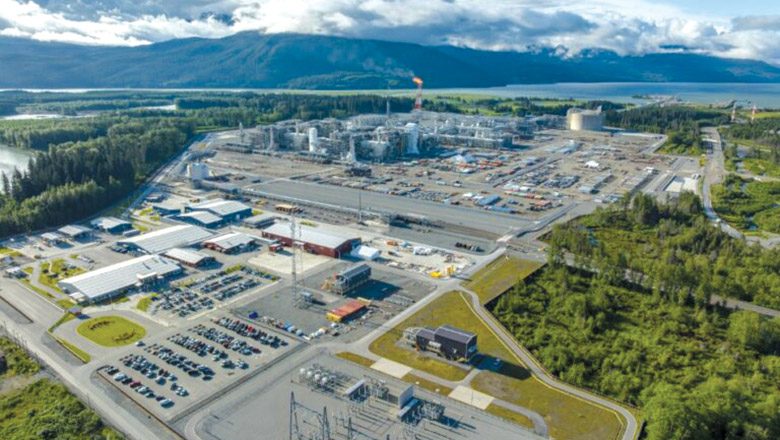


Selection last month of Fluor Corp. and JGC Corp. as front-end engineering and design contractor for Phase 2 of the massive LNG Canada liquefied natural gas export terminal in British Columbia was a hopeful sign to that sector that its newly opened 14-million-ton-per-year predecessor would have a final investment decision to build a companion.
The joint venture, EPC contractor for the first phase, now is developing a plan to add two new trains to possibly double its processing, storage and shipping capacity as some markets show new potential. The plant is said to be the first of its kind in Canada, with greenhouse gas intensity described as 35% lower than current best performing LNG plants globally, and about 60% below the worldwide average.
Still unclear is timing for the next phase, which project owners, led by Shell, have not confirmed, but media say may not open until the early 2030s. Also to be determined are expansion details for TC Energy’s Coastal GasLink pipeline that would supply the larger export terminal, as well as plans to electrify production with more potential hydropower. “We look forward to contributing to the next chapter in construction of this world-class facility,” said Mike Alexander, president of Fluor’s energy group.
Six smaller LNG projects also are developing, representing $109 billion in capital investment if all are built, said Natural Resources Canada, including the $10-billion Ksi Lisims project that could reach an investment decision this year. But there are skeptics as to how fast Canada’s late-starting LNG boom can progress. Ed Crooks, Americas vice chair of energy consultant Wood Mackenzie, points to strong national opposition.
But shifts in global gas supply and in Canadian politics seem to favor growth of the first North American LNG export region with direct access to the Pacific Ocean, offering low-cost natural gas and shorter routes to Asia compared to U.S. Gulf Coast facilities.
Europeans have also been expressing interest in Canada’s gas supply. Energy and Natural Resources Minister Tim Hodgson told Reuters Aug. 27 of talks with German officials “who believe there will be more LNG required and for longer as a transition fuel,” citing AI power demand and need to shift more quickly from Russia- and China-sourced energy.
The election this year of centrist Prime Minister Mark Carney and new global tariff tensions with U.S. President Donald Trump also could spur energy projects forward.
Carney said the government may release details this month of a plan to fast-track approval of new pipeline and port infrastructure to support Atlantic LNG exports. One port location eyed is Churchill, Manitoba, on the Hudson Bay in the province’s far north that Hodgson described as a “five- to seven-year” development.
90
Days that the U.S. Energy Dept. ordered regional grid operator PJM Interconnection, on Aug. 26, to keep operating in Pennsylvania the 760-MW natural gas-and-oil-fired Eddystone power plant, citing a 2025 Donald Trump “energy emergency” order. Two Eddystone units set to retire on May 31 are staying online until Nov. 26, although DOE said operation of the plant, owned by Constellation Energy Corp., “will continue in the near term and also likely … in subsequent years.” Advocacy groups and regulators in several PJM states are appealing the emergency order.
Source: S&P Global, August 2025
Texas, Louisiana LNG Projects Set Move Toward FID
Two LNG export projects gained U.S. approvals Aug. 29, moving both closer to capacity expansion final investment decisions this year, said their developers, Next Decade and Kimmeridge. Despite opponent objections, the U.S. Federal Energy Regulatory Commission upheld Texas-based Rio Grande LNG’s prior okay for two trains to boost export capacity to 27 tons per year, one year after an appeals court ordered more review of its prior FERC approval.
The U.S. Energy Dept. also granted final OK for the 9.5-million-tpy Commonwealth LNG in Louisiana to export to countries lacking free trade pacts with the U.S. Bechtel and Technip are EPC contractors for Rio Grande and Commonwealth, respectively.






