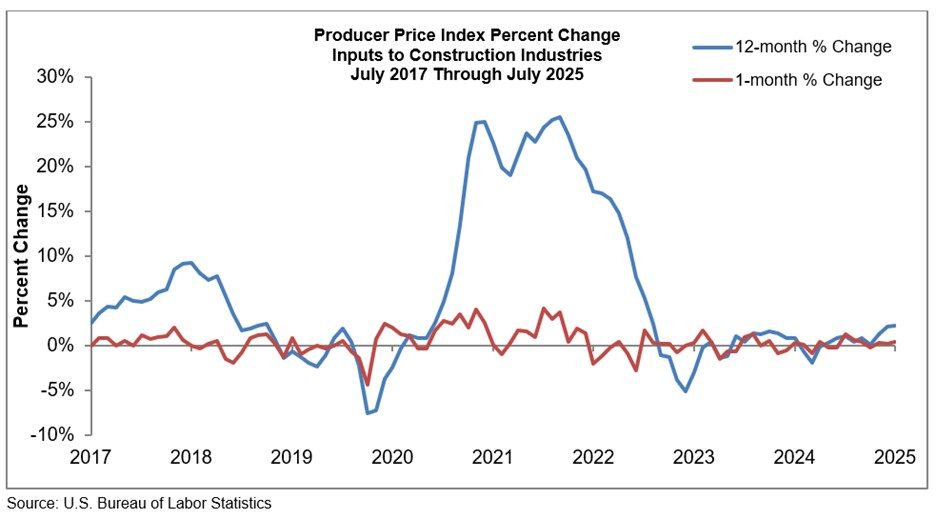

Monthly construction input prices rose 0.4% in July, while yearly prices increased 2.2%, according to the Producer Price Index released by the U.S. Bureau of Labor Statistics. In the nonresidential sector, prices are 0.4% higher than the previous month and 2.6% higher than in July 2024. Materials for multifamily work followed a similar trajectory, up 0.3% for the month and 2.5% for the year.
“Steep tariff increases earlier this year on aluminum and steel, along with a more recent tariff on raw copper, drove the producer price index for construction inputs higher for the third-straight month,” said Ken Simonson, chief economist at Associated General Contractors of America, in a press release. “Even though contractors do not generally import materials directly, it is clear that domestic producers are raising prices in line with the protection tariffs are providing them.”
Anirban Basu, chief economist at Associated Builders and Contractors, said in a statement that prices were rising “too quickly,” adding that “nonresidential input prices have risen at a 5.8% annualized rate since January, and trade policy will likely continue to put upward pressure on materials prices over the next several months.”
Hot rolled steel experienced the largest monthly increase, at a rate of 5.3%, while prices rose 2.4% since July 2024. Copper wire and cable prices also surged in July, 4.9% higher than in June. Since the same time last year, prices have increased 12.2%.
Basu noted that rising costs in other areas are also a cause for concern. “The rapid increase in broader producer prices in July is just as worrying as rising construction input costs,” he said. “With prices for final demand goods and services rising at the fastest pace since March 2022, the Federal Reserve will have to consider the prospect of resurgent inflation when deciding whether or not to cut rates at its September meeting.”
He continued: “The construction industry is in desperate need of lower borrowing costs, and higher rates for longer would continue to weigh on construction spending.”