

For most of the modern energy code era, Division 08 has lived with a quiet contradiction that is only complicated by an industry slow to embrace changes. Energy codes now ask buildings to perform at levels that conventional double-pane insulated glass simply cannot reach. Conventional triple-pane glass units can hit the targets, but they drag in penalties that include weight, thickness, and costs that ripple through framing, structure, and detailing. What looks like a simple “better IGU” decision on paper quickly becomes a cascade of fiscal changes in the real world.
This is not a transient building market blip. It is a structural issue in how North American fenestration has evolved. And it is exactly where advanced thin-glass insulated glass units (IGUs) enter the story today.
How we got stuck with doubles
The imbalance between walls and windows has been growing for decades. After World War II, wall assembly values crept up from roughly R–7 to R–20 and beyond. Windows stayed mostly in the R–1 to R–3 energy efficiency range. Mechanical systems filled the gap. When energy was cheap and ductwork oversized, nobody felt an urgent need to push fenestration much further.
Two things kept that status quo in place in the U.S. long after Europe and Canada moved on. First, energy codes. Whole-building energy requirements matured later in North America than overseas, and many jurisdictions allowed relatively weak fenestration performance so long as the rest of the envelope carried most of the load.
The second was industry geometry. Manufacturers did what any rational industry does. They optimized around what the market asked for. That meant 25.4-mm (1-in.) glazing pockets, relatively light sashes, slim frames, balances, and hinges sized for the weight of a typical double. Fabrication methods were tuned to repeat that geometry at scale. Over time, that 25.4-mm (1-in.) double became the gravitational center of the North American window world.
Europe and parts of Canada followed a different path. Higher energy prices and aggressive envelope standards pushed the market toward triple glazing much earlier. Frames became deeper and stiffer. Tilt and turn hardware designed to carry heavy triple-pane windows became the norm. That infrastructure made it easier to live with 40–50 percent heavier IGUs.
In the U.S., that shift never fully happened. It now has one of the largest installed bases of framing designed specifically for 25.4-mm (1-in.) double-pane windows anywhere in the world. Many storefront, window wall, and curtain wall systems in the U.S. are engineered with the expectation of a roughly 31.7 kg/m2 (6.5 lb/sf) double unit. A conventional triple-pane window, often in the 43.9 to 46.4 kg/m2 (9 to 9.5 lb/sf) range, does not simply “drop in” when it comes to installation. Mullions, anchors, hardware, and sometimes floor edge details are involved.
That is why conventional triples often feel like a fringe solution in the U.S., even in a world of tightening codes. The barrier is not that people do not like better performance. The barrier is geometry, weight, and cost. Advanced thin-glass IGUs are promising, however, because they change performance without asking the rest of the geometry to change with them.
How advanced thin-glass IGUs actually work
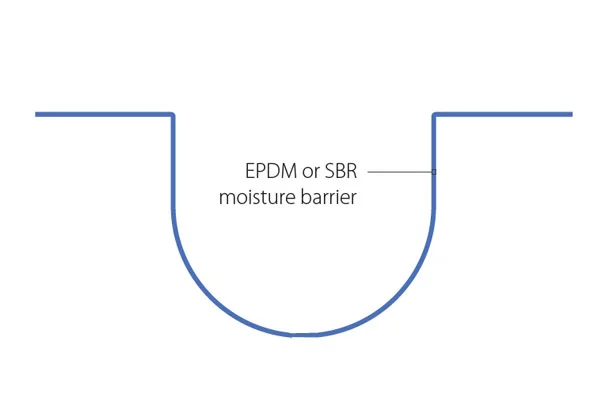
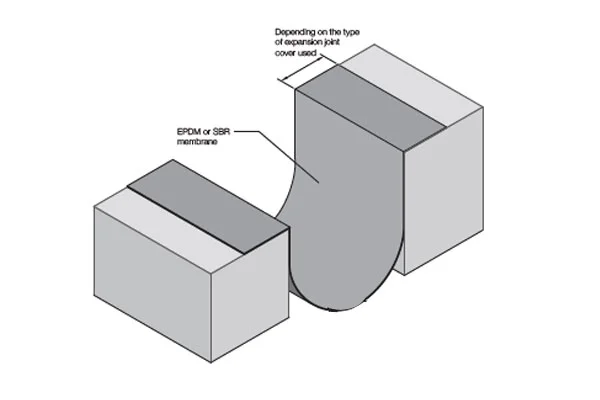
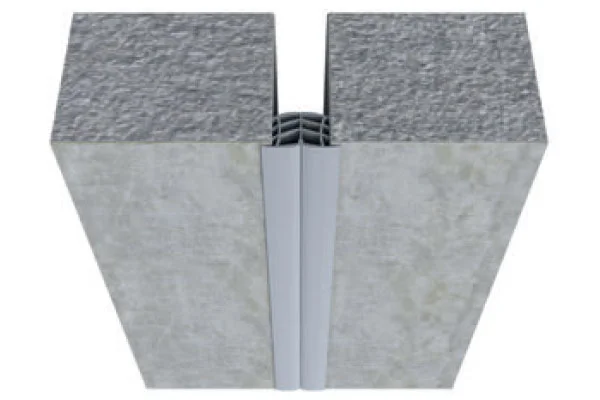
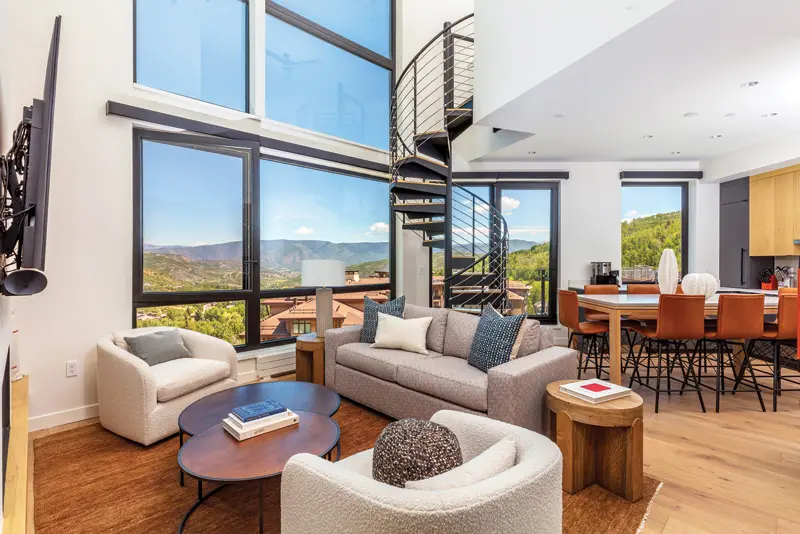
At first glance, a thin-glass IGU looks like any other high-performance window or sliding glass door unit. As illustrated in Figures 1 and 2, there is an outer lite facing the weather and an inner lite facing the building’s interior. Both of those are made of conventional soda-lime glass. They offer low-E coatings that include tints, patterns, lamination, or bird-friendly treatments. The difference is in the middle of the two pieces of soda-lime glass.
Instead of a full-thickness middle lite, advanced thin-glass IGUs incorporate a center lite of Corning’s fusion-drawn boro-aluminosilicate, or soda lime float glass, typically from 0.5 to 1.1 mm (0.02 to 0.043 in.), respectively, in thickness. For context, a standard 6 mm (0.236 in.) lite is about six to 12 times thicker than that. These center lites are so thin that they add very little weight, but they still do the important job of breaking up the gas cavity into two narrow gaps.
“Splitting a single cavity into two smaller ones suppresses buoyancy-driven convection. In a single large gap, warm gas rises and cool gas falls, setting up convective loops that move heat. Two smaller gaps are much less friendly to that circulation. Paired with appropriate argon or krypton gas fills, the result is a center-of-glass U-factor comparable to or better than a conventional triple, delivered in the profile of what looks and behaves like a double.” — Andrew Zech, Alpen CEO
From a physics standpoint, the composition of the thin lite matters. Boro-aluminosilicate glass has a coefficient of thermal expansion that is roughly one-third of soda-lime float glass. In practical terms, it grows and shrinks much less with temperature swings. Corning Incorporated’s fusion draw manufacturing process also produces glass without contact with rollers or molten tin, which means its pristine surfaces contain far fewer micro-defects. Fewer surface flaws plus lower thermal strain translates into a higher tolerance for the kinds of stresses that an IGU will see over its life.
Just as important is where that thin lite lives in the unit. It is not exposed. It is sealed between two thicker soda-lime lites, surrounded by gas and kept away from the metal of the frame. All safety and impact requirements in hazardous locations are met by the outer lites through conventional tempering or lamination, under the same ANSI Z97.1 and CPSC 16 CFR 1201 regimes that specifiers rely on now.
The geometry does one more piece of quiet work: the thin center lite is physically smaller than the outer lites. This is known as indexing. The center lite is cut several millimeters short of the outer glass on all sides, so its edge sits fully inside the footprint of the spacer and sealant system. The thin glass never touches the frame, the setting blocks, or the glazing pocket. Structural and thermal movements are taken by the thicker soda-lime lites and the spacer edge system, not by the exposed edge of the thin center lite.
Edge construction and spacers are where a lot of thin-glass durability work is focused. Thermoplastic warm-edge spacers are natural partners. They form a continuous, fully bonded edge with low thermal conductivity and very low moisture vapor transmission. Because they are slightly elastic, they can distribute loads around the perimeter and support the indexed center lite without introducing sharp stress concentrations at corners. Modern thermoplastic spacer systems have been in service for decades in conventional triples and quads and are designed for long-term gas retention and seal durability.
Put those elements together and the picture looks less exotic than it might at first glance. From the outside, one is still looking at what appears to be a conventional double-pane unit. From the inside, it is still glazing, and the sealing appears to be a double-pane unit. However, in the cavity, there exists a very thin, very stable piece of glass doing a disproportionate amount of thermal performance work.

What changes in performance
In code terms, what matters is not only center-of-glass performance, but whole-unit U-factor. Frames and edges matter.
A typical 6 mm (0.236 in.) over 6 mm (0.236 in.) double pane IGU, with a good warm-edge spacer and argon fill, might deliver whole-unit U-factors in the 1.53–1.70 W/m²·K (0.27–0.30 BTU/hr·ft²·F) range in a commercial frame. That can still pass in some jurisdictions, but it is bumping against the limits of ASHRAE 90.1-2022 and IECC 2024 in many climate zones. For stretch codes and programs influenced by Passive House criteria, it is often not enough.
Thin-glass triples, using a 0.5 to 1.1 mm (0.02 to 0.043 in.) center lite in the same general framing geometry, commonly land whole-unit U-factors around 1.14–1.31 W/m²·K (0.20–0.23 BTU/hr·ft²·F) in similar systems. Thin-glass quads, with two thin center lites, can push that further into the approximate 0.97–1.02 W/m²·K (0.17–0.18 BTU/hr·ft²·F) range. Center-of-glass values, depending on coatings and gas fills, can approach 0.57 W/m²·K (0.10 BTU/hr·ft²·F) or better.
The crucial point is that these U-factors are achieved without moving to much thicker IGUs or significantly heavier glass packages. Where a conventional triple might add 40–50 percent to the weight of a double, a thin triple often adds only three to six percent. The IGU still fits within the 25.4 mm (1 in.) pocket that many systems were originally designed to accept.
Code compliance is evaluated through the same National Fenestration Rating Council (NFRC) frameworks that specifiers already use. Whole units are modeled and tested under NFRC 100 for U-factor and NFRC 200 for solar heat gain and visible transmittance. Windows and skylights receive NFRC 700 labeling. Site-built curtain wall and storefront systems route through the NFRC Component Modeling Approach. Thin-glass IGUs fabricated under Insulating Glass Certification Council (IGCC) and Insulating Glass Manufacturers Alliance (IGMA), and now the Fenestration and Glazing Industry Alliance (FGIA) certification programs—and tested to ASTM E2190 fit neatly into that existing machinery.
From the building’s perspective, the impact goes beyond an abstract U-factor number. In a prototype 9,290 m² (100,000 sf) office with a 40 percent window-to-wall ratio, a shift from U-1.70 W/m²K (U-0.30 BTU/hr·ft²·F) to U-1.25 W/m²K (U-0.22 BTU/hr·ft²·F) glazing can reduce conductive heat loss through the window area on the order of 20-plus percent, before accounting for secondary effects. Higher window-to-wall ratios allows for more views and daylighting.
Studies from the U.S. General Services Administration (GSA) and the National Renewable Energy Lab (NREL) have shown that upgrading from high-performance doubles to lightweight low-U advanced windows can cut HVAC energy use in the range of roughly 20–30 percent in cold climate modeling and allow downsizing of heating equipment. Paybacks in roughly one to six years, depending on climate and rates. In addition, compared to a traditional triple glaze, thin glass units have a higher visual light transmittance and lower embodied carbon.
Those are the kinds of numbers that make their way into owner conversations and energy narratives. The practical question for Division 08 is how to capture that performance in specifications without prescribing one proprietary path.
Writing advanced thin glass into Division 08
Specifiers are not being asked to become thin-glass process engineers. What they are really doing is tightening performance requirements in a way that leans on thin-glass technology to carry the load, while preserving competition among qualified manufacturers.
A useful way to think about this is in three layers.
First, define performance outcomes in terms that a code official and an energy modeler will recognize. That means:
- Whole-unit U-factor targets that align with the project’s code path and performance ambitions, not just minimal prescriptive thresholds. In many stretch-code and Passive House-influenced contexts, 1.42 W/m²·K (U-0.25 BTU/hr·ft²·F) is a reasonable floor, with 1.14 W/m²·K (U-0.20 BTU/hr·ft²·F) or better as a target.
- Solar heat gain coefficients (SHGC) tailored by orientation and internal load. The same thin-glass engine can be configured for higher or lower SHGC, so this is still a design choice.
- Visible transmittance that supports the daylighting strategy, with clear expectations when dark tints or heavy frits are introduced.
Second, express the physical constraints of the framing systems in use. Many commercial systems are designed for nominal one-inch units and unit weights around 31.7 to 3 kg/m2 (6.5 to 7 lb/sf). If the specification explicitly limits IGU thickness and unit weight to those ranges unless otherwise engineered and documented, it leaves conventional doubles and thin triples on the table and naturally screens out many full-thickness triples and quads that would demand heavier frame sections.
Third, reference the standards and certification regimes that give everyone comfort:
- NFRC 100 and 200 for thermal and solar performance
- NFRC 700 labeling for manufactured units and NFRC Component Modeling for site-built systems
- ASTM E2190 for IGU durability
- ASTM E1300 for load resistance
- NFRC 706 for gas fill, including a minimum ninety percent fill level for argon or krypton
- ASHRAE 55 for thermal comfort
Studies from the U.S. General Services Administration (GSA) and the National Renewable Energy Lab (NREL) have shown that upgrading from high-performance doubles to lightweight low-U advanced windows can cut HVAC energy use in the range of roughly 20 to 30 percent in cold climate modeling and allow downsizing of heating equipment.
High U-factor glazing does more than waste energy. It creates discomfort that mechanical systems are forced to compensate for. ASHRAE Standard 55 defines thermal comfort in part through radiant asymmetry: the difference in mean radiant temperature between a warm ceiling and a cold window surface. When interior glass temperatures drop significantly below room air temperature in winter, occupants near the perimeter feel cold regardless of what the thermostat reads. The traditional response is perimeter heating with fin-tube radiation, sill convectors, or supply air washed up the glass. These are systems that add first cost, operating cost, and spatial constraints to every floor plate they serve.
Advanced thin-glass IGUs, especially in high-performance frame systems, raise interior glass surface temperatures enough to reduce or eliminate that radiant asymmetry. When the glass is no longer the coldest surface in the room, the perimeter heating load disappears. MEP engineers can simplify or eliminate perimeter systems entirely, recapturing floor area and reducing mechanical infrastructure. That value proposition exists entirely outside the energy model. Owners and tenants feel it on day one.
Within that framework, the glass makeup is largely performance-based. On the surface, “performance-based” specifications appear ideal, but contractors find them difficult and often ask the architect or engineer what products they are based on. Outer lites can be specified as clear or tinted glass in thicknesses appropriate to structural and aesthetic needs, with low-E coating locations determined by the manufacturer’s NFRC-certified files. Center lites can be called out generically as thin borosilicate-aluminosilicate glass in the approximate 0.5 or 1.1 mm (0.020 or 0.043 in.) soda lime glass; indexed smaller than the outer lites and fully enclosed within the IGU perimeter seal.
What that avoids is the need to prescribe the exact thickness of every component lite and the exact gas species in every cavity. That flexibility lets the IGU fabricator choose from their certified families to meet performance and geometry requirements, rather than locking the spec to a single proprietary make-up.
Durability, warranty, and size limits
Anytime a new technology is proposed, the same questions follow. How long will it last, what is the warranty, and where does it break?
Regarding durability, thin-glass IGUs rely on the same core classes of sealant chemistries and spacer designs as high-end conventional triples and quads. Thermoplastic warm-edge spacers used with thin center lites are not experimental. They have a service history going back to the mid-1990s and are designed for very low moisture vapor transmission and high gas retention. The addition of a thin center lite does not fundamentally change the diffusion paths for gas or moisture, which is why the same ASTM E2190 protocols apply.
Since the certification regimes and sealant systems are common, warranty terms typically match those offered for other premium IGUs in the same product family, often in the 10- to 20-year range for seal failure under normal service conditions.
Size limits are real, but they are not unusually restrictive. Many thin-glass programs currently support IGU sizes on the order of 4.65 m² (50 sf) as standard offerings, with some manufacturers providing larger units up to roughly 5.57 m² (60 sf), subject to project-specific engineering and handling plans. Those ranges are comparable to the practical limits of many conventional triple-pane configurations when structural loads, deflection limits, and glass handling are fully accounted for.
As with any glass product, very large “super jumbo” formats, extreme wind pressures, or special blast, and impact requirements may push the design into more specialized lamination and structural regimes. Thin glass can be part of those solutions, too, but should not be assumed as a universal substitute. A performance-based specification, backed by project-specific structural analysis, is the right place to draw those lines.
What changes for contractors
From the contractor’s perspective, the questions are simpler.
Does this look different? Is it heavier? Do I have to learn a new way to install it?
Thin-glass IGUs today are engineered so that the answer to all three is essentially “no.”
Once installed, they are visually indistinguishable from other high-performance IGUs with comparable coatings. The outer and inner lites are the same soda-lime products that glaziers handle every day. The slight weight increase over a conventional double is small enough that existing glass handling equipment, setting blocks, and anchorage details generally remain valid. That is a very different field experience than wrestling a significantly heavier conventional triple-pane window into a frame that was marginal for it to begin with.
Glaziers can use the same glazing pockets, stops, and sealants. Thin-glass programs that avoid capillary tubes and altitude adjustment hardware actually simplify logistics for projects that cross elevation changes. From a training standpoint, the field crew does not have to learn a new fastening system or sealing method. They are installing a sealed IGU that just happens to be more efficient inside.
This is part of what makes thin glass feel less like a speculative technology and more like an incremental evolution. It asks design teams to think differently about performance and does not ask contractors to completely relearn how to glaze. It also opens a glazing replacement option.
Other technologies in the mix
Thin-glass IGUs are not the only attempt to push fenestration performance forward.
Vacuum-insulated glazing, for example, offers very low center-of-glass U-factors by nearly eliminating gas conduction. It also introduces its own design considerations, including evacuated cavities, small internal pillars, and edge conditions that can dominate whole-unit performance if the frame is not carefully integrated.
Aerogel-filled IGUs provide very low conductance in testing, with translucent or semi-transparent infills replacing conventional gas cavities. Most of these products are still in early development or niche use, and questions remain about cost, manufacturing complexity, and long-term optical stability.
These approaches are worth watching. They may play larger roles as they mature. Thin-glass triples and quads occupy a different place in the timeline. They are already in full production at scale. They are built on familiar materials and certification frameworks. They work with the one-inch framing geometries that dominate North American practice. Millions of square feet are already installed in offices, multifamily buildings, educational facilities, and other real projects.
For specifiers working on buildings today, that combination of high performance and immediate compatibility with existing systems should be hard to ignore.

Left: Photo courtesy thinkalpen.com Centre Photo courtesy: jimnix.com Right Photo courtesy: Handel Architects
Pricing?
When it comes to modern glazing, thin glass is not an exotic luxury. It is actually a cost-effective innovation. Thanks to advancements in automated manufacturing, it now offers the best dollars-per-R-value when compared to traditional double- or triple-glazing that relies on expensive exotic room-side low-e coatings. Today’s thin glass solutions present high performance without an extreme price tag. The correlation between energy-efficient windows and doors and price is historically blurred, but the bottom line is that price does not always equate to high performance.
For architects, builders, and specifiers seeking a modern, budget-friendly solution, thin glass is the sweet spot, offering a healthy return on investment (ROI). It also reduces frame support, lowers U-values, and delivers greater ROI.
Conclusion: Bringing windows up to the wall
For most of the last 70 years, North American buildings have lived with asymmetry. Opaque assemblies marched steadily upward in performance. Windows followed more slowly, relying on cheap energy and generous mechanical systems to disguise their shortcomings.
Energy codes have now caught up with that imbalance. Double-pane IGUs that once represented the reasonable limit of float glass and IGU assembly are increasingly misaligned with code pathways and performance aspirations. Conventional triples can close the gap thermally, but they do it by stretching the weight and depth limits of the systems that were never designed with them in mind.
Thin-glass IGUs offer another path. By placing a very thin, very stable center lite inside the familiar outline of a double-pane window or door, triple- and quad-thermal performance is accessible without forcing a wholesale reinvention of framing, hardware, and field practice. They fit within the existing NFRC, IGCC, IGMA, and ASTM frameworks. They carry warranties and durability expectations that specifiers can easily understand. They are already in use at scale.
For Division 08 specifiers, the opportunity is clear. Master specifications can evolve from “double by default, triple by exception” to a more performance-driven posture that sets whole-unit U-factor targets, acknowledges realistic weight and thickness limits and invites thin-glass IGUs into the solution set without naming any one manufacturer.
There will always be projects that call for specialized glazing, from blast-resistant assemblies to extreme jumbo lites. In the much larger universe of buildings pursuing lower energy use, tighter envelopes and credible paths to net-zero, thin-glass IGUs are one of the most practical tools currently available at scale.
The wall has done its part. Thin glass is a way for the window to finally catch up.
Author

Avi Bar is chief revenue officer with nearly two decades of experience in sales leadership across the building materials and construction industries. He specializes in aligning strategy, execution, and market demand to accelerate the adoption of high-performance building solutions.