
 You’re likely aware that cold climates pose unique challenges to basement waterproofing. The freeze-thaw cycle can exacerbate existing cracks in your foundation, making room for damaging moisture intrusion. Condensation, too, becomes an enemy, demanding efficient humidity management and ventilation. You’re left wondering, how can you tackle these issues? How can thermal barriers and drainage systems help? Just when you think you’ve got the hang of it, it seems there’s always more to learn. Stay tuned, as we’re about to explore the depths of this complex issue together.
Key Takeaways
- Cold climates can cause frost heave, damaging foundations and increasing moisture risk due to condensation.
- Seasonal changes and frozen drainage systems present challenges in maintaining effective waterproofing strategies.
- Ice formation during winter months can compromise the structural integrity of a basement.
- The freeze-thaw cycle can widen cracks in foundation walls, allowing water to seep in and cause damage.
- It’s essential to use weather-resistant materials and advanced drainage systems to manage moisture, especially in cold climates.
Understanding Basement Waterproofing
Almost every homeowner will face the challenge of a damp or leaky basement at some point. It’s not just an annoyance; it can lead to significant damage to your home and even health problems. So, understanding basement waterproofing is vital.
Basement design plays an important role in moisture control. You need to take into account the layout, materials used, and drainage systems in place. A poorly designed basement can increase the risk of water seepage, leading to problems down the line.
As a result, you must pay attention to your basement’s design and make necessary adjustments to prevent water intrusion.
Moisture control is another key aspect of basement waterproofing. You’ve got to make sure you’re keeping the humidity levels in your basement in check.
This could involve using dehumidifiers, installing proper ventilation, or even regrading the landscape around your home to direct water away from your foundation.
The Impact of Cold Climates
When winter sets in, cold climates can throw a whole new set of challenges your way. These challenges aren’t limited to icy roads or frozen pipes; they extend right down to your basement.
You mightn’t know it, but your basement is at war with the elements, especially in the cold season.
The first cold weather foe you’re up against is frost heave. This phenomenon occurs when the moisture in the soil around your foundation freezes and expands, causing the ground to heave and potentially damaging your foundation.
It’s like having a giant ice cube pushing against your house. This can cause cracks in your walls and floors, leading to leaks and water damage.
Next up is moisture control. Cold air can’t hold as much moisture as warm air, so when it cools in your basement, it can lead to condensation.
This excess moisture can cause mold, mildew, and water damage. It’s not just about keeping the cold out; it’s about managing the moisture that comes with it.
Common Waterproofing Methods
While you’re battling the cold climate’s impact on your basement, it’s vital to know your arsenal for waterproofing.
First, let’s consider interior drainage systems. They’re designed to collect water that seeps in and direct it away using drainage tiles and sump pumps. It’s a popular method for its effective moisture control capabilities.
Exterior membranes and foundation coatings are your next line of defense. Their aim is to block water from infiltrating your basement walls. Paired with soil grading, the water’s directed away from your home, reducing the risk of seepage.
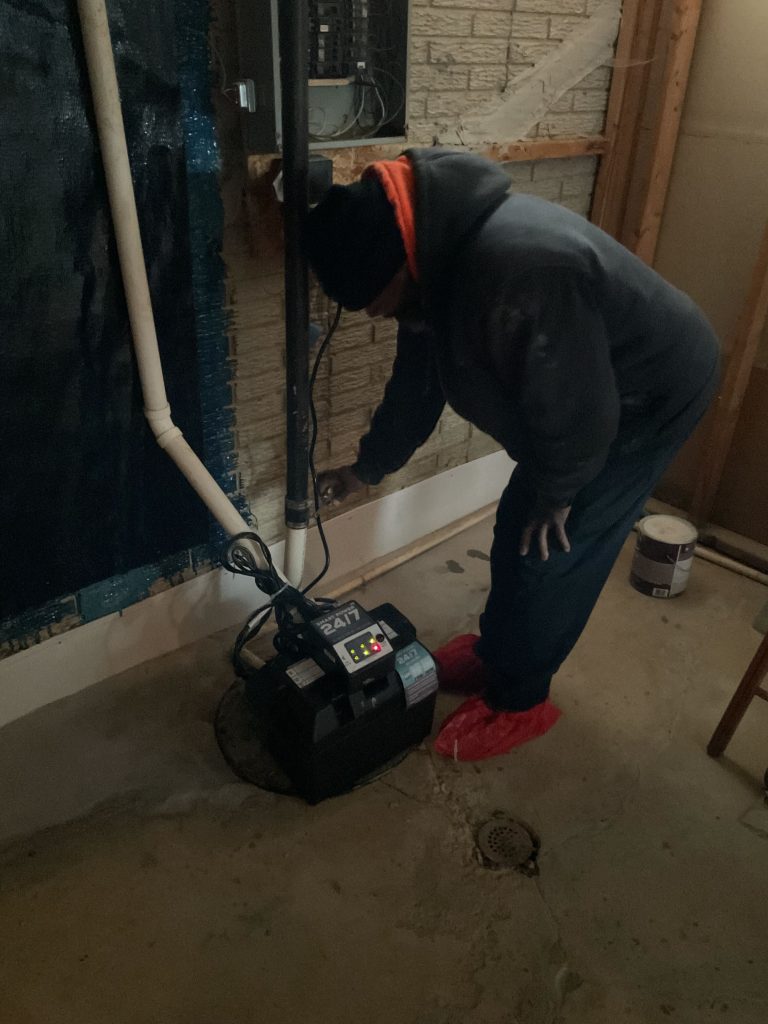
Sump pumps play a significant role in most waterproofing systems. They’re tasked with pumping out the collected water from your basement, keeping it dry.
Vapor barriers, on the other hand, prevent moisture from condensing on your walls and ceilings.
Root barriers and foundation coatings protect your foundation from water damage and plant intrusion. They’re often overlooked but play an important role in maintaining the structural integrity of your home.
Challenges in Cold Weather Waterproofing
Despite having an array of methods at your disposal, tackling basement waterproofing in cold weather presents unique challenges. Frozen groundwater and soil saturation can lead to ice formation, which can compromise the structural integrity of your foundation.
Ventilation issues can also exacerbate the situation, as they can result in condensation buildup and moisture problems.
Here are four major challenges you may face:
- Finding effective drainage solutions: When the ground freezes, traditional drainage systems may not work as efficiently. Sump pumps, for example, could freeze and malfunction.
- Installing moisture and vapor barriers: In cold weather, these barriers can become rigid and difficult to install, reducing their effectiveness.
- Providing sufficient thermal insulation: When it’s cold, maintaining a warm and dry basement can be a struggle. Insulating properly is essential to prevent heat loss and moisture buildup.
- Dealing with soil saturation and ice formation: These can put pressure on your foundation walls and lead to cracks or leaks.
Effects of Freeze-Thaw Cycles
Let’s talk about freeze-thaw cycles and how they affect your basement’s waterproofing.
You mightn’t realize it, but the damage from expanding ice can cause significant problems.
But don’t worry, we’re going to explore ways to prevent these frost-related leaks.
Understanding Freeze-Thaw Cycles
Understanding freeze-thaw cycles and their effects can be a game changer when it comes to basement waterproofing.
You see, weather patterns play a huge role in the freeze cycle effects on your basement’s integrity. It’s not just the cold; it’s the constant change between freezing and thawing that can wreak havoc.
Thaw impact analysis is essential. When the temperature rises above freezing, the ground thaws, creating a water-saturated environment. This can be problematic for your basement, especially if your waterproofing isn’t up to par.
Here’s why:
- Water expands when it freezes, putting pressure on your basement walls.
- Thawing causes water to seep into any existing cracks, further weakening your structure.
- Repeated freeze-thaw cycles can exacerbate these problems, potentially leading to serious damage.
- Understanding these cycles can aid in preventative measures, saving you costly repairs.
You can’t control the weather, but you can control how your home reacts to it.
Understanding the freeze-thaw cycle is vital in protecting your basement from water damage.
Damage From Expanding Ice
Expanding ice is more than just a chilly nuisance – it’s crucial to be aware of the significant threat to your basement’s integrity. When water seeps into the cracks and crevices of your basement walls, a freeze-thaw cycle can trigger ice expansion. This force is powerful enough to compromise the structural integrity of your foundation.
Ice expansion doesn’t just happen overnight. It’s a gradual process that occurs over time, incrementally widening gaps in your walls and floors.
| Freeze-Thaw Cycle Stage | Effect on Basement | Result |
|---|---|---|
| Freezing | Water expands into ice | Cracks widen |
| Thawing | Ice melts into water | More water seeps into cracks |
| Refreezing | Cycle repeats | Structural damage worsens |
The damage caused by ice expansion isn’t always visible. It might be hidden behind your walls, silently eating away at the very foundation of your home. By the time you notice any signs, it’s likely that significant damage has already been done. So, it’s crucial to be proactive in protecting your basement against the damaging effects of ice expansion. But don’t worry, we’ll discuss preventive measures in the next section.
Preventing Frost-Related Leaks
How can you protect your basement from frost-related leaks caused by the freeze-thaw cycle? Well, you’d need to focus on preventive measures that tackle frost heave, moisture control, and thermal bridging.
Frost heave can result in foundation cracking. Combat this by ensuring you have good drainage systems. Soil permeability plays a significant role here. If water can’t drain away, it can freeze and expand leading to heaving.
To manage moisture control, consider:
- Upgrading your insulation
- Installing vapor barriers
- Employing a reliable sump pump
- Effective gutter management
Insulation upgrades can prevent thermal bridging, where cold penetrates your home via weak spots in insulation. Vapor barriers help control moisture and humidity. Your sump pump can protect against flooding from melting snow and ice, while proper gutter management keeps water away from your foundation.
Material Considerations for Cold Climates
When it comes to cold climates, your choice of materials can make or break your basement waterproofing efforts.
Weather-resistant materials, along with the right insulation and sealants, are essential.
Let’s explore how these considerations play a significant role in your waterproofing strategy.
Choosing Weather-Resistant Materials
Ever thought about the essential role that weather-resistant materials play in basement waterproofing, especially in cold climates?
It’s a game-changer. Your choice of materials can greatly impact the longevity and effectiveness of your waterproofing strategy.
It’s vital to opt for materials that can withstand freezing temperatures, heavy snowfall, and the freeze-thaw cycles typical of cold climates.
Here’s a short list of some considerations:
- Weather-resistant coatings: These special coatings protect your basement walls from moisture penetration. They’re designed to resist the harsh elements, ensuring your basement stays dry all year round.
- Durable membranes: These are the second line of defense in your waterproofing arsenal. When installed correctly, they provide an additional barrier against water seepage.
- Waterproof sealants: Yes, they’re usually discussed under insulation and sealants, but their importance can’t be overstated. They fill in the gaps and cracks, preventing water entry.
- Quality drainage materials: These help to direct water away from your basement, reducing the likelihood of water pooling around your home’s foundation.
Insulation and Sealants Importance
Wondering about the role of insulation and sealants in basement waterproofing for cold climates? Let’s explore the nitty gritty.
Insulation and sealants are essential in maintaining your basement’s integrity during chilly months. Selecting the right insulation types and executing proper sealant applications, you’ll be able to keep your basement dry and cozy.
Among the insulation options, spray foam and rigid foam stand out for their moisture resistance and high R-value, respectively. Spray foam expands to fill gaps, while rigid foam offers steady insulation and doesn’t absorb water. For sealants, consider the water-based and silicone variants. Water-based sealants are user-friendly and ideal for DIYers, while silicone sealants provide durable, flexible waterproofing.
Take a look at this table for a quick comparison:
| Insulation Type | Sealant Type |
|---|---|
| Spray Foam | Water-based |
| Rigid Foam | Silicone |
Preventing Ice Damming in Basements
You mightn’t realize it, but ice damming can pose a significant risk to your basement, especially during the cold winter months. This happens when heat from your basement causes ice buildup on the exterior walls, which eventually melts and seeps into your basement.
Here’s how you can tackle this issue.
To begin with, moisture control is paramount. It’s about managing the humidity levels in your basement to prevent ice from forming. Install a dehumidifier if necessary.
In addition, consider investing in proper ventilation strategies. This guarantees that warm air doesn’t stagnate and form ice on the walls.
Your action plan should include:
- Implementing drainage solutions to redirect water away from your basement.
- Installing thermal barriers to reduce heat loss.
- Regularly inspecting for signs of ice damming.
- Seeking professional help if the problem persists.
Lastly, remember that prevention is better than cure. By keeping your basement dry, ventilated, and insulated, you’ll greatly reduce the chances of ice damming.
Don’t let winter be a threat to your home’s foundation. Stay vigilant and take proactive steps to secure your basement.
Innovative Waterproofing Techniques
While keeping an eye out for ice damming and implementing preventive measures is important, it’s just as valuable to explore new and effective ways to waterproof your basement.
Emerging technologies are leading the charge, offering a wide range of innovative waterproofing techniques that can keep your basement dry even in the coldest of climates.
One such technology is the use of smart membranes. These aren’t just barriers; they’re systems that can detect moisture levels and adapt their properties to prevent water from seeping in.
Another is hydrophobic sealants, which are designed to repel water, providing an extra layer of defense against potential flooding.
But it’s not just about effectiveness. Many of these technologies also offer eco-friendly solutions.
For instance, some waterproofing methods use bio-based materials, reducing the environmental impact of basement waterproofing.
In your quest for a dry basement, don’t overlook the potential of these innovative techniques. They can offer you not just a solution to your waterproofing needs, but a sustainable one that keeps your basement dry and your peace of mind intact.
Essential Maintenance Tips for Winter
When winter rolls around, prioritizing your home’s waterproofing maintenance can make all the difference. With freezing temperatures and snowfall, basements become more susceptible to water seepage and increased humidity. Consequently, it’s essential to perform seasonal maintenance that guarantees your basement stays dry and warm.
Start by checking for cracks in your basement walls and floors. Even the smallest crack can lead to major leaks in winter. Seal any you find promptly with a waterproof sealant.
Also, make certain your sump pump is in good working order. It’s your first line of defense against basement flooding.
Next, tackle basement humidity. Too much of it can lead to mold growth and damage to your belongings. Consider investing in a dehumidifier to maintain a healthy level of humidity in your basement.
Regularly check and clean your gutters too. They play a vital role in directing water away from your home’s foundation.
Lastly, insulate your basement pipes to prevent freezing and bursting. This is a common issue in winter that can lead to significant water damage.
Frequently Asked Questions
What Is the Average Cost of Basement Waterproofing in Cold Climates?
You’re likely wondering about the average cost for basement waterproofing in colder climates.
It’s hard to provide a specific figure, as it varies based on cost factors like the size of your basement and the severity of the water issue.
Material options also play a role in the final cost.
It’s best to get several estimates from professionals to determine a reasonable price range for your particular situation.
How Does Basement Waterproofing Impact Property Value?
Basement waterproofing greatly boosts your property investment.
It not only prevents damage from water intrusion but also enhances your home’s market appeal.
Potential buyers often look for houses with basements that are dry and usable.
By investing in waterproofing, you’re ensuring your basement remains in top condition, thereby increasing your property value.
Are There Any Eco-Friendly Waterproofing Methods Suitable for Cold Climates?
Yes, there are eco-friendly waterproofing methods suitable for cold climates.
You can opt for green materials like a rubber membrane, which is resistant to harsh weather conditions.
Natural sealants, such as clay, are also a good choice. They’re not only environmentally friendly but also very effective in preventing water intrusion.
It’s essential to guarantee you’re using methods and materials that are kind to the environment and effective in your climate.
What Steps Should I Take if My Basement Floods During a Freeze-Thaw Cycle?
If your basement floods during a freeze-thaw cycle, don’t panic.
First, stop the water source if you can. Then, remove the excess water.
It’s key to dry everything out thoroughly to prevent mold.
Consider investing in flood prevention measures, such as a sump pump or French drains.
Remember, freeze-thaw effects can cause foundation cracks, so regularly check for damage.
It’s always best to consult with a professional for a tailored solution.
Will Home Insurance Typically Cover Damages From Ice Damming in My Basement?
You’d need to look at your individual insurance policy for specifics, but generally, home insurance does cover damages from ice damming.
It’s often considered a type of water damage.
However, if it’s found that the ice damming was a result of neglect, like not cleaning your gutters, you mightn’t be covered.
Always check with your insurance provider to be sure.
Conclusion
So, tackling basement waterproofing in cold climates isn’t a walk in the park. You’ve got freeze-thaw cycles, ice damming, and condensation to deal with. But don’t sweat it! By understanding the challenges, using innovative techniques, and staying on top of maintenance, you can keep your basement dry and safe. Remember, prevention is key, so don’t skimp on those thermal barriers and drainage systems. Stay proactive and you’ll weather the winter without a hitch.

Ohio State Waterproofing has provided quality service with over 90,000 successful waterproofing and foundation repair installations and satisfied customers since our inception in 1978.
Ohio State Waterproofing’s philosophy for success is to provide honest, courteous and guaranteed service to every customer. Our reputation reflects this. Our well-trained waterproofing technicians are dedicated to complete customer satisfaction. This is achieved through fast, efficient processes as well as teamwork throughout this organization. You will always find a friendly representative willing to meet your needs at Ohio State Waterproofing.
We are a full service company that handles problems ranging from patching cracks to rebuilding basements. In addition, we hold three patents related to waterproofing that make us unique in the industry. These patents and our experience allow us to be able to do what every other waterproofer can do, but no one else can do what we do.
We are actively involved in the industry and community, including the National Association of Waterproofing Contractors, BHA, NARI, NAHB, NHIA, the BIA, the FHA and a number of consumer advocacy groups, as well as playing leading roles in a number of charitable functions.
But, most importantly, our highest degree of praise comes from the thousands of referrals we get from satisfied customers. Together they’ve made us a leader in the basement waterproofing and foundation repair industry.