

When learning the ropes of the single-ply roofing world, beginners will find that the two main players are PVC and TPO. In these stages of their career, professionals will want to ensure they approach a roofing project equipped with all of the necessary information, and it is essential to understand the difference between the two and when to use them. Single-ply is a popular roof system used on commercial and industrial buildings, especially low-slope rooftops, and offers a solid balance of durability, ease of installation, and energy efficiency. And while PVC and TPO appear extremely similar, the chemistry behind each plays a big role in how they perform and which membrane is best suited for a given project.
Getting to Know Single-Ply Roofing
Single-ply systems use one layer of flexible membrane to weatherproof and protect a building. These membranes are mechanically fastened, connected with adhesives, or induction welded to the substrate. In some instances, a combination of attachment methods can be used to secure a roofing system. Both TPO and PVC membranes are designed to resist UV rays, reduce rooftop temperatures, and stand up to the elements. But the materials themselves have significant differences, hence why it is important to understand the fundamental aspects that separate them.
PVC (Polyvinyl Chloride) is a thermoplastic membrane made primarily from vinyl and has been used in roofing for decades. One key characteristic that sets PVC apart is its ability to provide protection against chemical exposures like grease, oils, and some industrial pollutants. Some versions are enhanced with KEE (Ketone Ethylene Ester) for added flexibility and durability. PVC membranes used in the roofing industry meet ASTM D4434, Standard Specification for Poly(Vinyl Chloride) Sheet Roofing.
TPO (Thermoplastic Polyolefin) is a blend of rubber and plastic (typically ethylene-propylene and polypropylene-based). TPO does not require added plasticizers to stay flexible, which gives TPO an advantage when it comes to long-term movement and expansion/contraction cycling. TPO also does not include any Redlist materials, helping building owners meet their environmental goals. TPO membranes used in the roofing industry meet ASTM D6878, Standard Specification for Thermoplastic Polyolefin-Based Sheet Roofing.
How to Choose Your Roofing Membrane
To best determine what kind of roofing membrane is suitable for a particular structure, a thorough analysis of the site must be conducted to ensure the completed roof will suit the building’s intended use. The key considerations can be summarized as: occupancy type, geography, and function. In practice, this will mean addressing the weather patterns and climate of the location, identifying the building’s intended use, and addressing any potential stressors on the roof, all of which will determine which membrane will provide the most durable and resilient solution.
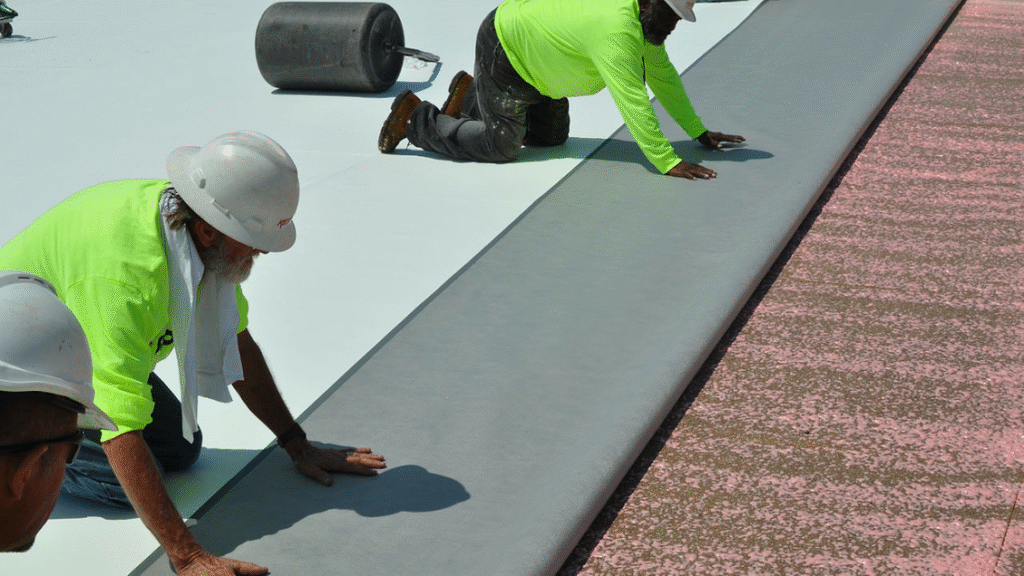
 Image courtesy of Siplast
Due to the protection it can provide against grease, oils, and some industrial pollutants, PVC KEE is a strong choice for any roof located over a kitchen, restaurant, or industrial facility. Rooftops exposed to a wide temperature swing or are likely to experience more wear over time are good candidates for a durable and high-performing TPO. While these are generally good rules for assigning TPO or PVC for a given project, there are always aspects of nuance that need to be considered in order to ensure the membrane is, in fact, the best option. Roofing is not a one-size-fits-all all, and there is rarely an immediately obvious option, but these characteristics provide an easy starting point to begin determining which membrane to choose. Working closely with the developer, designer, contractor, and installer will increase the efficiency of the project and help ensure a seamless roof installation that meets the needs of the end user and satisfies the owner.
Installation and Maintenance Guidance
Installation methods for PVC and TPO are similar as they can both be either mechanically attached, adhered, or induction welded. The key to long-term performance includes proper design and proper preparation, meaning the roofing and construction professionals are well acquainted with the chosen membrane and informed about why it was selected. Experienced installers will be familiar with both systems, which is essential for helping to execute a quality installation. This will also require specifying compatible components and high-quality materials.
Another consideration to make when choosing, installing, and maintaining the roof is accounting for proper slope and drainage, which may mean using tapered insulation when needed. Contractors and installers will also have to ensure chemical compatibility and long-term fastening with adhesives and substrates, as well as consult local code requirements for fire resistance, wind uplift resistance, impact resistance, and energy efficiency.
Despite the high durability of PVC and TPO, which makes them a preferred choice for most applications, basic maintenance is still critically important for roof performance.. Keeping the roof surface free of debris, maintaining proper drainage, and inspecting the system regularly are crucial to ensure seams, flashings, and penetrations remain watertight. It is recommended to inspect the system at least twice a year, usually in the spring or fall, as well as after any major weather events or storms, and following instances of heavy foot traffic. With proper care, PVC and TPO roofing systems may have a service life of 20 to 30 years, depending on the installation method, membrane thickness, manufacturer specifications, and the quality of the membrane chemistry. Membranes that are thicker, well-adhered, and installed with high-quality details typically perform longer and may qualify for longer duration warranties or guarantees.
A highly durable single-ply roofing system is most easily achieved when all considerations for the structure are taken into account, including the occupancy type, geography, and location. Closely analyzing how external factors and the intended use for the project will impact the roof will provide professionals with the required information to recommend PVC or TPO. Working with knowledgeable and experienced professionals to evaluate the site, design the system, and install the membrane is necessary for achieving a functional roof that will serve its intended purpose for several years. By following this outline, roofing professionals can become better acquainted with these two common single-ply roofing options and will serve as an informed resource for clients and other design and construction professionals.






