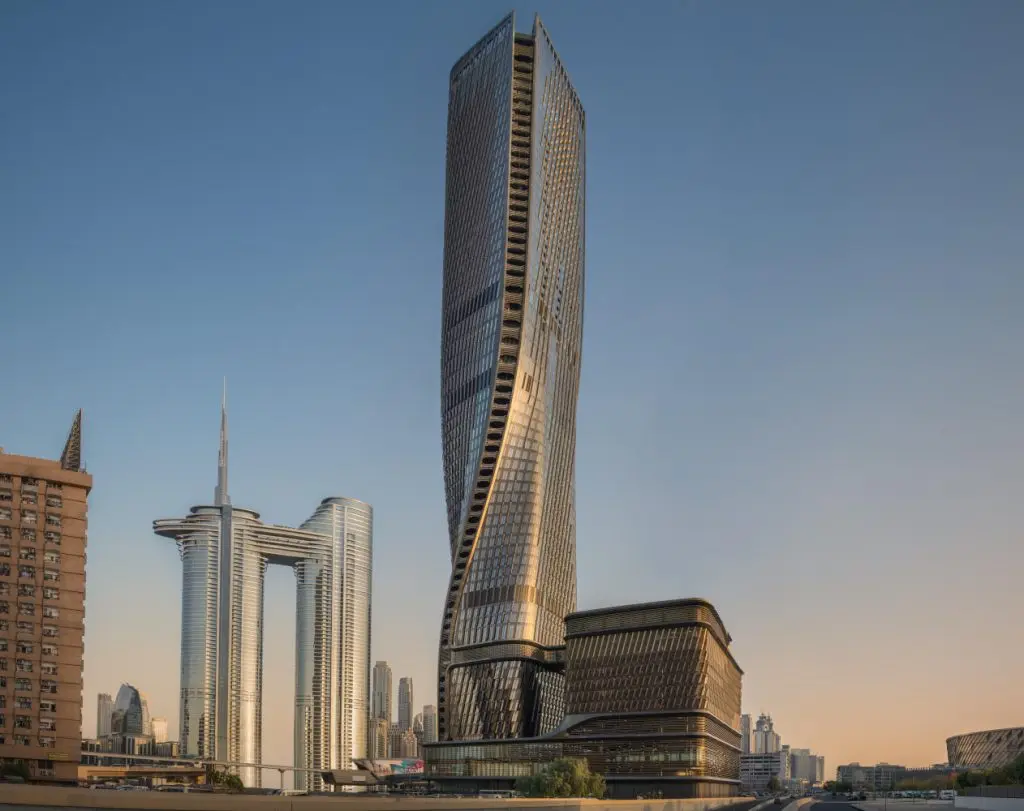

A 302 m (990 ft) high-rise building in Dubai uses a ceramic facade to deliver shading and reduce heat radiation. The Wasl Tower, located near the iconic Burj Khalifa, combines traditional materials with advanced engineering to reduce cooling loads by approximately 10 percent.
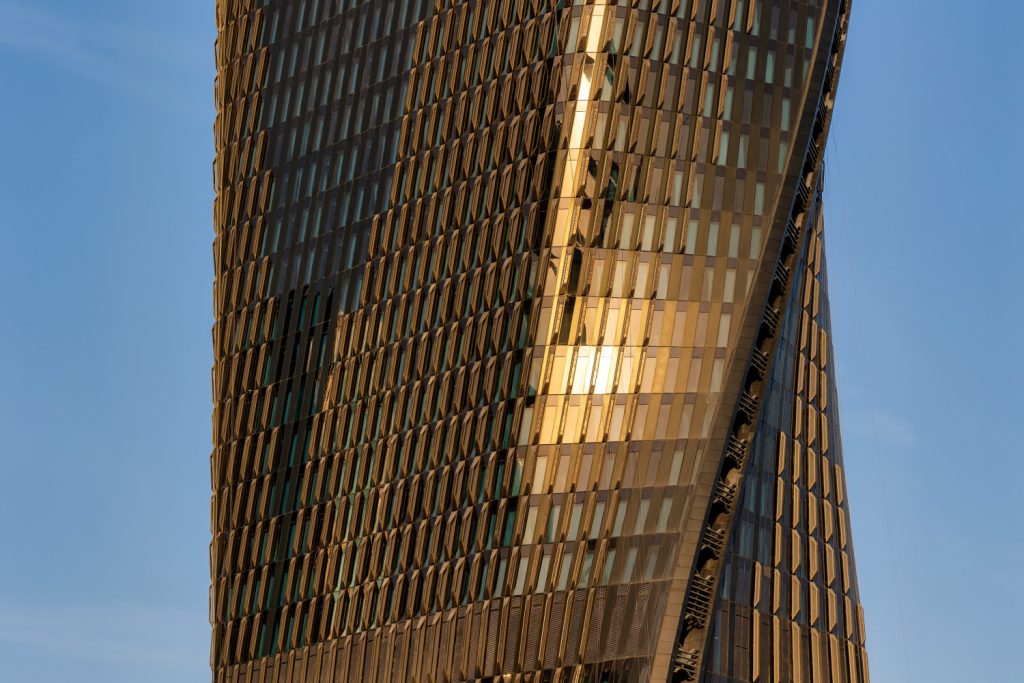
It is the region’s tallest building to feature a ceramic facade, a material chosen for both durability and cultural significance. Thousands of ceramic fins provide shading, reduce heat radiation, and harness high winds, adapting to the desert climate. By reimagining ceramics for a high-rise project, the designer UNS combines low-tech manufacturing methods with advanced design techniques.
The ceramic fins create a protective cloak around the tower, acting as a passive environmental filter. The fins allow daylight to fill the interior while blocking solar heat gain.
Each composite ceramic fin features a custom terracotta profile, baked with a metallic glaze that enables visual transformation throughout the day and seasons.
Across its 167,733 m2 (1.81 million sf) area, Wasl Tower houses mixed-use facilities. These include a hotel, residential units, offices, and a convention hall. The design also incorporates elevated public areas, creating unique spaces for social interaction.
“The aim was to make a visit to Wasl Tower as attractive and contemporary as possible,” says Ben van Berkel, founder and principal architect of UNS.