
Nile Elam is vice president of government affairs for the National Asphalt Pavement Association. Opinions are the author’s own.
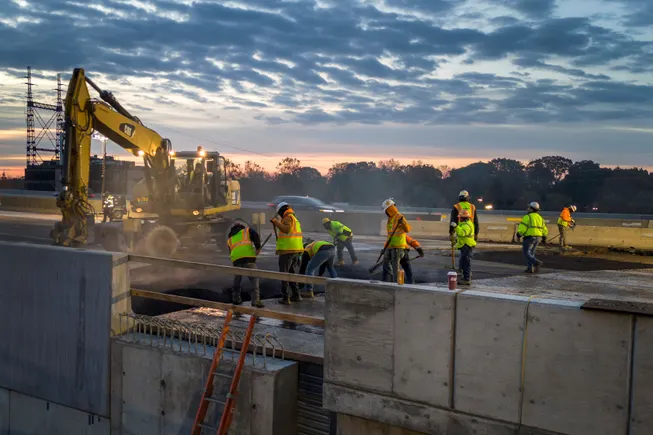
America’s 4 million miles of roads drive our economy and connect our communities. But building and maintaining them takes a human toll we should not accept.
A work zone crash occurs in the U.S. roughly every five minutes, according to the National Work Zone Safety Information Clearinghouse. More than 100 people are injured in these incidents daily and around 17 die each week.
For the men and women building and maintaining our nation’s roads, that level of risk is unacceptable, yet far too common. And they aren’t the only ones at risk. Indeed, drivers and passengers account for around 80% of work zone fatalities.
Some danger in life is unavoidable, but these rates of crashes, injuries and deaths are intolerable, especially because many of these incidents are preventable with the right policy and careful implementation.

Nile Elam
Permission granted by National Asphalt Pavement Association
Lawmakers have noticed. The bipartisan Infrastructure Investment and Jobs Act of 2021 established the Work Zone Safety Contingency Fund to support a range of safety measures. Congress has also held hearings addressing the problem, including last year’s Highways and Transit Subcommittee hearing on roadway safety, where Chair David Rouzer, R-N.C., and others called for action.
“Our enforcement can discourage reckless driving in work zones, but we can also look at ways to better design work zones and related traffic patterns to curtail these incidents,” Rouzer said at the February 2025 hearing.
Work Zone Awareness Week
Industry leaders have long pushed for progress. This week marks the 26th annual National Work Zone Awareness Week, a campaign advanced by industry partners and transportation agencies to promote safe driving in work zones. Industry groups have also formed the National Work Zone Safety Coalition to encourage lawmakers to take action.
Collectively, we are taking steps in the right direction, but we need to do more — and fast — because progress has not kept pace with the problem. About three in five highway contractors reported in 2024 that a vehicle had crashed into their work zones in the past year.
The road ahead for work zone safety
Fortunately, 2026 is a monumental year for transportation policy. Congress is working to reauthorize the surface transportation bill, creating a clear opportunity to turn rhetoric into action.
As lawmakers craft this year’s bill, work zone safety must be a top priority, especially since there are practical, bipartisan actions to take:
- Advance the Preventing Roadside and Work Zone Deaths Act.
- Strengthen tools such as the Work Zone Safety Contingency Fund.
- Invest in proven safety measures, from law enforcement presence to driver education programs to modern traffic control technologies.
The WZSCF itself exemplifies both progress and a missed opportunity for work zone safety. While these funds are available to all 50 states, very few have actually used them. The intent of the policy is right, but implementation must improve.
Work zone safety is a shared responsibility. Policymakers must set strong standards. Agency officials must implement them. Enforcement must ensure compliance. The industry must continue innovating and applying best practices. And, critically, drivers must stay alert and slow down. We all have a role to play.
This year, as Congress works on highway bill reauthorization, National Work Zone Awareness Week must be about more than just talk. This is a moment for action. Lawmakers should include these practical reforms in this year’s bill, and constituents should make clear why they matter.
The solutions are within reach. It’s time to grab them.