Basement moisture problems are often associated with water leaks, groundwater pressure, or poor drainage. While these are major contributing factors, one critical element is often overlooked: ventilation.
Without proper airflow, moisture can become trapped inside the basement, creating conditions that lead to damp surfaces, musty odors, and mold growth. Even small amounts of humidity can build up over time if there is no way for air to circulate effectively.
Understanding why basement ventilation matters for moisture control helps homeowners take a more complete approach to keeping their basements dry and healthy.
When combined with waterproofing and humidity control, proper ventilation plays an essential role in preventing long-term moisture problems.
Key Takeaways
- Poor ventilation allows moisture to build up in basements.
- Airflow helps reduce humidity and prevent condensation.
- Ventilation supports better indoor air quality throughout the home.
- Lack of airflow contributes to mold growth and musty odors.
- Combining ventilation with waterproofing provides the best moisture control.
Why Basements Often Have Poor Airflow
Basements are naturally prone to poor ventilation due to their design.
Because they are located below ground level, they often have limited access to natural airflow. Many basements have few windows, and in some cases, no windows at all.
Other factors that contribute to poor airflow include:
- enclosed spaces with minimal air movement
- heavy insulation that traps air
- finished basements with sealed walls
- lack of mechanical ventilation systems
Without proper airflow, moisture can accumulate and remain trapped inside the basement.
How Moisture Builds Up Without Ventilation
When moisture enters a basement, whether through groundwater seepage, humidity, or condensation, it needs a way to escape.
Without ventilation, this moisture remains in the air, increasing humidity levels.
Over time, trapped moisture can lead to:
- damp surfaces
- condensation on walls and pipes
- musty odors
- mold growth
Even if water intrusion is minimal, poor ventilation can allow humidity to build up gradually.
The Relationship Between Airflow and Humidity
Airflow plays a critical role in regulating humidity levels.
When air circulates properly, it helps remove excess moisture and replace it with drier air. This process reduces the overall humidity in the basement.
Without airflow, humid air becomes stagnant, allowing moisture to settle on surfaces.
This creates ideal conditions for mold and mildew to develop.
Maintaining proper airflow helps keep humidity levels within a healthy range.
How Ventilation Helps Prevent Mold Growth
Mold requires moisture to grow, and poor ventilation creates an environment where that moisture can persist.
By improving airflow, ventilation helps:
- reduce humidity levels
- dry out damp surfaces
- prevent condensation buildup
- limit the spread of mold spores
While ventilation alone may not eliminate mold risks, it plays a crucial role in preventing the conditions that allow mold to thrive.
Natural vs Mechanical Ventilation
There are two main types of basement ventilation: natural and mechanical.
Natural Ventilation
Natural ventilation relies on openings such as windows or vents to allow air to flow in and out of the basement.
While this method can help in some cases, it may not always be effective, especially in humid climates where outside air contains moisture.
Mechanical Ventilation
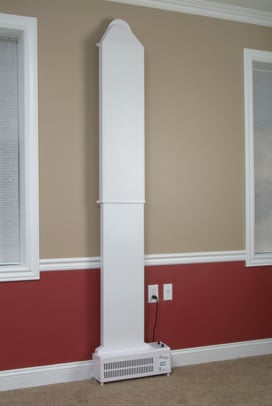
Mechanical ventilation uses systems such as fans or air exchangers to actively move air through the basement.
These systems provide more consistent airflow and can be more effective at controlling humidity levels.
Mechanical solutions are often recommended for basements with persistent moisture problems.
The Role of Dehumidifiers in Ventilation
Dehumidifiers work alongside ventilation systems to remove excess moisture from the air.
While ventilation improves airflow, dehumidifiers actively reduce humidity levels by extracting moisture.
Using both together helps:
- maintain balanced humidity levels
- prevent condensation
- improve indoor air quality
- reduce the risk of mold growth
For many homeowners, combining ventilation and dehumidification provides the best results.
Why Ventilation Alone Is Not Enough
While ventilation is important, it does not address all sources of basement moisture.
If water is entering the basement through foundation cracks or groundwater pressure, ventilation alone cannot solve the problem.
This is why a comprehensive approach to moisture control is necessary.
Effective moisture control typically includes:
- basement waterproofing systems
- drainage solutions
- sump pumps
- dehumidification
- proper ventilation
Combining these solutions helps address both the source of moisture and the conditions that allow it to build up.
Signs Your Basement Needs Better Ventilation
Homeowners may notice several signs that indicate poor ventilation in the basement.
These include:
- persistent musty odors
- damp or humid air
- condensation on surfaces
- visible mold growth
- stale or stagnant air
These symptoms suggest that airflow is insufficient and that moisture may be accumulating.
Improving ventilation can help reduce these issues.
Long-Term Benefits of Proper Basement Ventilation
Improving basement ventilation offers several long-term advantages.
These include:
- reduced humidity levels
- improved indoor air quality
- lower risk of mold growth
- increased comfort throughout the home
- protection of structural materials
By maintaining proper airflow, homeowners can create a healthier and more comfortable living environment.
Conclusion
Basement ventilation plays a critical role in controlling moisture and maintaining a healthy indoor environment.
Without proper airflow, humidity can build up and create conditions that lead to mold growth, musty odors, and poor air quality.
Understanding why basement ventilation matters for moisture control allows homeowners to take a more complete approach to managing basement conditions.
While ventilation alone may not solve all moisture problems, it is an essential part of a comprehensive solution that includes waterproofing, drainage, and humidity control.
By addressing both airflow and moisture sources, homeowners can protect their basements and improve the overall health of their home.
FAQs
Does basement ventilation reduce humidity?
Yes. Proper airflow helps remove excess moisture from the air and reduces humidity levels.
Can ventilation prevent mold in basements?
Ventilation helps reduce conditions that allow mold to grow, but it should be combined with moisture control solutions.
What is the best way to ventilate a basement?
Mechanical ventilation systems and dehumidifiers are often the most effective solutions for maintaining consistent airflow and humidity control.
Is ventilation enough to stop basement moisture problems?
No. Ventilation is important, but it must be combined with waterproofing and drainage systems to fully control moisture.