 Skip to content
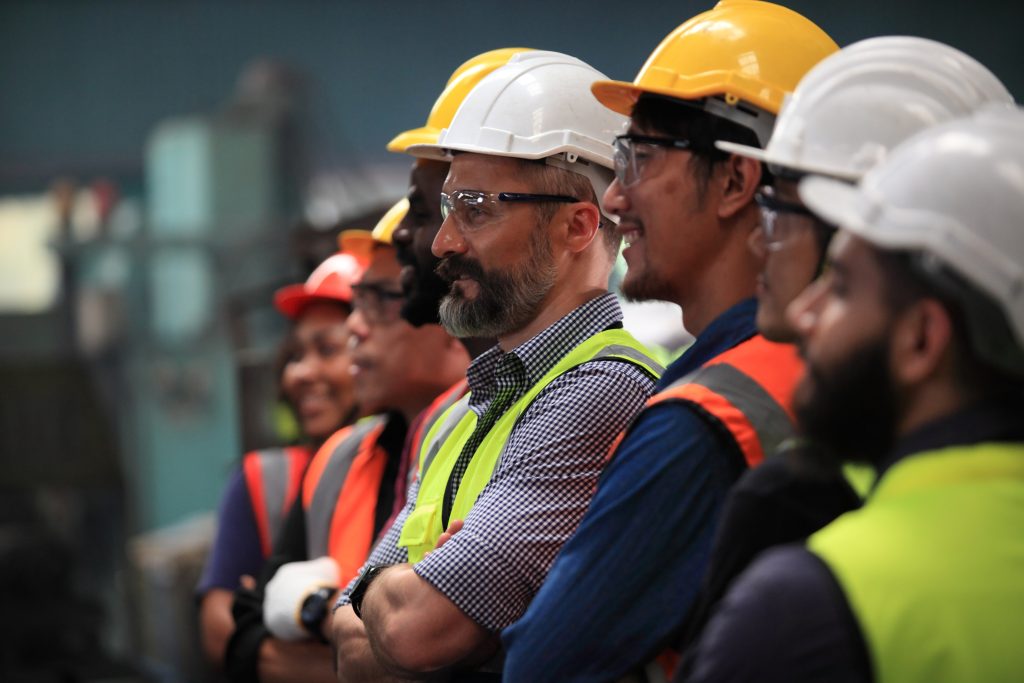

Construction safety has long been a top priority across the industry. Yet fatality rates have remained stubbornly flat for more than a decade. Steven Carter, global health and safety director at Gilbane chair company for Construction Safety Week 2026—believes the industry has reached a pivotal moment. This year’s theme—”All In Together: Recognize. Respond. Respect.”—is a unified call to action for owners, designers, contractors and craft professionals around a shared, risk-based approach to preventing serious injuries and fatalities.
In a recent interview with Construction Executive, Carter discusses why the industry must move beyond incremental improvements, how technology and AI can support better planning and what it will take to create a true culture of psychological safety on jobsites.
Tell us about your background and your role in Construction Safety Week this year.
I’ve been in construction for 40 years. I started right out of high school working in scaffolding with my dad, so I’ve seen the industry from the tools up. About 25 years ago, I moved fully into safety. I’ve worked across the project life cycle—development, construction and operational safety—in the U.K. and the U.S.
I joined Gilbane about 18 months ago as global health and safety director. Our CEO, Adam Jelen, has long been involved in Construction Safety Week, and because Gilbane is serving as chair in 2026, I was asked to partner in shaping this year’s strategy.
My role is to ensure we have a proactive, risk-based safety program—one that plans with the end in mind. And the end in mind is simple: everyone goes home safe. Construction Safety Week gave us an opportunity to bring that philosophy to the broader industry and unify around a common goal.
What inspired this year’s theme, “Recognize. Respond. Respect.”?
Safety management is a science. It has to be data-driven. When you look at the data, what stands out is that while we’ve made progress reducing high-frequency, low-impact incidents, we haven’t seen meaningful improvement in serious injuries and fatalities over the past 10 to 15 years. Roughly 1,000 construction workers lose their lives each year in the U.S. That’s unacceptable.
We studied organizations that have achieved step changes in serious injury and fatality rates. Almost every time, the common denominator was a risk-based approach focused on identifying and managing critical controls—the hazards most likely to result in life-altering outcomes.
That’s where “Recognize” comes from. First, identify the hazards that can kill or seriously injure someone. Different organizations use different terminology—high-energy hazards, critical risks or what OSHA calls the fatal four—but the principle is the same. You must clearly recognize the biggest threats.
“Respond” is about planning. Once you know where the greatest risks lie, you design controls early—through engineering, scheduling and collaboration—to prevent those risks from turning into tragedies.
“Respect” is about culture. Our industry often looks for technical fixes, but we can’t overlook the human element. Respect means valuing the craft professional’s expertise, ensuring they understand the plan and empowering them to speak up if something isn’t right.
Let’s talk more about that “Respect” component.
Today we talk a lot about psychological safety, and sometimes that term gets misunderstood. At its simplest, it means creating an environment where people feel safe to speak up.
At the craft level, respect starts with respecting the plan. The controls in place are there to prevent serious injuries and fatalities. But if the plan isn’t right, we need people to say so—and we need to honor that. Stop-work authority is a key part of this. If someone calls a stop, we stop. That’s the commitment. Respect means shared accountability. It’s about partnership, not top-down directives.
Why is dedicating one week to safety so important when companies focus on it year-round?
I see Safety Week as a celebration of the work happening all year. It’s not a one-off event. The momentum carries forward continuously. As soon as one year ends, planning for the next begins.
This year, we’ve strengthened our alliance with OSHA, reinforcing that regulators and industry leaders are aligned in our goals. Safety Week provides a platform to raise awareness, share best practices and elevate the entire industry—especially small and mid-sized contractors that may not have extensive internal resources.
When we come together in unison, even raising awareness can make a difference. It creates energy and focus that extend far beyond that single week.
How have craft professionals responded to Safety Week initiatives?
We surveyed craft professionals this year, and the response has been overwhelmingly positive. When they see that owners, designers and executives are investing time and energy into planning for their safety—not just issuing rules, but listening—it builds trust.
Safety Week creates opportunities for leaders to visit sites, engage directly with craft workers and have honest conversations about risk. It helps close the gap between planning and execution.
We’re also intentional about language. If I say “high-energy hazards,” someone might think I’m talking about electricity. But if I say “the stuff that can kill you,” that resonates. Stories and relatable language are powerful tools for engagement.
What programming can participants expect this year?
We’ve created daily toolbox talks built around case studies and storytelling. People connect with stories. They disarm defensiveness and make risk real.
We’re also running a “Spot the Hazard” competition on the Safety Week website. It gamifies hazard recognition. Participants spin a digital wheel, identify hazards in images and enter a prize drawing. It’s engaging, but also educational.
On Wednesday, May 6, we’ll align with OSHA’s National Safety Stand-Down to Prevent Falls, reinforcing the connection between our messaging and what OSHA identifies as leading causes of fatalities. Whether you call them high-energy hazards, critical risks or the fatal four, the objective is the same: understand and manage what can cause the most harm.
What role do technology and AI play in advancing safety?
Technology is a tremendous enabler, particularly in planning. Using BIM and 3D modeling, we can visualize projects early and design out risk before construction begins. What can’t be eliminated can be controlled through thoughtful scheduling and collaboration.
AI can help identify potential risk scenarios quickly and highlight cross-contamination of risk—what happens when schedules compress and trades overlap. It gives teams time to think and plan.
Ultimately, I see AI removing complexity and administrative burden while strengthening controls. Early in my career, every incident led to a new policy. Over time, that layered on noise. My commitment is to remove complexity but add control—and improve outcomes. AI can help us do that.
What message would you share with companies considering participation in Safety Week?
Be part of the solution. There’s no intellectual property in safety. Leadership in safety isn’t about inventing the next proprietary program—it’s about unifying around what works.
Come with an open mind. Share what you’ve learned. Learn from others. The diversity of thought in this industry is one of our strengths. If we keep the end in mind—a measurable reduction in serious injuries and fatalities—we can make meaningful progress. And that’s what this is about: one industry, one goal and a shared commitment to sending everyone home safely.







