

Few foundation problems are as concerning for homeowners as basement walls that begin to bow inward. Unlike small cracks or minor moisture issues, a bowing wall is a visible sign that significant pressure is affecting the structure of the home.
When basement walls begin to curve, lean, or bulge inward, it usually means that the soil surrounding the foundation is exerting more force than the wall can handle. Over time, this pressure can weaken the structure and lead to serious stability issues if not addressed.
Understanding why basement walls start bowing inward can help homeowners recognize early warning signs and take action before the problem becomes more severe.
Because foundation damage tends to worsen over time, identifying the cause of bowing walls is essential for protecting the long-term safety of the home.
Key Takeaways
-
Bowing basement walls are caused by excessive pressure from surrounding soil.
-
Hydrostatic pressure from groundwater increases stress on foundation walls.
-
Expansive soil can push against walls and cause structural movement.
-
Horizontal cracks are often early signs of wall bowing.
-
Professional foundation repair systems can stabilize and reinforce walls.
What Does It Mean When a Basement Wall Is Bowing?
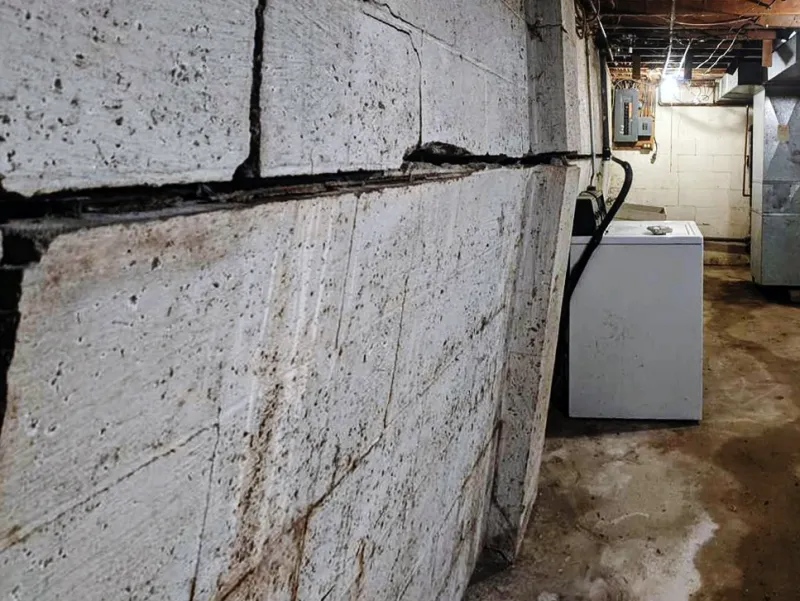
A bowing basement wall is one that is no longer straight and vertical. Instead, it begins to curve or lean inward toward the basement space.
This movement typically occurs gradually and may not be noticeable at first. Over time, the wall may develop visible deformation, including:
-
slight inward bending
-
bulging in the center of the wall
-
leaning at the top or bottom
-
horizontal cracking along the wall
These changes indicate that the wall is under stress and is no longer able to fully resist the pressure from outside the foundation.
The Role of Soil Pressure
The primary cause of bowing basement walls is pressure from the soil surrounding the foundation.
Soil is not a fixed material. It expands when it absorbs water and contracts when it dries out. This constant movement places stress on basement walls.
When soil becomes saturated after heavy rain or snowmelt, it increases in volume and weight. This creates additional pressure against the foundation.
Over time, repeated cycles of expansion and contraction can weaken basement walls and cause them to bow inward.
Hydrostatic Pressure and Water Saturation
Hydrostatic pressure plays a major role in foundation wall movement.
When water builds up in the soil, it fills the spaces between soil particles and creates pressure that pushes outward in all directions. This pressure is directed against basement walls and beneath the foundation.
As hydrostatic pressure increases, it adds to the force already being applied by the soil itself.
This combined pressure can eventually exceed the structural capacity of the wall, causing it to shift or bow inward.
Expansive Soil and Its Impact on Foundations
Certain types of soil, especially clay-rich soil, are known as expansive soils.
These soils absorb large amounts of water and expand significantly when wet. When they dry out, they shrink.
This cycle of expansion and contraction creates continuous movement around the foundation.
Expansive soil can apply strong lateral pressure against basement walls, making it one of the leading causes of bowing and structural damage.
Homes built in areas with expansive soil are particularly vulnerable to this type of foundation issue.
Warning Signs That a Wall Is Starting to Bow
Bowing walls often develop gradually, and early signs may be subtle.
Homeowners should watch for:
-
horizontal cracks forming along basement walls
-
walls that appear slightly curved instead of straight
-
gaps forming between walls and floors
-
doors or windows that become difficult to open
-
water seeping through cracks
These warning signs indicate that pressure is affecting the foundation and that the wall may continue to move if the issue is not addressed.
Why Bowing Walls Should Not Be Ignored
A bowing basement wall is not just a cosmetic issue. It is a structural problem that can worsen over time.
If left unaddressed, bowing walls may lead to:
-
severe cracking
-
structural instability
-
water intrusion
-
partial wall failure
As the wall continues to move inward, the risk of more serious damage increases.
Addressing the issue early can help prevent more extensive repairs and protect the overall structure of the home.
How Water Problems Make Bowing Walls Worse
Water plays a significant role in foundation damage.
When moisture accumulates in the soil around the home, it increases both hydrostatic pressure and soil expansion. This combination creates additional stress on basement walls.
Water entering through cracks can also weaken materials inside the wall, making it more susceptible to movement.
This is why basement waterproofing is often recommended alongside foundation repair solutions.
Controlling moisture levels around the foundation helps reduce pressure and prevent further damage.
Professional Solutions for Bowing Basement Walls
Repairing bowing basement walls requires more than simply sealing cracks.
Professional foundation repair solutions are designed to stabilize the wall and prevent further movement.
Common repair methods include:
-
wall anchors that secure the wall to stable soil
-
carbon fiber reinforcement systems
-
steel beam supports installed along the wall
-
structural reinforcement techniques
These solutions help restore the wall’s stability and prevent it from bowing further.
In many cases, waterproofing systems are also installed to reduce moisture and relieve pressure on the foundation.
Preventing Future Foundation Movement
While not all foundation movement can be prevented, homeowners can take steps to reduce risk.
Preventative measures include:
-
maintaining proper drainage around the home
-
extending downspouts away from the foundation
-
grading soil to direct water away from the house
-
addressing basement moisture issues early
Combining these steps with professional waterproofing and repair solutions provides the best long-term protection.
Conclusion
Bowing basement walls are a clear sign that significant pressure is affecting the foundation of a home. This pressure often comes from a combination of soil movement, hydrostatic pressure, and moisture buildup around the foundation.
Over time, these forces can cause walls to shift inward, leading to structural damage and increased risk of water intrusion.
Understanding why basement walls start bowing inward allows homeowners to recognize early warning signs and take action before the problem worsens.
Professional foundation repair and basement waterproofing solutions provide effective ways to stabilize walls, reduce pressure, and protect the home from long-term damage.
Taking action early is the best way to preserve the safety, stability, and value of your home.
FAQs
What causes basement walls to bow inward?
Bowing walls are typically caused by pressure from saturated soil and hydrostatic pressure pushing against the foundation.
Are bowing basement walls dangerous?
Yes. Bowing walls can indicate structural weakness and may lead to more serious damage if not repaired.
Can bowing walls be fixed?
Yes. Professional repair methods such as wall anchors, carbon fiber reinforcement, and steel supports can stabilize the wall.
Will waterproofing help prevent bowing walls?
Waterproofing can help reduce hydrostatic pressure and moisture levels, which are major contributors to wall movement.