Fire caulking can look straightforward, but in rated construction, it’s a technical decision. Pick the wrong material, and you can end up with failed inspections, rework, and gaps that don’t perform the way the assembly was designed to.
Across Eastern PA, NJ, and DE, firestop work is judged against tested, listed systems, not a “fire-rated” label on a tube. Material type, joint movement, penetrant mix, opening size, and exposure all drive what actually belongs in that seal.
| In This Article: A data-driven breakdown of fire caulking materials, UL system requirements, and how to match the right sealant to penetrations, joints, and perimeter assemblies for code-compliant, long-lasting performance. |
How UL Listed Firestop Systems Drive Every Fire Caulking Decision
Fire caulking selection starts with the rated assembly and the tested system, not the tube on the shelf.
In commercial construction, a fire-resistance rating is assigned to a specific UL-listed design that defines wall or floor type, penetrant category, annular space, backing material, and required sealant depth. Substituting a different product outside that listing can void the rating.
Laboratories test through-penetration systems to ASTM E814, also referenced as ANSI UL 1479. The F rating measures how long the system resists flame passage, while the T rating measures temperature rise on the non-fire side, commonly limited to 325°F above ambient.
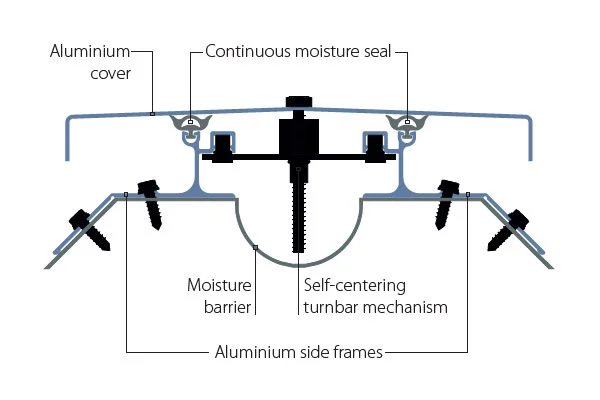
Linear joint systems are tested in accordance with ASTM E1966, referenced as ANSI UL 2079. Joint assemblies must be able to move while still being fireproof. Listings define movement capability as a percentage of nominal joint width, often validated through cycling per ASTM E1399 before fire exposure.
Technicians measure air leakage, given an L rating, in CFM per square foot for penetrations or per linear foot for joints. Water resistance, identified as a W rating, involves exposure to a three-foot head of water for seventy-two hours before fire testing.
These ratings directly determine which fire caulking materials are appropriate for a given condition and situation.
Comparing Intumescent Acrylic, Silicone, and High-Movement Elastomeric Fire Caulking Products
Material chemistry affects caulking performance under heat, movement, and environmental exposure. Fire caulking falls into a few common categories, each suited to specific listed systems.
Intumescent Acrylic and Latex Fire Caulking for Static Penetrations
Manufacturers formulate water-based intumescent sealants to swell and form a protective char layer when exposed to elevated heat. Expansion helps close voids created when combustible penetrants, such as certain plastic pipes, soften or melt during a fire.
Application conditions matter. Many water-based fire caulking products require a minimum installation temperature of around 40°F, and depending on the job site conditions, they may take 18 to 24 hours to dry completely. The specific UL listing and product data must support long-term wet conditions.
Contractors frequently apply intumescent acrylic fire caulking in static through-penetrations where movement is limited, and the listing specifies that chemistry.
Silicone Fire Caulking for Movement and Moisture Exposure
Silicone firestop sealants offer greater flexibility and temperature stability than many water-based products. Neutral cure silicone materials are common in dynamic joints, head-of-wall assemblies, and some perimeter fire barrier systems.
Contractors often select silicone fire caulking for joints that cycle, slab edges near curtain walls, and penetrations exposed to washdown or moisture. They review paint compatibility and substrate preparation requirements in the product data before making a selection.
High-Movement Elastomeric Fire Caulking Used in UL 2079 Joint Systems
In practice, high-movement fire caulking is frequently silicone-based, though the listing governs performance.
Joint systems are cycled before initial fire testing to establish core extension and compression limits, and listings report maximum movement as a percentage of installed width. A fire caulking product listed only for static joints may fail prematurely in a dynamic head-of-wall condition.
Matching Fire Caulking Materials to Penetrations, Joints, and Perimeter Assemblies
Material selection becomes clearer when tied to the application type and the listed system requirements.
Through Penetrations in Rated Walls and Floors
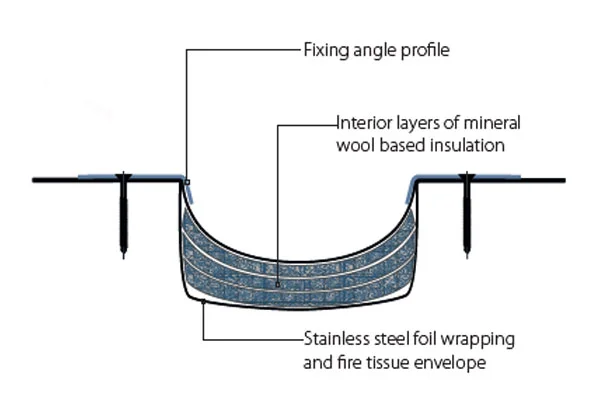
Penetrations require compatibility with substrate, penetrant, and backing material. Many listed designs call for mineral wool packing at defined compression rates, often around 25%. Sealant depth and annular space limits are specified in the listing.
Intumescent fire caulking is commonly used in mixed service openings and conditions involving combustible penetrants. Silicone fire caulking may be specified where moisture exposure or washout resistance is part of the tested system.
Linear Joints Including Head of Wall and Expansion Conditions
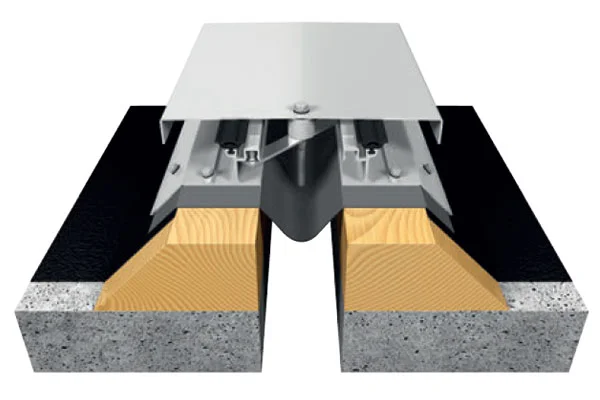
Building codes require fire-resistive joint systems to maintain ratings equal to the assemblies they connect. Movement classification under UL 2079 drives product selection.
A 33% movement rating may be appropriate for many head-of-wall details, but the specific listing will determine the final decision.
High-movement silicone fire caulking paired with mineral wool backing appears frequently in dynamic joint listings. Static acrylic products should only be used where the UL system supports that application.
Perimeter Fire Barrier Systems at Slab Edge
Perimeter fire barrier systems at curtain wall interfaces are typically tested per the ASTM E2307 standard.
Documentation must reference a listed perimeter system rather than a generic joint design. These assemblies typically include mineral wool safing insulation and a smoke seal, often a silicone fire caulking product identified in the listing.
Water resistance and air-leakage performance can influence product selection at the slab edge, particularly in buildings with smoke-control strategies.
Fire Caulking Selection Matrix for Common Commercial Conditions
| Application Type | Primary Concern | Typical Material Type in Listed Systems | Relevant Standard |
| Static pipe penetration in rated wall | Flame spread and temperature rise | Intumescent acrylic fire caulking with mineral wool | ASTM E814 / UL 1479 |
| Mixed MEP penetration with combustible elements | Expansion under heat | Intumescent sealant or wrap device per listing | ASTM E814 / UL 1479 |
| Head-of-wall dynamic joint | Movement up to 33% | Silicone high-movement fire caulking | ASTM E1966 / UL 2079 |
| Slab edge perimeter barrier | Fire continuity and smoke control | Silicone sealant in ASTM E2307 listed system | ASTM E2307 |
| Washdown or moisture-exposed penetration | Water resistance | W-rated silicone fire caulking where specified | UL 1479 with W rating |
Inspection Requirements and Documentation That Influence Product Selection
Firestop inspection standards such as ASTM E2174 for penetrations and ASTM E2393 for joints require verification against the listed system. Destructive testing protocols compare installed conditions to submittals and UL designs.
Standardizing on a limited group of fire caulking products that appear across multiple UL listings can simplify submittals, training, and inspections.
Project teams that align material selection with tested systems, documented ratings, and local code adoption in Pennsylvania, New Jersey, and Delaware place themselves in a stronger position during plan review and field inspection.
Fire Caulking Choices That Hold Up at Inspection and Over Time
Fire caulking works when the product matches the UL-listed system, the rated assembly, and the real jobsite conditions. Getting those details right supports approval, limits rework, and keeps rated barriers performing as intended.
At Waterproof Caulking & Restoration, we work directly with facility managers, contractors, and property teams across Eastern Pennsylvania, New Jersey, and Delaware to match firestop sealants to the assemblies they protect.
For upcoming construction, renovation, or corrective firestop efforts, my team is available to walk through your assemblies and specifications with you and confirm the approach before work begins. To initiate the process, you can schedule a consultation on our website, call us at 484.265.9646, or submit a request through our online contact form.