These bodyweight moves build strength and keep you feeling youthful in your 60s and beyond.
There are many physical changes that occur when men turn 60. Muscle mass decreases, body fat increases, and hormones shift. And that’s just scratching the surface. It’s not uncommon for bones to lose density, which leads to a decrease in height. On top of that, there are health conditions that become a higher risk, including osteoarthritis and heart disease. We’re not trying to be downers, just pointing out some facts. Fear not, because bringing your workout up a notch is so important, and can totally help. We spoke with a fitness expert who shares five essential bodyweight exercises for men in their 60s to stay strong and live independently.
“Men in their 60s should focus on functional strength, joint stability, flexibility, balance, posture, circulation, and proprioception,” explains Caitlin Donato, director of fitness at Pritikin Longevity Center. “These goals not only improve everyday movement but also reduce fall risk and support healthy aging. Bodyweight training reinforces the mind-body connection—a key factor in maintaining coordination and cognitive sharpness as we age.”
Research shows that just one hour of a light workout (including bodyweight training) each week, can greatly lower depression symptoms in older adults.
“It’s an ideal entry point for building confidence, restoring movement patterns, and laying the foundation for more advanced resistance training—all without overwhelming the joints,” Caitlin shares.
Now that you understand just how important it is to strength train in your 60s, here are some essential bodyweight exercises to consider.
5 Essential Bodyweight Exercises for Men in Their 60s
Caitlin suggests performing 2 to 3 bodyweight sessions each week, for a length of 20 to 30 minutes. Complete 10 to 15 reps for 3 to 5 sets per exercise at a 2-1-2 tempo. Do each exercise at a controlled pace to minimize stress on aging joints while maximizing muscle engagement.
This is a stellar formula to stay strong and active into your 60s and beyond.
Planks
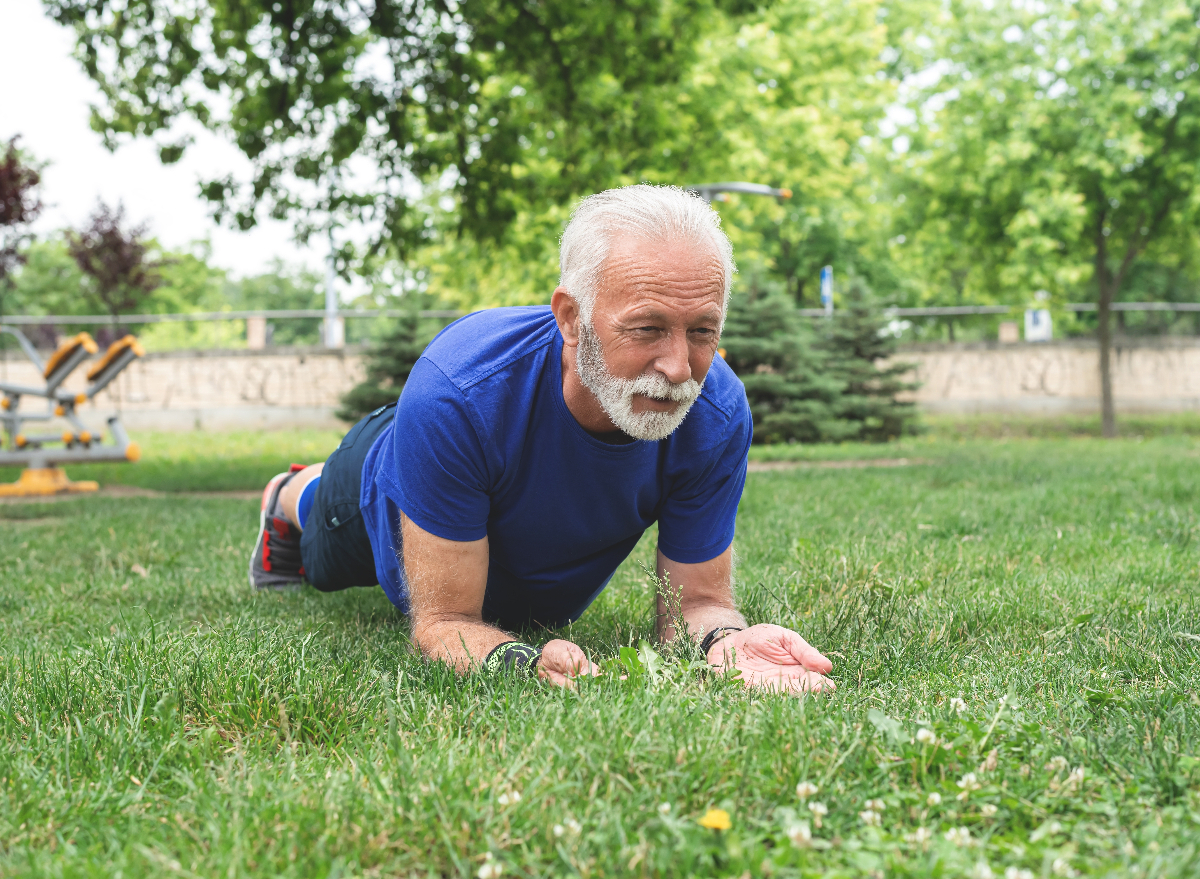
Planks help stabilize the spine and strengthen the core.
- Bring your forearms to the ground, parallel to each other.
- Extend your legs back so your body forms a straight line.
- Activate your abs as you hold the forearm plank.
Squats
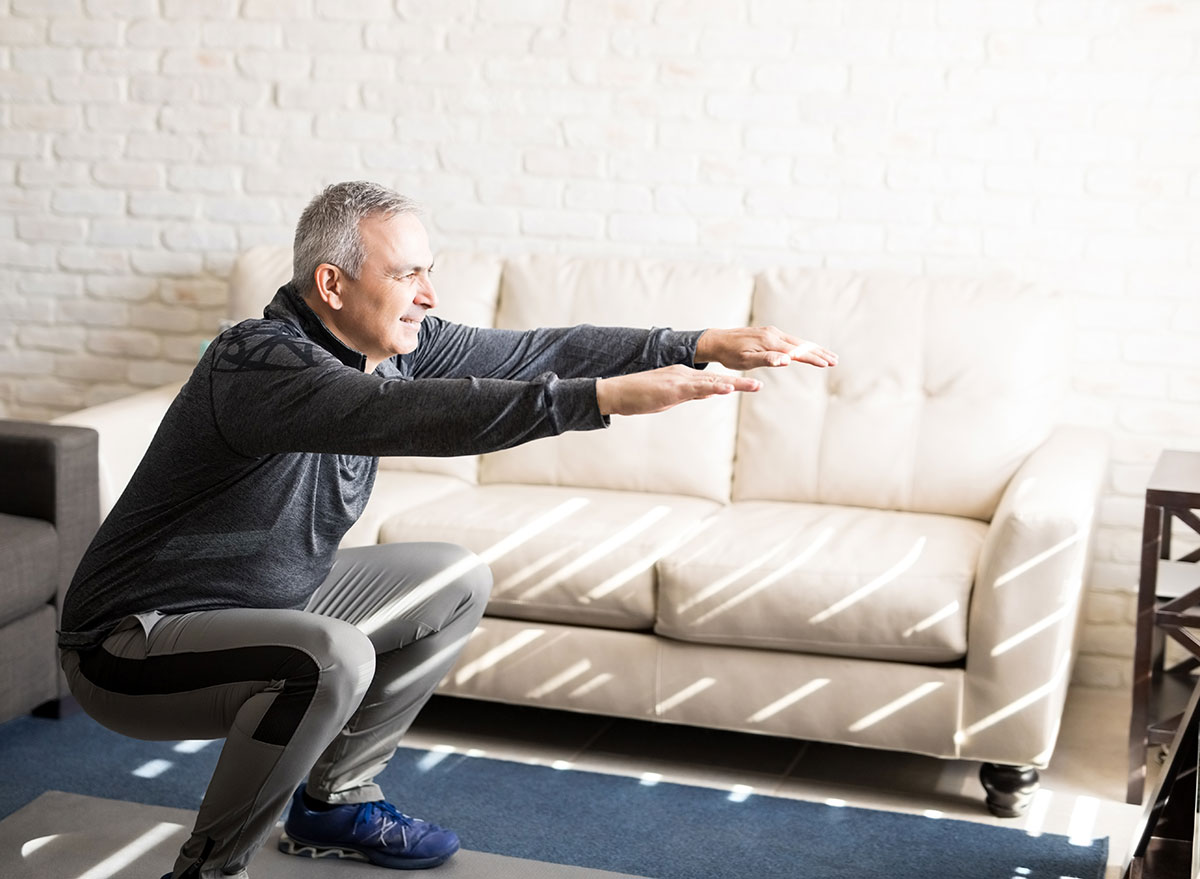
Adding squats into your routine builds lower-body strength. This bodyweight move is essential for maintaining an active, independent lifestyle as you age.
- Stand tall with your feet planted shoulder-width apart.
- Bend at the knees and hips as you lower into a squat until your thighs are parallel to the floor.
- Hold in the squat position for 30 seconds to 1 minute.
- For a dynamic challenge, pulse within a small range of motion.
Lunges
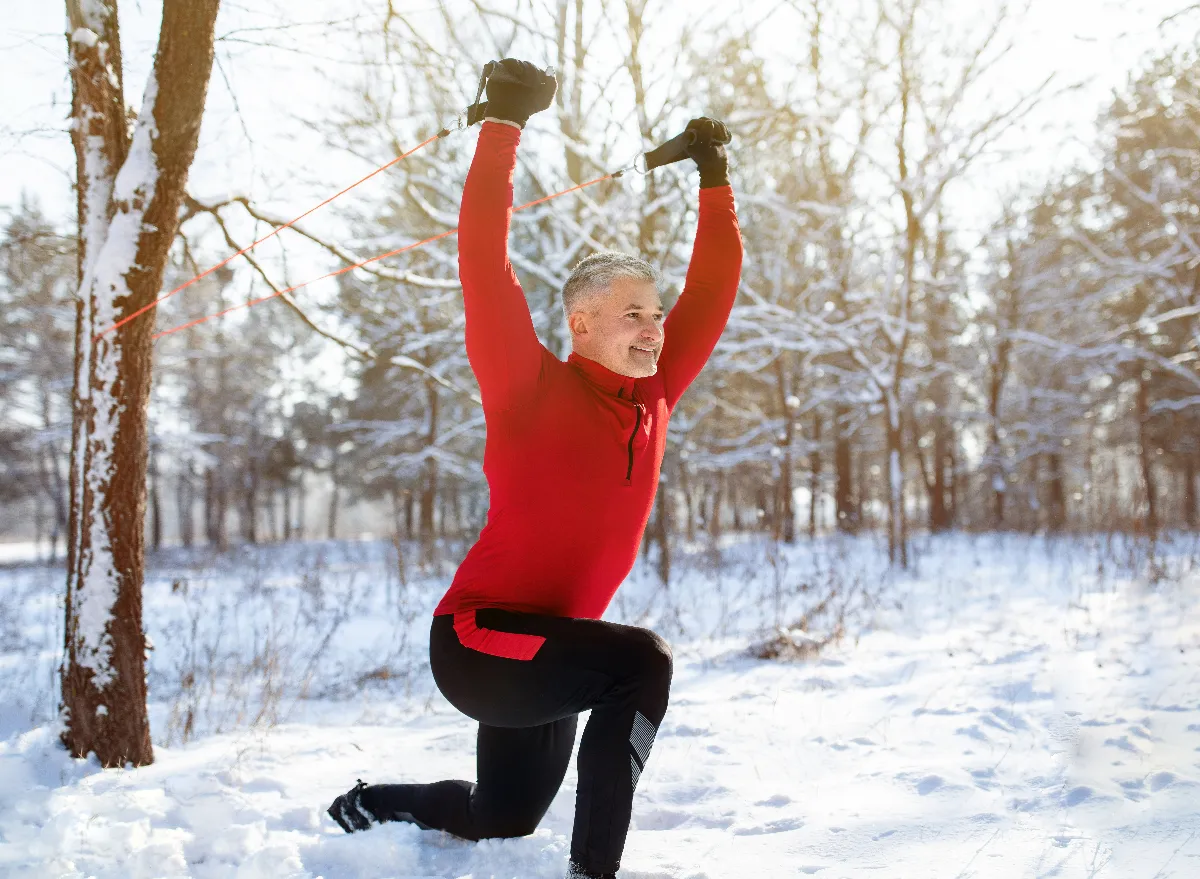
Lunges are a great movement to improve joint control and balance.
- Stand tall with your body in a straight line.
- Step one foot forward.
- Bend your front and back knee as you lower into a lunge.
- Maintain a tall posture while lowering.
- Extend your legs to return to the start position.
Pushups
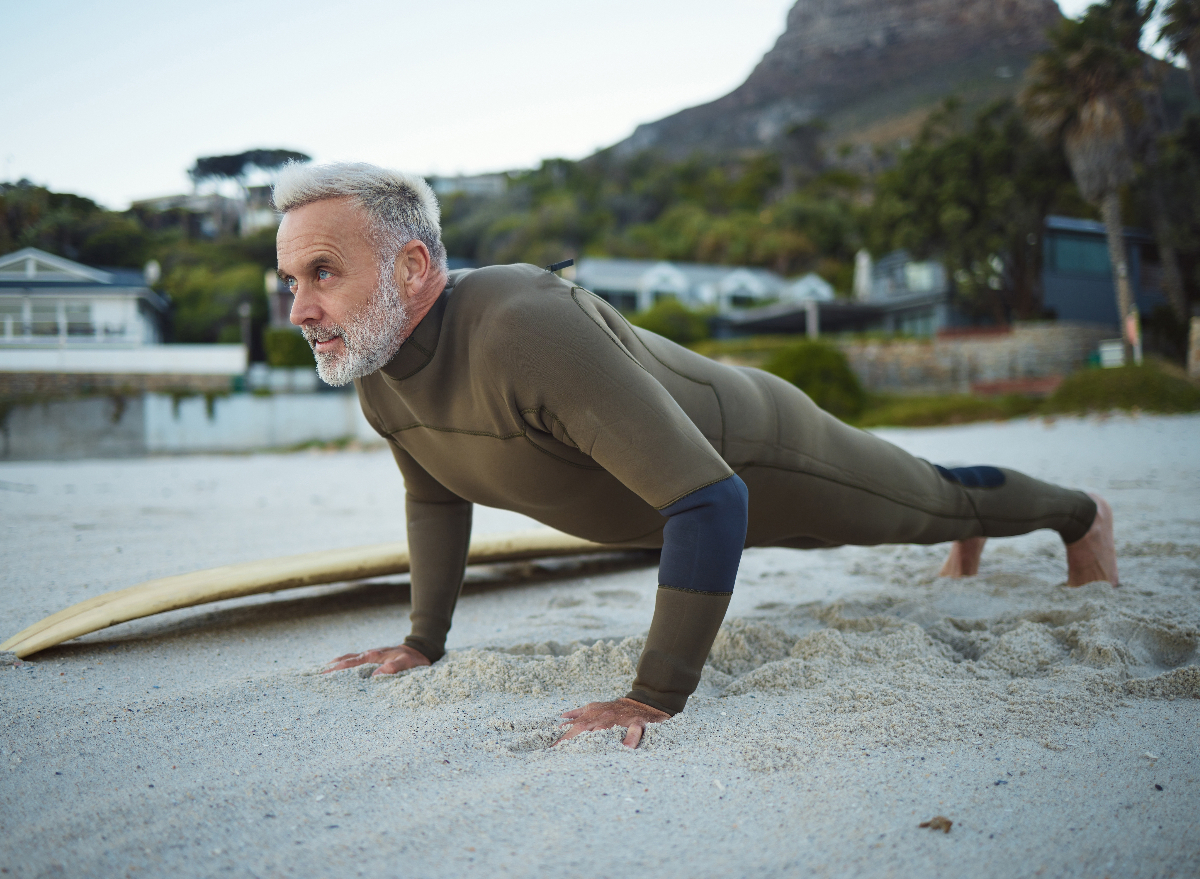
Pushups kick up your core and upper-body endurance.
- Begin in a high plank with your hands under your shoulders, keeping your body straight.
- Bend your elbows and lower your chest toward the floor.
- Press through your hands to rise back up.
Glute Bridges
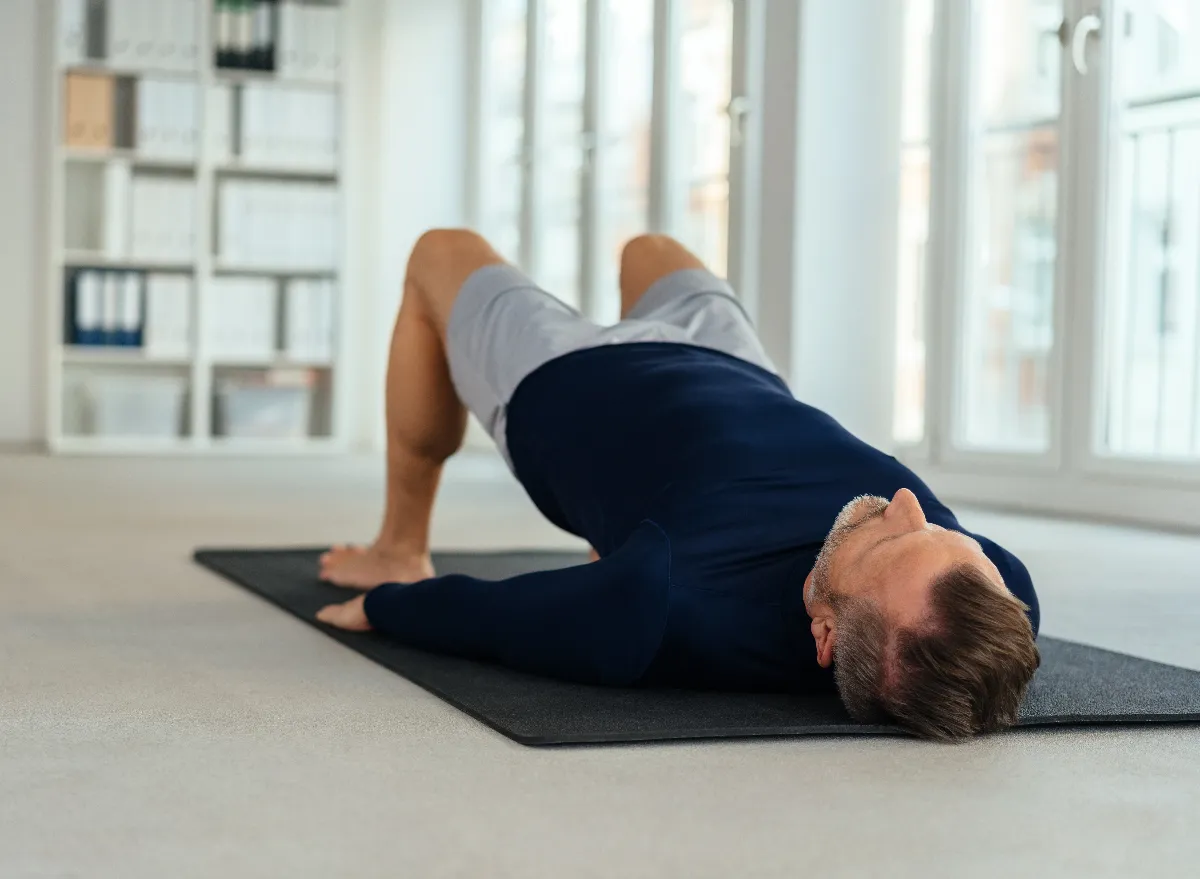
Glute bridges help alleviate lower back pressure. They also maintain mobility in your hips.
- Lie flat on your back with bent knees and feet hip-distance apart on the floor.
- Press through your heels as you lift your hips toward the ceiling until your body forms a straight line from head to heels.
- Squeeze your buttocks at the top, hold for a few moments, then lower.
Alexa Mellardo