

Discovering water coming through the basement floor can be one of the most confusing problems homeowners face. Many people expect leaks to appear in basement walls or windows, but when moisture begins seeping up from the floor, the source of the problem is often unclear.
Basement floor seepage typically occurs when water builds up beneath the foundation slab and gradually pushes upward through cracks, joints, or porous concrete. Even homes that have never experienced flooding can develop this issue over time.
Understanding why basement floors start seeping water can help homeowners identify early warning signs and take steps to prevent long-term structural damage, mold growth, and costly repairs.
Because basement floors sit directly on the ground, they are constantly exposed to moisture from the surrounding soil. When that moisture has nowhere to go, it may eventually find its way into the basement.
Key Takeaways
-
Basement floor seepage usually occurs due to groundwater pressure beneath the foundation.
-
Concrete basement floors are porous and can allow moisture to pass through.
-
Cracks in the basement floor create easy pathways for water intrusion.
-
Seasonal changes and heavy rainfall often increase underground water pressure.
-
Professional basement waterproofing systems can manage groundwater and prevent floor seepage.
Why Basement Floors Are Vulnerable to Water Seepage
Basement floors are typically made from poured concrete slabs that rest directly on compacted soil. While concrete is strong and durable, it is not completely waterproof.
Concrete contains microscopic pores that can allow moisture to pass through under certain conditions. When groundwater pressure increases beneath the foundation, water may slowly move through these pores.
Over time, this moisture movement can become visible as damp areas or small puddles on the basement floor.
Unlike leaks from plumbing pipes, basement floor seepage often appears gradually and may become more noticeable during wet seasons.
Hydrostatic Pressure Beneath the Foundation
One of the most common causes of basement floor seepage is hydrostatic pressure beneath the foundation slab.
When rainwater or melting snow saturates the soil around and beneath a home, water begins filling the small spaces between soil particles. As the soil becomes more saturated, pressure increases.
Because basement floors sit directly above this saturated soil, water pressure may begin pushing upward against the concrete slab.
Eventually, the pressure can force water through:
-
tiny pores in the concrete
-
cracks in the basement floor
-
joints where the wall meets the floor
This process explains why homeowners may notice water appearing on their basement floor even when there are no visible leaks in the walls.
Cracks in the Basement Floor
Cracks in basement floors are extremely common and often develop as homes settle over time.
These cracks may occur due to:
-
natural foundation settling
-
soil expansion and contraction
-
temperature changes
-
shifting groundwater levels
While many floor cracks appear harmless, they can easily allow water to enter the basement when hydrostatic pressure builds beneath the slab.
In some cases, homeowners may notice water appearing only during certain seasons, especially after heavy rainfall or snowmelt.
Recurring water along floor cracks usually indicates that groundwater pressure is present beneath the foundation.
Water Seeping Through the Wall-Floor Joint
Another common location for basement floor seepage is the cove joint, which is the area where the basement wall meets the floor.
This joint exists because basement walls and floors are typically poured at different times during construction. The seam between these two surfaces can become a weak point where water enters.
When groundwater pressure increases, water may follow this joint and seep into the basement along the edges of the floor.
Homeowners may notice dampness or small puddles forming along the perimeter of the basement.
This type of seepage is one of the most common signs that a basement drainage system may be needed.
Seasonal Changes That Increase Floor Seepage
Basement floor leaks often appear during certain times of the year when groundwater levels rise.
Common seasonal triggers include:
-
spring snowmelt
-
heavy rainstorms
-
prolonged wet weather
-
frozen soil preventing natural drainage
During these periods, soil around the home may remain saturated for extended periods of time. As the water accumulates, hydrostatic pressure beneath the foundation increases.
This increased pressure can force moisture through the basement floor even if the basement normally stays dry.
Why Sealing Basement Floors Often Fails
Many homeowners attempt to stop basement floor leaks by applying sealants or waterproof paints to the concrete surface.
While these products may temporarily slow down moisture penetration, they rarely solve the underlying problem.
Because the water pressure originates beneath the foundation slab, surface coatings cannot eliminate the pressure pushing moisture upward.
Eventually, water will find another pathway into the basement.
This is why surface sealing solutions are often considered temporary fixes rather than long-term solutions.
How Professional Basement Waterproofing Stops Floor Seepage
Professional basement waterproofing systems are designed to manage groundwater before it can enter the basement.
Instead of trying to block water at the surface, these systems work by controlling water movement around the foundation.
A typical waterproofing solution may include:
-
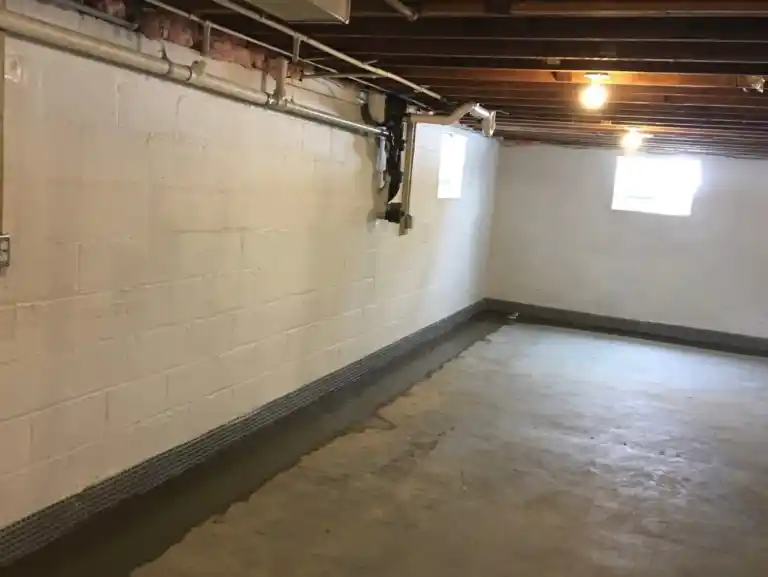
interior drainage channels installed along the basement perimeter
-
sump pump systems that remove collected water
-
drainage systems beneath the basement floor
-
crack repairs in foundation walls and floors
Interior drainage systems collect water as it enters the basement and direct it safely to a sump pump.
The sump pump then removes the water from the home and discharges it away from the foundation.
This process relieves hydrostatic pressure and prevents water from accumulating beneath the basement floor.
Protecting Your Basement From Future Water Problems
Preventing basement floor seepage requires addressing both groundwater pressure and drainage conditions around the home.
Homeowners can reduce moisture risks by:
-
maintaining gutters and downspouts
-
ensuring proper grading around the foundation
-
monitoring basement humidity levels
-
addressing small cracks before they worsen
However, when groundwater pressure becomes significant, professional waterproofing systems are usually the most effective way to keep basements dry long term.
A properly installed drainage system can prevent recurring water problems and help protect the home’s foundation.
Conclusion
Basement floor seepage is a common problem that many homeowners experience, especially in areas where groundwater levels fluctuate throughout the year.
When water builds up beneath the foundation, hydrostatic pressure can push moisture through cracks, joints, and porous concrete. Over time, this process can lead to damp floors, puddles, and ongoing moisture problems.
Understanding why basement floors start seeping water helps homeowners recognize early warning signs and take action before the issue becomes more severe.
Professional basement waterproofing systems are designed to manage groundwater, relieve pressure beneath the foundation, and keep basements dry and protected for years to come.
FAQs
Why is water coming through my basement floor?
Water often seeps through basement floors when groundwater pressure beneath the foundation forces moisture through cracks or porous concrete.
Is basement floor seepage a serious problem?
Yes. Persistent moisture can lead to mold growth, structural damage, and poor indoor air quality if left untreated.
Can cracks in basement floors cause leaks?
Yes. Even small cracks can allow water to enter when hydrostatic pressure builds beneath the foundation.
What is the best way to stop basement floor seepage?
Professional basement waterproofing systems that include interior drainage channels and sump pumps are typically the most effective long-term solution.