
When Mindy Uber travels, she likes to observe the architecture of different regions, cities and nations. In particular, she likes checking out Major League Ballparks — her goal is to visit all 30 of them.
Uber has to travel often as the regional vice president of safety for Skanska USA, the American arm of the Sweden-based developer and contractor. As a part of taking in construction around the world, she also pays close attention to safety practices — and not just on Skanska jobs.
Here, Uber talks with Construction Dive about how she entered the industry, the safety work she’s proudest of and how far women in construction have come over the course of her career.
The following has been edited for brevity and clarity.
CONSTRUCTION DIVE: How did you get your start in construction?
Mindy Uber: It was kind of by accident, honestly. I had my degree in environmental science. I had been working for a couple different consulting firms doing asbestos surveys, hazardous materials investigations, lead paint sampling, all kinds of stuff. And I was getting a little bored with that. I was looking for something else.
I didn’t really seek out construction. I happened to meet a Skanska employee in a class that I was taking, and he said, “Hey, it would be really great to have someone with your background and your knowledge and skills on our team.” So he brought me to a jobsite and showed me around. That was 19 and a half years ago.
What’s different about construction that you like more than your previous work?
Well, I haven’t been bored since I’ve been here, so that’s good.

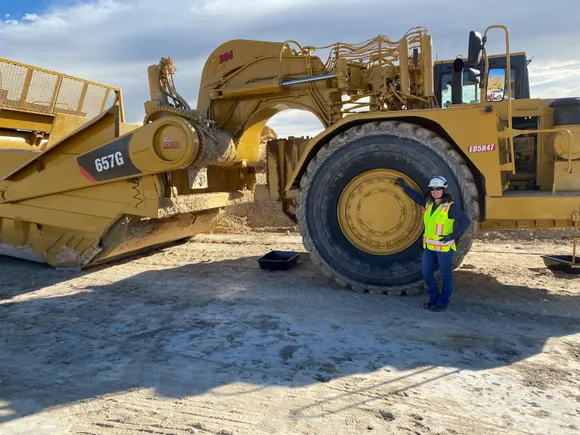
Mindy Uber
Permission granted by Skanska
I like that construction’s always evolving. Literally as we’re building things, it’s changing. I like the different types of buildings that we build, the different communities that we build in, different teams, different opportunities. There’s always challenges in safety.
I like being part of helping find solutions and bringing the right people to the team. I think that’s what’s keeping me here and keeps me engaged.
What safety work are you proudest of?
I’ve done a lot of work with vendors. Whether that’s tool manufacturers or PPE, helping guide workshops and getting feedback — especially around women’s PPE — has been great. Working with a vendor to say, “Here’s what we need,” and then bringing end users together to try stuff on, give feedback, that’s been really meaningful for me.
I like to be able to influence the industry and speak as an end user, but also bring in other voices for folks who are out in the field all day every day. I want to let them give their input on the tools they’re using, the vests they’re wearing every day, the helmets they’re wearing.
How has the role of women in construction changed since you joined the industry? What’s different?
I’ve definitely seen more women in construction, especially in leadership roles at Skanska. That has been meaningful to me to have an example to follow. I think the industry in general has evolved quite a bit in my time. Terminology that’s used is more gender-inclusive now.
Certainly when I started, I had some tough conversations with people who didn’t think that women belonged in construction or commented what could I possibly know about construction safety, having no experience working in the trades myself.
I think that type of mindset has changed. People appreciate what women can offer, that we do have good ideas even though I’m personally not out there swinging hammers every day. I think there’s more opportunity for us to have a seat at the table than there was 20 years ago.
What does it mean to be a woman in construction to you?
It’s kind of funny, I don’t have any other perspective. Yes, I’m a woman and I work in construction.
I think it’s pretty unique. In my friend group, I work in a rather non-traditional role, I’d say, for women, and I think that’s pretty cool. I’m proud of that. I’m proud of my career and how I’ve been able to move up and be supported by Skanska the whole way.
I hope that someday it won’t be a thing. Like it won’t be such a unique thing to talk about, because there will be so many women in construction that it’s just like talking to men. We’re on the way there, but I think it will take quite some time.
What advice do you have for other women in construction?
Stand your ground. Make sure you’re getting your voice heard. Sometimes we’re not the loudest voices in the room. It’s hard to be a different voice, whether that’s a different opinion or bringing different ideas to the table, but stick to your guns.
Also, find some people who can support you and be your champions. I was fortunate early in my career, I had a couple of superintendents take me under their wings and show me the ropes and they were there when I needed help talking. So, find some allies.