Skip to content
Executive Summary
The ECOWAS building seismic joints market is entering a pivotal phase of structural transformation, driven by a confluence of rapid urbanization, evolving regulatory frameworks, and heightened awareness of seismic risks. This report provides a comprehensive 2026 analysis and strategic forecast to 2035, dissecting the complex interplay of demand drivers, supply chain dynamics, and competitive forces shaping the region. The market’s trajectory is fundamentally tied to large-scale infrastructure modernization and the adoption of more resilient building codes across member states.
Growth is increasingly concentrated in coastal urban hubs and economic capitals, where high-rise construction and critical infrastructure projects are most prevalent. However, market penetration remains uneven, with significant variance in adoption rates between more developed and emerging economies within the bloc. The competitive landscape is characterized by the presence of specialized international manufacturers alongside a growing cadre of regional fabricators and distributors seeking to capture value.
This analysis concludes that the long-term outlook to 2035 is robust, contingent upon sustained public and private investment in resilient infrastructure. The market’s evolution will be defined by technological adaptation, cost optimization strategies, and the deepening of local supply chains. Strategic insights provided herein are essential for stakeholders aiming to navigate regulatory shifts, identify growth pockets, and mitigate operational risks in this specialized but critical construction segment.
Market Overview
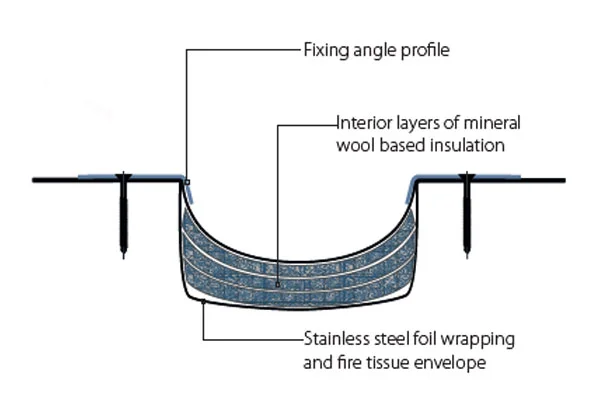
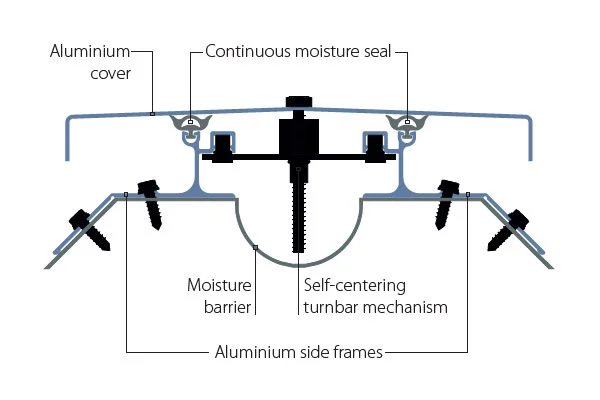
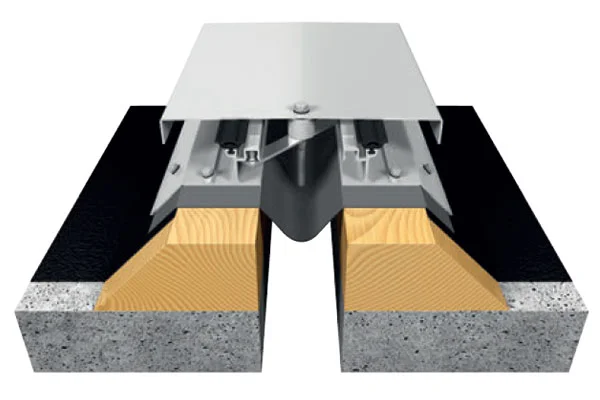
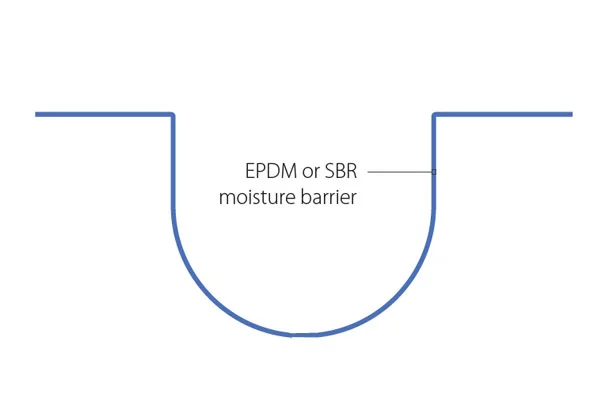
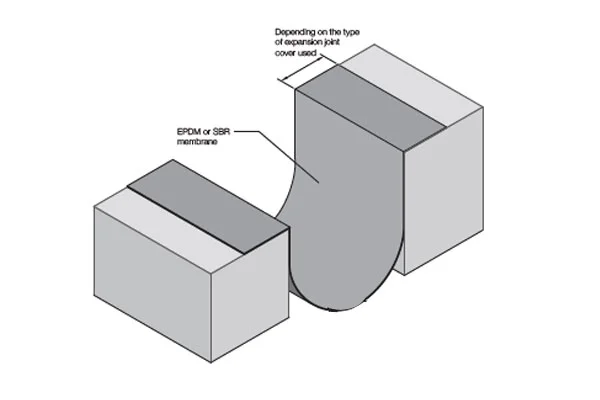
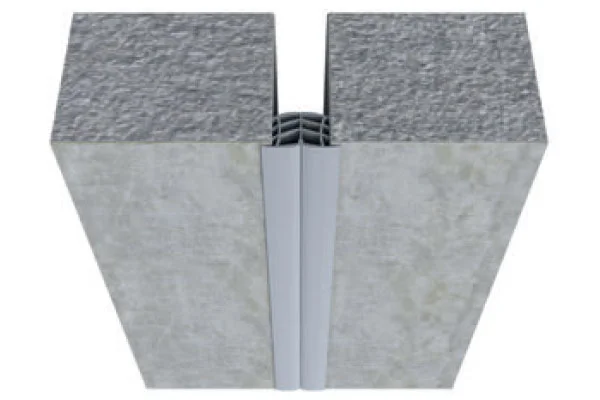
The ECOWAS building seismic joints market constitutes a specialized niche within the broader construction materials and advanced building systems sector. Seismic joints, also known as expansion joints or movement joints, are engineered components designed to absorb and accommodate dynamic movements in structures caused by seismic activity, thermal expansion, wind sway, and settlement. In the ECOWAS context, their primary function is to enhance the seismic resilience of buildings and infrastructure, thereby protecting lives and assets.
The market’s geographical footprint spans the fifteen member states of the Economic Community of West African States, with activity heavily concentrated in Nigeria, Ghana, Côte d’Ivoire, and Senegal. These countries account for the lion’s share of regional construction GDP, high-rise development, and public infrastructure spending. The market is segmented by product type, including metallic joints, rubber-based joints, and laminated bearing systems, each with specific applications in commercial, residential, industrial, and public infrastructure projects.
Current market maturity varies significantly across the region. While countries like Ghana and Côte d’Ivoire have made notable strides in updating building codes, implementation and enforcement remain inconsistent. The market is transitioning from a reliance on imported, specification-driven solutions for flagship projects towards a more diversified model that includes localized assembly and supply for mid-tier construction. This evolution is creating new opportunities and challenges for industry participants.
Demand Drivers and End-Use
Demand for building seismic joints in ECOWAS is propelled by a multi-faceted set of macroeconomic, regulatory, and social factors. The primary catalyst is the region’s unprecedented urban population growth, which is fueling intensive construction of high-rise residential and commercial towers in major cities. These structures, by virtue of their height and mass, have a fundamental requirement for movement accommodation and seismic protection that standard construction cannot provide.
Concurrently, a critical demand driver is the ongoing revision and formalization of national building codes across several ECOWAS member states. Governments and regulatory bodies, often prompted by international development agencies and lessons from past seismic events in neighboring regions, are increasingly mandating higher standards of structural resilience. This regulatory push is transforming seismic joints from a premium, optional feature into a code-required component for an expanding class of structures.
The end-use landscape is diverse and expanding:
- Commercial Real Estate: Office towers, shopping malls, and hotels in financial districts and urban cores represent the most consistent source of demand, driven by private developers and international investors requiring compliance with global best practices.
- Public Infrastructure: Government-funded projects such as airports, railway stations, hospitals, and universities are becoming significant consumers, particularly as public procurement increasingly emphasizes disaster resilience.
- Industrial Construction: Large-scale manufacturing plants, warehouses, and energy facilities require seismic joints to protect sensitive equipment and ensure operational continuity.
- High-End Residential: Luxury apartment complexes and condominiums in major cities are incorporating seismic resilience as a key selling point for safety and asset protection.
Furthermore, rising risk awareness among insurers and financial institutions, who are beginning to link financing and insurance terms to demonstrable resilience measures, is creating a powerful indirect driver. This financial incentivization is gradually extending demand beyond the largest projects to a broader segment of the construction market.
Supply and Production
The supply landscape for building seismic joints in ECOWAS is characterized by a hybrid model of import dependency and nascent local value-addition. The vast majority of high-specification, engineered joint systems are imported from established manufacturing hubs in Europe, North America, and Asia. These international suppliers provide certified, tested products for complex projects, often working directly with multinational engineering firms and leading contractors.
However, a tier of regional supply is emerging. This includes:
- Local fabricators who assemble or customize joint components using imported raw materials like specialized steel and elastomers.
- Regional distributors and technical representatives of international brands, who maintain local stock and provide technical sales support.
- Suppliers of lower-tech joint solutions and ancillary materials, such as sealants and covers, which are increasingly produced within the region.
Local production faces significant hurdles, including high capital costs for precision manufacturing equipment, a scarcity of specialized engineering expertise, and challenges in sourcing consistent, high-quality raw materials. The economies of scale required to compete with global giants on core product lines are difficult to achieve given the current market size. Consequently, local players often compete on agility, customization for local project specifics, faster delivery times, and cost-effectiveness for less complex applications.
The supply chain is also sensitive to global logistics disruptions and currency volatility, as key inputs are dollar-denominated. This vulnerability underscores the strategic importance of developing more resilient regional supply networks, a trend that is likely to gain momentum as the overall market volume grows towards 2035.
Trade and Logistics
International trade is the lifeblood of the high-end ECOWAS seismic joints market. Imports flow primarily through major seaports such as Tincan/Apapa in Nigeria, Tema in Ghana, Abidjan in Côte d’Ivoire, and Dakar in Senegal. These ports serve as the critical gateways for bulky, high-value consignments of engineered joint systems and raw materials. Air freight is utilized for urgent, high-value components needed to address project delays.
The trade landscape is shaped by several key factors. Firstly, complex certification requirements mean that products from established international manufacturers are often specified by name in project tender documents, limiting short-term competition. Secondly, tariffs and import duties on finished goods vary by country, influencing the landed cost and competitiveness of different supply routes. Some countries offer concessions for infrastructure-related imports, which can alter sourcing decisions.
Intra-regional trade within ECOWAS remains limited but holds potential. As local assembly and fabrication grow, there is scope for the movement of semi-finished components or standardized products from more industrially advanced member states to their neighbors. However, this is currently constrained by non-tariff barriers, including differing national standards, bureaucratic clearance procedures, and underdeveloped cross-border logistics for specialized cargo. The effectiveness of the ECOWAS Trade Liberalization Scheme (ETLS) in facilitating the smooth flow of these specialized construction materials will be a key variable to watch through the forecast period to 2035.
Logistics costs and lead times constitute a significant portion of the total cost of ownership for end-users. Delays at ports, challenging inland transportation to construction sites, and the need for careful handling to prevent damage all add layers of complexity and cost. Suppliers that can master in-country logistics and provide just-in-time delivery gain a distinct competitive advantage in the market.
Price Dynamics
Pricing in the ECOWAS seismic joints market is not transparent and is highly project-specific, determined by a complex set of variables. The foundational cost driver is the specification: a joint system designed for a 50-story tower in a high seismic zone is fundamentally different in engineering and cost from one for a mid-rise building. Material composition—whether high-grade stainless steel, specialized alloys, or advanced polymers—directly dictates a significant portion of the unit price.
Beyond product specs, the procurement model heavily influences final price. Direct import by a main contractor or consultant for a specific project often yields one price point, while purchases through local distributors who add margins for inventory holding, technical support, and warranty services yield another. Large-scale infrastructure projects funded by multilateral development banks often undergo competitive international bidding, which can exert downward pressure on prices, though rarely at the expense of certified quality.
Macroeconomic factors introduce volatility. Fluctuations in global metal prices (especially steel), currency exchange rates against the Euro and US Dollar, and changes in maritime freight costs are all passed through the supply chain. Furthermore, the cost of compliance—including testing certifications, third-party inspections, and the engagement of specialized installation supervisors—adds a substantial premium to the delivered price. This makes the total installed cost significantly higher than the ex-works price of the joint component itself.
Looking towards 2035, price dynamics are expected to be influenced by two opposing forces. On one hand, increased market volume and potential scaling of local assembly could exert moderate downward pressure on costs for standard solutions. On the other hand, the likely tightening of performance standards and the demand for more advanced, integrated joint systems for next-generation resilient infrastructure could support premium pricing for innovative, high-performance products.
Competitive Landscape
The competitive arena is stratified and defined by distinct player archetypes, each with its own strategic focus and value proposition. At the top tier are the global engineering-focused manufacturers, predominantly based in Europe and North America, with a long heritage in seismic and structural movement technology. These players compete on the basis of:
- Proven performance in extreme conditions and extensive certification portfolios.
- Proprietary engineering software and design support services.
- Direct relationships with multinational engineering consultancies (AECOM, ARUP, etc.) and flagship project developers.
A second tier consists of large international construction material conglomerates and regional leaders from the Middle East and Asia, who offer seismic joints as part of a broader portfolio of building envelope or structural solutions. They compete through integrated supply, competitive pricing, and leveraging existing distribution networks in the region.
The emerging and increasingly active tier comprises local and regional specialists. These include:
- Authorized distributors and technical partners of international brands, who provide crucial in-country presence.
- Local fabricators and engineers who design and assemble joint systems for specific project requirements, often filling gaps for mid-market projects.
- Specialized subcontractors who focus on the installation and maintenance of joint systems, a critical and skill-intensive part of the value chain.
Competition is intensifying as the market grows. Global players are establishing more permanent local offices and technical centers, while regional players are investing in technical training and seeking partnerships to enhance their capabilities. The competitive battleground is shifting from purely product specification to encompass total value, including design assistance, logistics reliability, installation supervision, and after-sales service. Success through 2035 will depend on a firm’s ability to navigate local regulatory environments, build trust with a widening contractor base, and offer solutions that balance performance with economic feasibility for the ECOWAS context.
Methodology and Data Notes
This market analysis and forecast is built upon a rigorous, multi-layered research methodology designed to ensure analytical depth and reliability. The core approach integrates quantitative data gathering with qualitative expert assessment to triangulate market size, trends, and dynamics. Primary research formed the backbone of the study, involving structured interviews and surveys with key industry stakeholders across the value chain.
Primary research participants were carefully selected to provide a representative cross-section of the market and included:
- Project managers and procurement heads at leading construction and engineering firms operating in ECOWAS.
- Technical directors and sales managers at international seismic joint manufacturers and their local distributors.
- Architects and structural engineering consultants specializing in high-rise and infrastructure projects in the region.
- Regulatory officials and standards body representatives in key member states.
Secondary research provided critical contextual and validation data. This encompassed the analysis of public tender documents for major infrastructure projects, review of national building codes and regulatory announcements, trade statistics from national and international databases, and financial reports of publicly traded construction firms active in the region. Furthermore, a comprehensive review of technical literature, industry publications, and project case studies was conducted to understand technological trends and application specifics.
All market size estimations, growth rate projections, and segment analyses derived from this report are the product of this synthesized research methodology. The forecast to 2035 employs a scenario-based modeling approach, factoring in baseline economic growth projections for ECOWAS, planned public infrastructure pipelines, and anticipated regulatory developments. It is crucial to note that this forecast is sensitive to external macroeconomic shocks, changes in public investment priorities, and the pace of regulatory harmonization across the bloc.
Outlook and Implications
The ECOWAS building seismic joints market is poised for sustained expansion through the forecast horizon to 2035, underpinned by irreversible macro-trends of urbanization, infrastructure development, and resilience thinking. Growth will be non-linear and clustered, with surges tied to the commencement of major national infrastructure projects and the implementation of new building codes in key economies. The market’s evolution will increasingly be shaped by the region’s response to climate change, as resilient construction integrates both seismic and climatic adaptation requirements.
For suppliers and manufacturers, the strategic implications are clear. Success will require a nuanced, country-by-country strategy that recognizes the varying stages of market development within ECOWAS. Building deep partnerships with local engineering firms and contractors will be as important as maintaining product excellence. There is a significant opportunity to develop “tropicalized” or cost-optimized product variants that meet core performance standards while addressing regional budget sensitivities and environmental conditions.
For policymakers and development financiers, the report underscores the critical importance of capacity building. Accelerating market maturity and ensuring quality outcomes will depend on:
- Strengthening the enforcement mechanisms of updated building codes.
- Investing in the training of local engineers, inspectors, and installers in seismic design principles.
- Supporting the development of regional testing and certification facilities to reduce dependency and cost.
In conclusion, the building seismic joints market represents a critical, though often overlooked, component of ECOWAS’s sustainable development and disaster risk reduction agenda. Its growth trajectory offers a tangible indicator of the region’s commitment to constructing a safer, more resilient built environment. The transition from a niche, import-dependent market to a more mature, diversified, and regionally integrated industry will present both formidable challenges and substantial opportunities for all stakeholders involved from now through 2035.
Source: IndexBox Platform