
It is a challenging time to be a roofing contractor. The tariffs have increased costs and created supply chain delays. While there is an optimistic outlook for roofing opportunities in 2026, currently, building owners and property managers are hesitant to move forward with projects. Contractors, however, play an important role as honest brokers in the process of helping clients navigate uncertain times by listening to their challenges and recommending solutions.
Roofing contractors are responsible for choosing the right materials for each project. By understanding industry trends and the benefits of different roofing options, contractors can provide invaluable counsel.
Market growth and opportunities
An important conversation to have with clients is the opportunity to save money. Roof coatings are a strategic choice for extending the life of an existing roofing system efficiently and cost-effectively. Since the Roof Coatings Manufacturers Association (RCMA) has been educating end-users for many years on the many advantages of roof coatings. Building owners, developers, architects, specifiers, and facility managers are recognizing the tremendous benefits of this solution, which is driving increased demand and market growth. According to SNS Insider, the roof coating market size is expected to reach $3.64 billion by 2032, growing at a compounded annual growth rate of 3.54 percent over the forecast period of 2024–2032.1
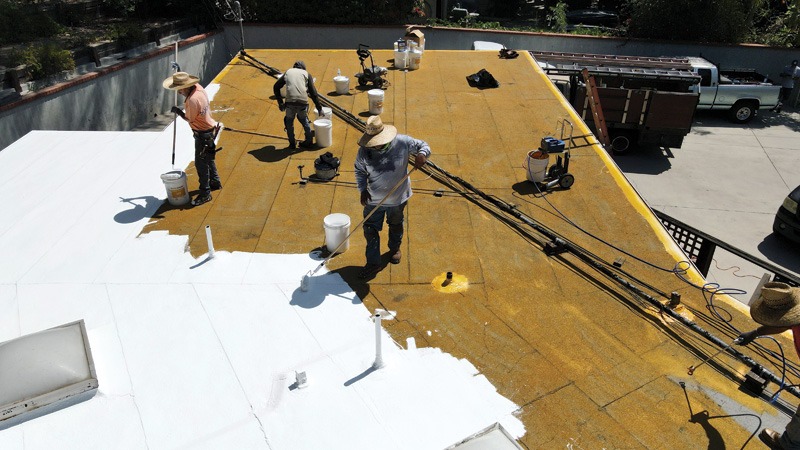
Silicone roof coatings are ideal for any commercial asset class with a flat or slightly sloped roof, regardless of geographic area in the country. For example, shopping centers with modified bitumen cap sheets or single-ply roofs, industrial warehouses, and Class A office buildings would all benefit. Since school districts must maintain and upgrade aging roofs while working within tight budget constraints, restoration with a silicone roof coating could save millions, ensuring safe and dry environments for students and staff.
Thoroughly grasping the ins and outs of this product will help during conversations with customers and position manufacturers as a trusted industry resource.
Silicone roof coating benefits
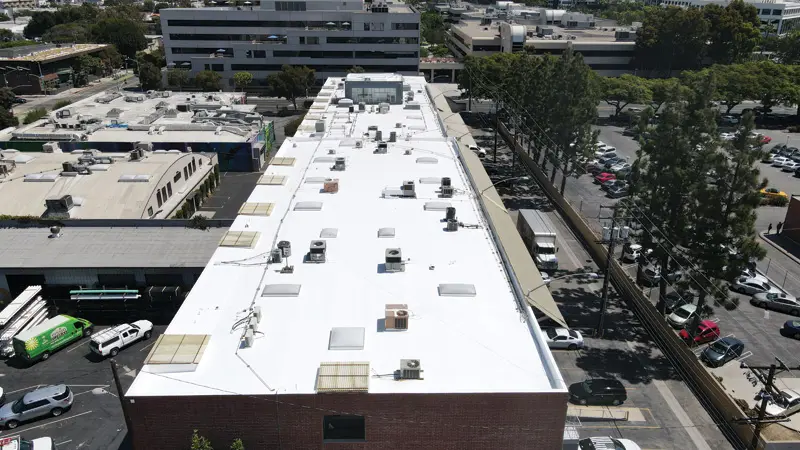
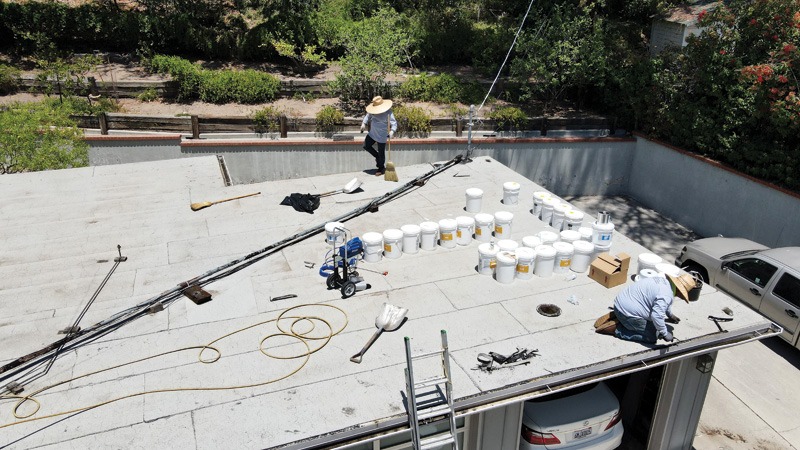
Roofs that are in good shape but require renewal due to age and normal wear and tear are ideal candidates for a silicone roof restoration. This coating process is applied as a liquid membrane to fill in cracks, blisters, and seams, thereby increasing a roof’s resistance to the elements. A roof coating serves as an added waterproofing barrier, protecting the roof surface from environmental exposures and physical damage, including preventing potential leakage from a damaged roof membrane. While the process does not improve insulation, it adds an extra layer of UV protection, reducing thermal absorption and helping the building’s interior stay cooler, which in turn lowers energy consumption and costs.
Unlike other coating materials, silicone will not degrade, chalk, or crack from prolonged exposure to direct sunlight. Silicone coatings erode much more slowly than other elastomeric coatings without becoming too brittle or hard.
Once cured, these moisture-cured coatings form an elastomeric and durable film, which allows the roof coating to seal around penetrations, bridge cracks, and reinforce membrane seams. Being a moisture-cure substance, silicone effectively resists moisture penetration, making it the ideal coating to protect against the damaging effects of ponding.
Professionally applied roof coatings can extend the lifespan of the roof by up to 20 years and can be recoated every 10 years or so, saving thousands of dollars by avoiding traditional roof replacement—an important benefit to point out to customers. Additionally, silicone roof coatings:
- Extend roof life by protecting buildings from water intrusion and enhancing durability.
- Extend building service life by protecting the roof system from water intrusion.
- Prolong the roof system lifecycle by reducing “thermal shock” caused by large temperature fluctuations.
- Reduce installation costs by as much as 30 percent because the process is more straightforward and shorter in duration, which also lowers labor costs.
- Increase energy efficiency because white roofs reflect the sun, keeping roof surfaces cooler. By minimizing cooling costs, peak energy use is reduced, decreasing the risk of power outages and the strain on the electrical grid. According to Energy Star, a roof coating can cut peak cooling demand by 10 to 15 percent.
Adding a reflective coating can reduce roof surface temperatures, particularly on darker or weathered roof systems. For example, on a 32 C (90 F) day, a conventional darker-coloured roof can reach temperatures of up to 66 C (150 F), while a coated or “cool” roof may remain closer to 38 C (100 F)—a difference of roughly 28 C (50 F). Heat transfers from the roof through insulation and into the building. By lowering the roof surface temperature, less heat enters the building, thereby reducing the reliance on HVAC systems to maintain indoor comfort. While roof coatings do not add R-value and may offer additional benefits on roofs that are already white and reflective, they can still contribute to reduced cooling demand and lower energy costs, depending on the existing roof assembly and surface condition.
Return on investment
A primary goal of commercial building owners, developers, and property managers is maximizing the return on investment (ROI) on each property’s assets, including the roof. A silicone roof coating helps avoid an expensive roof tear-off, and the difference in price is significant: a silicone roof coating costs around $2-4 per square foot, whereas a complete tear-off can cost around $6-8 per square foot. In addition, a tear-off takes much longer to remove, costs money to haul away and dump the existing roof in a landfill, and adds expenses for the new roof material and installation.
Labor represents a significant portion of the cost of a full roof replacement, often accounting for nearly half of the total installed price. Depending on location and project complexity, labor costs for tear-off and replacement can range from approximately $3–$7 per square foot, with higher rates common in urban markets. Some contractors may also charge hourly, typically in the range of $40–$80 per hour, with costs increasing for hard-to-access roofs, limited workspace, or multi-story buildings without freight elevators.2
In addition to installation labour, existing roofing materials must be removed before replacement. Tear-off costs typically increase with each additional roof layer, averaging:
- $90–$140 per 100 square feet for one layer
- $110–$160 for two layers
- $120–$170 for three layers
These labour-intensive steps further widen the cost gap between full replacement and roof restoration options, which generally require fewer workers and shorter installation timelines.
Since tenants pay their electric bills, they will appreciate the lower operating costs and increased lease value. This helps ensure that tenants are more satisfied and, as a result, become long-term renters. Additionally, many businesses are environmentally conscious and want to lease buildings from forward-thinking building owners, developers, and property management companies.
Reduced maintenance and investment protection
Controlling unplanned maintenance expenses is the most effective way to reduce costs and tenant frustration while protecting owners’ assets. This strategy is especially valuable when applied to properties throughout the portfolio.
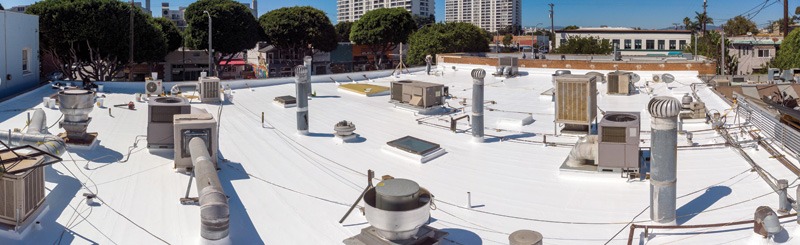
One of the most expensive and vulnerable assets of a commercial building is the roof. Leaks from a damaged roof are not only a nuisance but also destructive to every part of the roof assembly and what is under the roof, including tenants’ property and equipment. By counseling customers about the benefits of a silicone roof coating, contractors help reduce their roof maintenance expenses while providing a cost-effective solution that delivers an excellent ROI.
Financial incentives
Both businesses and tax-exempt organizations, such as schools and religious institutions, can benefit from Section 179D, Energy Efficient Commercial Buildings Tax Deduction, for energy-efficient projects.2 Silicone roofing is a legitimate deduction as defined in Section 179. It is considered part of the equipment that keeps a business running, and the total amount spent on it can be applied toward annual deductions. Further, because silicone roof coatings reduce the energy costs associated with heating, cooling, and lighting, end-users could qualify for the Section 179D deduction, which allows claims between 50 cents to $1 per square foot, depending on the total energy savings.
In addition to using Section 179D deductions, companies can use tax credits for upgrades or construction projects. Specifically, Section 148 Investment Tax Credit allows building owners to use the tax credit against their own tax liability. In most cases, the credits now carry back three years and forward 20 years.
Building owners should consult a qualified tax professional to assess applicable tax-saving opportunities.
Unique role
The unique expertise brought by a skilled roofing contractor knowledgeable in roofing solutions, such as silicone coating, positions them as a trusted advisor and valuable resource. This role as an honest broker provides an invaluable link between end-users and coating manufacturers.
Looking for some information on substrate inspection, prep, costs, procedures, best practices, signs that roof system is not a candidate for restoration.
While silicone coating systems offer many advantages, they also involve tradeoffs that should be considered during project evaluation. Silicone coatings can attract and retain dirt and airborne contaminants, which may discolor the roof surface over time and require periodic cleaning or maintenance to keep it in good condition. Additionally, silicone roof coatings can become slippery, particularly on roofs with steeper slopes—typically those with a pitch of 4:12 or greater.
Notes
1 Refer.
2 See.
Author

Todd Farr is national sales manager with EVERROOF and can be reached at todd@everroof.com. EVERROOF, a division of General Coatings Manufacturing Corporation, is a U.S.-based manufacturer of fluid-applied roofing systems. For more information, visit everroof.com.
Key Takeaways
Silicone roof coatings let contractors extend roof life, reduce leaks, and lower energy use without costly tear-offs. In a high-cost, uncertain market, they deliver strong return on investment (ROI), faster installs, and long-term durability—helping contractors guide owners toward smarter, lower-risk asset protection.