Skip to content
Executive Summary
The Portugal building seismic joints market is a critical, niche segment within the nation’s construction and civil engineering industry, characterized by its direct correlation to regulatory stringency, seismic risk awareness, and investment in resilient infrastructure. As of the 2026 analysis period, the market is transitioning from a period of steady, regulation-driven adoption to one shaped by broader trends in urban redevelopment, critical infrastructure investment, and the retrofitting of the existing building stock. The market’s evolution is not merely a function of new construction volumes but increasingly reflects a sophisticated understanding of lifecycle asset protection and mandatory safety upgrades.
This report provides a comprehensive, data-driven assessment of the market’s current state, supply chain mechanics, and competitive dynamics. It meticulously analyzes the interplay between Portugal’s specific seismic zoning, evolving building codes, and the practical demands of architects, structural engineers, and contractors. The analysis extends through a detailed forecast horizon to 2035, outlining the strategic implications for manufacturers, distributors, and investors operating within this specialized field.
The core conclusion of this analysis is that the Portuguese market for seismic joints is on a trajectory of maturation and segmentation. Growth will be bifurcated, driven simultaneously by high-specification applications in new public and private projects and the expanding retrofit sector. Success for industry participants will hinge on technical advisory capabilities, product certification, and the ability to navigate a complex landscape of public tenders and private developer requirements.
Market Overview
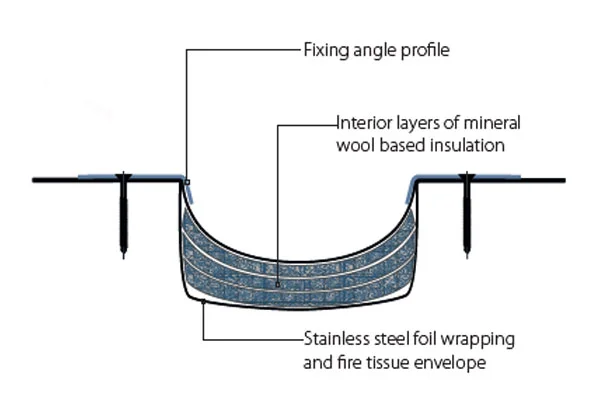
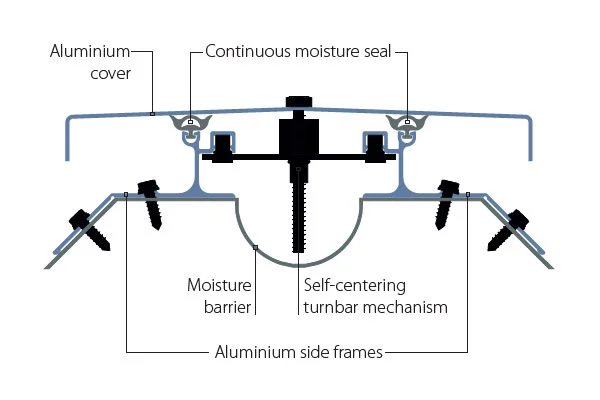
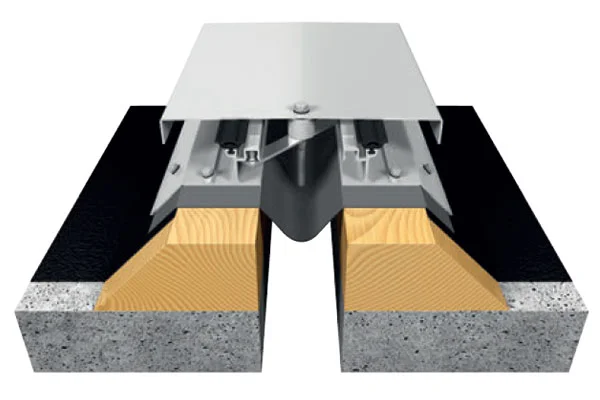
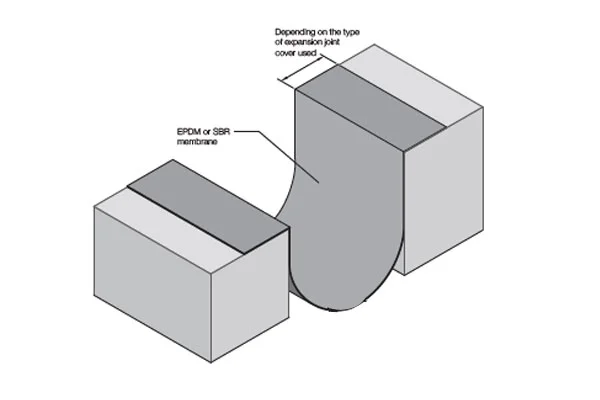
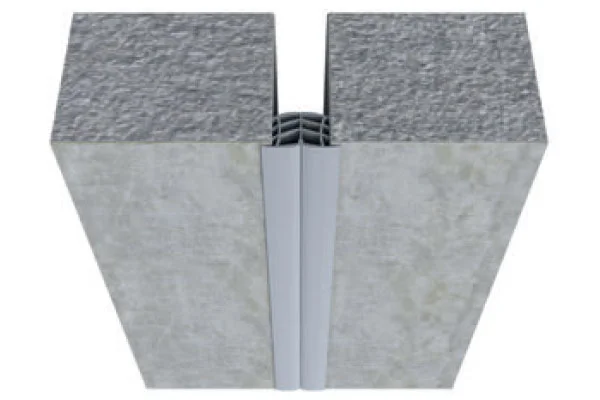
The Portuguese market for building seismic joints is fundamentally defined by the country’s location in a region of moderate seismic activity, particularly in the Lisbon metropolitan area and the Algarve. The regulatory framework, primarily the National Annex to Eurocode 8, mandates specific design and construction requirements for seismic protection, creating a stable baseline demand for certified seismic joint systems. The market encompasses a range of products including expansion joints, structural bearings, and damping devices specifically engineered to accommodate dynamic movements caused by seismic events, thermal changes, and creep.
As of the 2026 analysis, the market structure is a blend of international specialty manufacturers and a network of technically proficient local distributors and engineering consultancies. Market activity is closely tied to the pipeline of large-scale infrastructure projects, commercial real estate developments, and public sector investments in hospitals, schools, and transportation hubs. The market size is inherently linked to the value of the overall construction sector, but with a premium attached to projects where seismic resilience is a non-negotiable design priority.
The product mix within the market is evolving. While traditional mechanical expansion joints remain prevalent, there is growing interest in advanced solutions such as viscous dampers and lead-rubber bearings, particularly for iconic or high-risk structures. This trend reflects a broader shift towards performance-based seismic design, where joints are integral to a building’s overall energy dissipation strategy rather than merely providing a gap for movement.
Geographically, demand is heavily concentrated in regions with higher seismic hazard ratings and greater economic activity. The Lisbon and Tagus Valley region accounts for the largest share of demand, followed by Porto and the northern coastal areas. However, national regulations ensure that even regions with lower seismic risk incorporate basic seismic jointing requirements in public and critical structures, creating a nationwide market.
Demand Drivers and End-Use
Demand for seismic joints in Portugal is propelled by a confluence of regulatory, economic, and technical factors. The primary and non-discretionary driver is the enforcement of national building codes derived from Eurocode 8. Compliance is not optional for new constructions falling within specific use categories and height thresholds, creating a consistent, code-mandated market. Furthermore, the periodic revision and tightening of these codes, often in response to seismic research or events abroad, act as a catalyst for product innovation and specification upgrades.
A significant and growing demand segment is the retrofit and rehabilitation of existing buildings. A substantial portion of Portugal’s building stock, particularly in urban centers, was constructed before the implementation of modern seismic codes. Public initiatives aimed at improving school and hospital safety, coupled with private incentives for commercial property owners to enhance asset resilience and value, are driving investment in seismic strengthening, where joints often play a key role.
The end-use segmentation of the market reveals distinct demand patterns:
- Public Infrastructure & Civil Works: This is the most stable and specification-intensive segment. It includes bridges, overpasses, airports, railway stations, hospitals, and university buildings. Projects in this sector are characterized by long planning cycles, rigorous public tender processes, and an uncompromising focus on certified, durable solutions.
- Commercial Real Estate: Demand here is driven by office towers, shopping malls, hotels, and data centers. For developers and owners, the business case extends beyond compliance to encompass asset protection, business continuity planning, and meeting the sustainability and safety expectations of corporate tenants and investors.
- Industrial Construction: Manufacturing plants, warehouses, and logistics centers require large, open floor plans that are particularly susceptible to seismic forces. The use of seismic joints in these structures is critical to protecting not only the building but also expensive machinery and inventory within.
- Residential Construction: While less prominent in standard housing, seismic joints are mandatory in taller residential buildings and are increasingly specified in high-end developments where safety and quality are key marketing propositions.
Beyond new construction, the market is increasingly influenced by the principles of sustainable construction. The role of seismic joints in protecting a structure over its entire lifespan, thereby preventing demolition and reconstruction after a seismic event, aligns with broader environmental, social, and governance (ESG) goals in the construction industry.
Supply and Production
The supply landscape for seismic joints in Portugal is predominantly import-dependent, with domestic manufacturing capacity for high-specification systems being limited. The market is supplied by a select group of multinational engineering firms that specialize in seismic and structural protection solutions. These companies operate through a hub-and-spoke model, typically managing regional operations from Southern European bases and serving the Portuguese market via exclusive distributors or local branch offices staffed with technical sales engineers.
These international suppliers provide the core technology, proprietary products, and global certification backing. Their product portfolios are extensive, covering everything from standard modular expansion joints to custom-engineered damping systems for unique architectural projects. They compete on the basis of technical performance data, proven project references, research and development investment, and the ability to provide full-scale testing documentation to satisfy stringent Portuguese engineering standards.
The critical local layer of the supply chain consists of authorized distributors and system integrators. These entities are responsible for market penetration, holding local stock of standard components, providing just-in-time delivery to construction sites, and offering essential technical support. Their engineers work directly with Portuguese design firms to ensure correct product selection and integration into building plans. Furthermore, they manage the logistics of importing special-order items and coordinating with the global manufacturer’s technical teams for complex projects.
While full-scale production of advanced seismic joints is not a feature of the local industrial base, there is a niche for local fabrication and value-added services. This includes the custom cutting and preparation of joint profiles, the assembly of smaller modular systems from imported components, and the provision of installation supervision services. The expertise required for proper installation is itself a key aspect of supply, as incorrect installation can void warranties and compromise system performance, making qualified installers a crucial link in the value chain.
Trade and Logistics
Given the import-oriented nature of the market, international trade flows are a defining characteristic. Portugal sources its high-performance seismic joint systems primarily from other European Union countries with established specialty manufacturing clusters, notably Italy, Germany, and Switzerland. These countries host the headquarters and primary production facilities of the leading global suppliers. Trade is facilitated by the EU’s single market, which simplifies the movement of goods and harmonizes technical standards, though national certifications and approvals remain necessary.
The logistics chain for seismic joints is complex due to the nature of the products. Shipments can range from pallets of standardized elastomeric bearings or sealants to oversized, pre-assembled modular joint units or massive damper cylinders for bridge applications. This necessitates a multimodal logistics approach, combining sea freight for heavy components with road freight for just-in-time delivery to often congested urban construction sites. Reliable logistics partners with experience in handling heavy and sensitive construction materials are vital for suppliers and distributors.
Import documentation and customs clearance, while streamlined within the EU, still require meticulous attention to detail. Harmonized System (HS) codes must be accurately declared, and certificates of origin, conformity (CE marking), and mill certificates for metallic components are standard requirements. For projects funded by European development funds or other international financing, additional documentary compliance may be necessary. The lead times for specialized, made-to-order items can be substantial, often spanning several months, requiring careful project planning and inventory management by distributors.
Portugal’s strategic ports, such as Sines and Leixões, along with its road and rail connections to Spain and the rest of Europe, provide adequate infrastructure for this trade. However, the final-mile delivery to construction sites, often located in dense city centers or remote infrastructure project locations, presents the most significant logistical challenge and cost variable for suppliers.
Price Dynamics
Pricing in the Portugal building seismic joints market is far from commoditized and is determined by a multi-faceted set of factors. The primary determinant is the technical specification and performance grade of the product. A simple modular expansion joint for a low-rise building will command a fundamentally different price point than a custom-designed, high-capacity viscous damper for a cable-stayed bridge or a hospital base isolation system. Material costs, particularly for specialized steels, high-grade elastomers, and proprietary fluids, directly influence the final price.
The procurement channel significantly impacts the price paid by the end-user. In public infrastructure projects, acquired through open tender, prices are highly competitive and transparent. Suppliers submit bids based on detailed bill-of-quantities, and the award typically goes to the economically most advantageous tender, which balances price and technical merit. In contrast, private commercial projects may involve negotiated contracts between developers, consulting engineers, and preferred suppliers, where factors like past performance, technical support, and warranty terms can justify premium pricing.
Project scale and complexity introduce further price variables. Large projects allow for economies of scale in both manufacturing and logistics. However, projects with unique architectural or engineering challenges require extensive custom design, computational analysis, and prototyping, costs which are passed on to the client. Furthermore, the total cost of ownership extends beyond the unit price of the joint itself to include the costs of design consultancy, installation labor, and long-term maintenance inspections.
Market prices are also sensitive to broader macroeconomic trends. Fluctuations in global steel and polymer prices, changes in international freight rates, and currency exchange rate volatility (for non-Euro denominated components) can all create margin pressure for suppliers and price variability for buyers. As of the 2026 analysis, the market exhibits a trend where clients are increasingly evaluating lifecycle cost over initial purchase price, benefiting suppliers of higher-quality, more durable systems.
Competitive Landscape
The competitive environment in the Portuguese seismic joints market is an oligopoly of global specialists, mediated by strong local distribution partnerships. The market is not crowded with undifferentiated players; instead, it is contested by a handful of firms with deep technological expertise and extensive international project portfolios. Competition occurs on multiple fronts: technological innovation, certification breadth, project reference quality, and the strength of local technical support networks.
The leading competitors are multinational corporations for whom seismic and structural control is a core business unit. These companies invest heavily in research and development, often in collaboration with universities and research institutes, to develop next-generation damping and isolation technologies. They compete by showcasing their involvement in globally recognized landmark projects, using these as validation of their capabilities for demanding Portuguese clients.
At the operational level in Portugal, competition is channeled through their local representatives. The effectiveness of these distributors or branch offices is a critical success factor. Key competitive differentiators at this level include:
- The technical proficiency of in-country engineers to assist with design and specification.
- Responsiveness in providing quotes, submittals, and delivery schedules.
- The ability to provide or coordinate certified installation crews.
- The depth of local inventory for standard products to meet urgent project needs.
While price competition is acute in public tenders, the market generally avoids pure price wars due to the critical safety function of the products and the significant liability involved. Reputation, reliability, and a proven track record of successful project execution in similar seismic zones are paramount. New entrants face very high barriers, including the cost of product certification, the need to establish trust with the conservative engineering community, and the requirement to build a local support infrastructure from scratch.
Methodology and Data Notes
This report on the Portugal Building Seismic Joints Market has been developed using a rigorous, multi-method research methodology designed to ensure analytical depth, accuracy, and strategic relevance. The foundation of the analysis is a comprehensive review of primary and secondary data sources, triangulated to build a coherent market picture. The methodology is transparent and replicable, adhering to the highest standards of commercial market analysis.
Primary research formed a cornerstone of the study, consisting of structured interviews and surveys with key industry stakeholders. This included conversations with product managers and regional directors at leading international seismic joint manufacturers, technical directors at major Portuguese construction and engineering firms, architects specializing in large-scale projects, public procurement officials, and specialized distributors. These interviews provided critical insights into procurement processes, specification drivers, pricing models, and competitive behaviors that cannot be gleaned from documentary sources alone.
Secondary research involved the systematic aggregation and analysis of data from a wide array of public and proprietary sources. This included analysis of Portuguese national and municipal construction statistics, review of public tender announcements and award notices from the Base.gov.pt platform, examination of company annual reports and financial statements for key players, and monitoring of relevant trade publications and engineering association bulletins. Furthermore, technical data from product catalogs, white papers, and certification documents was reviewed to understand product evolution and performance standards.
All quantitative data presented in this report, including market size estimates, trade figures, and growth rates, is derived from the aggregation and modeling of these verified sources. Where absolute figures are cited, they are drawn from official statistics or well-established industry databases. Forecasts to the 2035 horizon are based on econometric modeling that considers the relationship between seismic joint demand and its key macroeconomic and construction industry drivers, applying historically observed elasticities and accounting for anticipated regulatory and technological shifts. It is crucial to note that this report does not invent new absolute forecast figures but projects trends based on the established 2026 analysis baseline.
Outlook and Implications
The outlook for the Portugal building seismic joints market from the 2026 analysis period through to 2035 is one of cautious optimism and structural evolution. Growth is expected to outpace that of the general construction sector, as the drivers of seismic resilience become more deeply embedded in Portugal’s building culture. This growth will not be linear or uniform but will be segmented across different project types and catalyzed by specific regulatory and economic developments.
A major trend shaping the forecast period is the accelerating focus on the resilience of existing infrastructure. National and EU-funded programs aimed at seismic retrofitting of schools, hospitals, and critical transport links will create a sustained, project-driven demand stream. This retrofit market often involves more complex engineering challenges than new builds, favoring suppliers with strong design-assist capabilities. Concurrently, the ongoing urban regeneration in Lisbon and Porto, featuring mixed-use complexes and taller structures, will continue to demand high-specification jointing systems.
Technologically, the market will see a gradual shift towards smarter, more integrated systems. The integration of sensors within seismic joints to monitor movement and stress in real-time—part of the broader trend towards Structural Health Monitoring (SHM)—will transition from a novelty to a valued feature for critical infrastructure. This will create opportunities for suppliers who can bundle physical products with digital data services. Furthermore, advancements in material science, such as more durable elastomers and shape-memory alloys, will enable longer-lasting, lower-maintenance solutions.
For industry participants, the strategic implications are clear. Manufacturers must continue to invest in product development tailored to the specific seismic and climatic conditions of Southern Europe while strengthening their local technical support ecosystems. Distributors must evolve beyond logistics providers to become true technical partners, capable of guiding clients through complex product selection and regulatory compliance. For investors and new entrants, opportunities may lie in niche areas such as specialized installation services, maintenance contracts, or digital monitoring platforms, rather than in challenging the established giants on core manufacturing.
In conclusion, the Portugal building seismic joints market is maturing into a sophisticated segment where value is defined by safety, durability, and technical assurance. The forecast to 2035 points to a market that is both larger and more discerning, rewarding those players who can successfully navigate its intertwined technical, regulatory, and commercial landscapes. Success will belong to those who view seismic joints not as a mere construction component, but as an essential element of Portugal’s sustainable and resilient built environment for the decades to come.
Source: IndexBox Platform