Skip to content
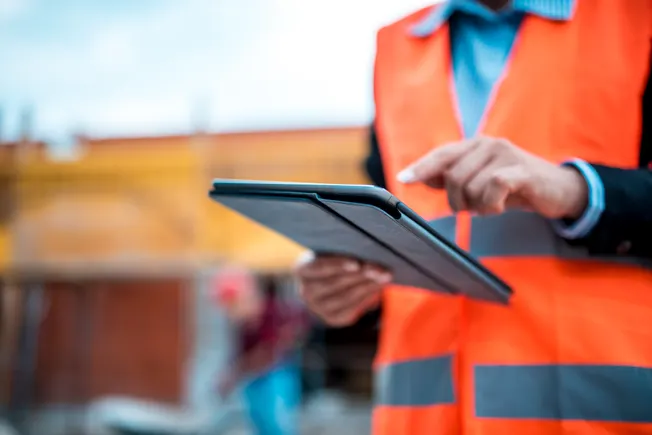

Alok Chanani is the co-founder and CEO of BuildOps, a software platform for commercial and industrial service contractors. Opinions are the author’s own.
The Federal Reserve Bank of Dallas has quietly admitted what many of us knew already: Labor math in Texas is broken.
In their October 2025 Southwest Economy, the Federal Reserve Bank of Dallas stated that decreased international migration is reducing employment growth throughout the state of Texas. And for those working in Texas construction – 40% of whom are immigrants — the loss of international migrant workers is not a “head wind.” It is a structural failure.
For decades, the U.S. construction industry has relied on a consistent stream of foreign-born labor to replace an aging workforce. That pipeline has now been ratcheted down.
Meanwhile, demand is skyrocketing. Due to the infrastructure bill, the reshoring of manufacturing and the rush to build power-hungry data centers to fuel the AI boom, there is more work than ever before.

Alok Chanani
Permission granted by BuildOps
Elected officials can argue over immigration policies until they are blue in the face. However, contractors making less than 3% net profit margins cannot afford to wait for Washington to resolve border issues or for local high schools to produce master electricians.
The reality we face is stark: We will not have enough people to build the future we design.
The industry has exactly one short-term solution: We must significantly increase the productivity of the people we currently have. This is when the conversation about AI typically falls apart and turns into “innovation theater” about robots building brick walls or 3D-printed skyscrapers.
But let’s forget the science fiction. The true benefit of AI in the physical world is not to replace workers; it is to compress experience.
The 20-year gap
The one thing that keeps our customers up at night isn’t the rising price of steel; it’s the so-called silver tsunami. All of the master technicians — the people who can listen to a hospital chiller humming and tell you exactly which valve is loose — are retiring.
When they walk away, they take decades of institutional knowledge with them. We are replacing them with 24-year-old apprentices who are willing to learn but lack experience. In the past, it would take fifteen years to turn that apprentice into a master technician. We no longer have fifteen years.
This is the specific, practical issue that AI addresses.
Young technicians are using AI as a “force multiplier” in the field. When they take a picture of a serial number on a rusty rooftop air conditioning unit, AI can retrieve the owner’s manual, identify the fault codes and summarize the repair history for the past five years.
As a result, a technician with two years of experience can troubleshoot a job with the confidence of someone much more seasoned..
Using AI does not make the job “easier.” Construction remains physically demanding and dangerous. However, AI bridges the knowledge gap. Contractors can now send a junior tech to a critical job without worrying about losing a large amount of money due to a catastrophic mistake.
Survival math
Tech pundits enjoy talking about AI in terms of “disruptors.” However, for the people and companies running electrical, plumbing and mechanical businesses, this is about survival math.
Construction is a business with thin margins and extreme risk. If a project schedule slips because you couldn’t locate a crew or you had to do “rework” because a junior tech made an error, your margins disappear.
Due to the decrease in immigration, the cost of labor will increase. Supply and demand dictate this. If you can’t recruit additional personnel, you must obtain 20% or 30% more revenue from the crews you already have.
As a result, contractors must eliminate administrative waste that currently plagues the trades. Technicians will no longer sit around waiting for dispatch codes. Handwritten invoices lost in truck cabs will cease to exist. Contractors must digitize workflows so that the humans can focus on “wrench time.”
A revolution in hard hats
It is ironic that engineers have been able to train AI on how to create poetry or pass the bar exam. Meanwhile, from my perspective the most significant economic impacts of this technology are occurring in mechanical rooms and on construction sites.
Blue collar workers, who have historically been underserved by technology, are adopting AI solutions at a faster rate than white collar middle management. Why? Because the benefits of AI are undeniable. They don’t care about the hype cycle. They want to complete jobs and go home to their families.
The Dallas Fed report should serve as a wake-up call. The easy growth generated by cheap and plentiful immigrant labor is slowing. We are moving into a period of labor scarcity.
We cannot program our way out of a shortage of electricians. AI can’t pull wires or weld pipes. However, if we stop focusing on vanity metrics and instead concentrate on how to apply AI to solve real-world problems, it can give us the time needed to train the next generation of builders.
The workforce crisis is here. The immigration cavalry is not arriving. And the people holding this country together can’t fight this battle with clipboards and guesswork. It will take putting technology in their hands, powered by AI, to help them win.