 Skip to content

Every construction leader knows how tough it’s become to keep projects fully staffed. It’s not a lack of dedication or skill — the workforce simply isn’t growing fast enough to match the workload. While this reality can be frustrating, it’s also sparking a major shift in how contractors approach their operations.
Below, we explore the value of construction automation in combating labor shortages, and how to start integrating it in a practical way.
How Construction Automation Helps You Overcome Skilled Labor Shortages
Construction automation is the use of digital tools, intelligent equipment and connected jobsite technologies to streamline repetitive or labor-intensive tasks. It isn’t about replacing skilled workers. It’s about enabling smaller teams to deliver at the same scale and quality as larger ones.
Automation bridges the workforce gap by transforming the way construction projects are planned, executed and monitored. A few key benefits of automation in construction include:
- Amplified productivity: With automated systems, fewer operators are needed to accomplish certain tasks.
- Enhanced accuracy: Digital guidance eliminates many of the human errors that can lead to rework. That means less time correcting mistakes and more time pushing the project forward.
- Improved safety: Automation can take over high-risk or repetitive tasks, such as surveying in hazardous zones or manually measuring grades near heavy equipment, reducing exposure to potential injuries.
By integrating digital tools into existing workflows, contractors can stretch their workforce further, deliver consistent results and maintain profitability even when labor is tight.
Driving Efficiency and Productivity With Construction Technology
Modern construction automation comes to life through a range of technologies designed to make work faster, safer and more precise.

Automated Machine Control Systems
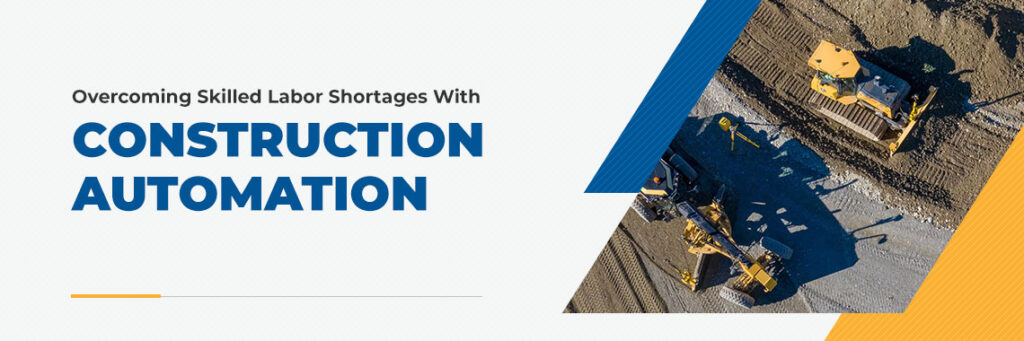
Machine control technology equips dozers, graders and excavators with GPS, sensors and onboard computers that allow operators to work directly from digital design files.
Instead of relying on multiple grade checkers or manual staking, operators can cut and fill to exact specifications in real time. This can help improve accuracy and reduce the need for constant supervision.
Robotic Surveying and Layout
In the past, surveying and layout required several team members working together — one managing the instrument and others marking points in the field. Today, robotic total stations and GNSS rovers enable a single worker to complete complex layout and verification tasks independently.
This approach speeds up the process and demonstrates how technology transforms traditional workflows, allowing one skilled professional to handle tasks that once required a full crew.
Drones for Data Collection and Progress Monitoring
Aerial data collection allows teams to perform stockpile measurements, site mapping and progress updates quickly and safely. Instead of tying up personnel to climb stockpiles or traverse uneven terrain, drones capture high-resolution data that integrates directly with design software and site management platforms.
This level of automation can help save time and provide decision-makers with accurate, real-time information, enabling them to keep projects on schedule.
A Practical Guide to Implementing Automation
Adopting construction automation may seem daunting, but with the right approach, it can be a rewarding experience.
1. Assess Your Current Workflows
Start by identifying the areas where labor shortages have the biggest impact.
Map out your existing processes and look for bottlenecks where automation can provide immediate relief. For example:
- Earthmoving: Machine control can reduce manual staking and improve grading speed.
- Surveying: Robotic systems allow one surveyor to handle layout and verification.
- Reporting: Drones and connected jobsite platforms streamline communication and documentation.
Start small by choosing one or two areas where automation offers a clear return on investment (ROI), then expand as your team gains confidence.
2. Prioritize Upskilling and Training
Position automation as an opportunity for professional growth. Offer training that helps your team understand how to operate new tools and how they fit into the bigger picture of project efficiency. Many systems are designed with user-friendly interfaces, allowing even first-time users to adapt quickly.
3. Choose the Right Technology Partner
Automation isn’t a one-time purchase — it’s an evolving process. That’s why choosing the right partner is essential.
The ideal partner should provide:
- Integration support: Ensuring new systems work seamlessly with your existing workflow.
- Training and onboarding: Helping your team use the technology effectively.
- Ongoing service: Providing updates, maintenance and technical support to maximize long-term ROI.
A strong partnership helps ensure your investment continues to pay off as both your company and the technology evolve.
Overcoming Common Challenges
Even with clear benefits, adopting automation can come with some resistance. Common hurdles may include skepticism from veteran workers, upfront costs and uncertainty around returns.
Here’s how forward-thinking construction leaders are overcoming these challenges:
- Involving your team early: Demonstrate how automation eliminates repetitive tasks, reduces fatigue and helps them perform at their best.
- Ensuring ROI: Focus on solutions that directly impact your biggest pain points.
- Continuous improvement: Regularly review your technology’s performance. Updates and new software versions can deliver even greater efficiency over time.
By approaching automation as an ongoing partnership, not a one-time project, companies can steadily increase productivity, even as workforce shortages persist.
Frequently Asked Questions
Here are some common questions construction professionals have about leveraging automation to navigate labor shortages:
1. What Is Construction Automation, and How Does It Help With Labor Shortages?
Construction automation is the implementation of technology, such as machine control, drones and robotic surveying tools, to perform or assist with tasks that traditionally required manual labor. These tools help contractors overcome skilled labor shortages by allowing smaller teams to complete projects faster, more accurately and with less rework. Instead of replacing people, automation empowers existing crews to do more with less effort.
2. Will Automation Replace My Skilled Workers?
The goal of construction automation is to augment, not replace, your workforce. Automated systems handle repetitive or precision-based tasks, like grading, layout or progress tracking, freeing skilled workers to focus on supervision, quality control and problem-solving.
When implemented properly, automation makes tasks safer and more efficient while improving overall job satisfaction.
3. How Much Training Does Construction Automation Require?
Most modern systems are designed with user-friendly interfaces that make them easy to learn, even for workers with minimal tech experience. Many contractors find that, with partner-led training and hands-on support, operators can become comfortable within days or weeks. Upskilling workers through short training sessions also builds long-term confidence and loyalty.

Future-Proof Your Operations With SITECH Southwest
The skilled labor shortage isn’t going away anytime soon. However, automation offers a clear and sustainable path forward for contractors determined to do more with less. By integrating digital tools and intelligent equipment, construction firms can maintain high productivity, reduce delays and keep projects profitable, even with leaner crews.
SITECH Southwest helps construction companies across the Southwest turn this vision into reality. We provide the latest Trimble construction management software for builders and contractors, from control systems to automated surveying, drone integration and connected jobsite platforms. Our goal is to provide you with the technology and expertise needed to bridge workforce gaps and build future-ready operations.
Contact us today to schedule a workflow assessment, and discover how automation can empower your team to overcome skilled labor shortages with confidence.







