
 Have you ever considered the role your gutters play in keeping your basement dry? When they’re clogged, rainwater can’t flow away from your home as it’s supposed to. Instead, it overflows and accumulates around your foundation, which can lead to basement flooding. If you think cleaning your gutters is just another tedious chore, it’s time to rethink. It’s a crucial task that could potentially save you from costly repairs and health hazards. But how exactly does this happen, and what measures can you take to prevent it? Let’s explore this further.
Key Takeaways
- Gutters serve as a first defense against water damage, directing rainwater away from home foundations.
- Clogged gutters can lead to water overflow, potentially causing foundation damage and basement flooding.
- Debris accumulation, visible water overflow, and staining on walls indicate clogged gutters.
- Regular inspections, gutter guards, and proper slope can prevent gutter clogging and subsequent basement flooding.
- Solutions for clogged gutters include manual debris removal, high-pressure water hosing, and professional cleaning services.
Understanding Gutter Functionality
In the grand scheme of home maintenance, you might overlook your gutters. Yet, these often-forgotten components play a significant role in rainwater management.
Designed to carry water from your roof away from your home’s foundation, the role of gutters in preventing basement flooding is critical.
Gutter design isn’t rocket science. You’ve got a trough that collects rainwater, downspouts that direct the water away, and a ground-level extension that keeps the water from pooling around your foundation. Simple, right? But don’t underestimate the importance of their design and function.
When it rains, your gutters are the frontline defense against water damage. They collect the rainwater falling on your roof and direct it away from your home.
This prevents water from seeping into your basement, causing the dreaded basement flood. It’s a simple system, but it’s essential for maintaining your home’s structural integrity.
The Problem With Clogged Gutters
You mightn’t realize it, but clogged gutters can lead to big problems.
If left unattended, they can cause severe damage to your home, including basement flooding.
Let’s explore how this happens, along with ways you can prevent it and solutions if it’s already a problem.
Impact of Clogged Gutters
Clogged gutters wreak havoc on your home’s foundation, turning minor rainstorms into major problems. When gutters clog, the water flow isn’t directed away from your property properly. Instead, the water overflows, seeping into your home’s foundation and causing serious drainage issues.
Over time, this consistent water flow against your foundation begins to erode the material, compromising the structural integrity of your home.
It’s not just the outside of your home that’s at risk, though. When the water can’t drain away, it finds its way into your basement, causing dampness and potentially damaging floods.
But it doesn’t stop at physical damage. Dampness attracts mold and mildew growth, which not only smells bad and looks unsightly but can also pose serious health risks.
Additionally, stagnant water in blocked gutters also acts as a breeding ground for mosquitoes, flies and other pests.
All in all, ignoring clogged gutters isn’t worth the risk. It’s not just an inconvenience; it’s a threat to the safety, comfort, and value of your home.
Prevention and Solutions
While the damage caused by clogged gutters is alarming, there’s good news – it’s entirely preventable. By choosing the right gutter materials and correct downspout placement, you can shield your basement from flooding.
First, consider the gutter materials. Copper, steel, aluminum, vinyl – each has its pros and cons. For instance, copper is durable but costly, while vinyl is affordable but less sturdy. The choice depends on your budget, climate, and aesthetic preference.
Second, pay attention to the downspout placement. It’s crucial to ensure that water is directed away from your house’s foundation. A downspout that ends too close to the foundation is inviting disaster. Consider adding extensions or splash blocks to keep the water at bay.
And remember, regular cleaning and maintenance are key. Leaves, twigs, and other debris can build up over time and clog the gutters. That’s why it’s important to clean them out at least twice a year.
| Prevention Method | Reason | Frequency |
|---|---|---|
| Choosing the right gutter materials | Depends on budget, climate, and aesthetic preference | One-time decision |
| Proper downspout placement | Prevents water from accumulating near the foundation | One-time installation, occasional checks |
| Regular cleaning and maintenance | Prevents build-up of leaves, twigs, and other debris | Twice a year |
How Water Travels to Your Basement
When it rains, the water that hits your roof invariably finds its way into your gutters. They’re your home’s frontline defense, designed to manage water flow and direct it away from your property.
But what happens when they’re clogged? Without a clear path, water overflows from your gutters, cascading down your home’s walls. It seeps into the soil, increasing its saturation level.
This is where your home’s drainage systems come into play. These systems are designed to funnel excess water away from your home’s foundation. Yet, if the water influx is too great or if your drainage systems are inefficient, water can pool around your foundation.
This water doesn’t stay outside for long. It starts to pressure your basement walls, finding any possible weak points or cracks to infiltrate. Given enough time and water, it’ll seep into your basement, creating the perfect conditions for mold growth and structural damage.
Understanding the journey of water from your roof to your basement is vital in preventing future flooding. Keep your gutters clean and your drainage systems efficient to protect your home.
Real-Life Basement Flooding Examples
You mightn’t believe how quickly a little rain can escalate into a full-blown flood.
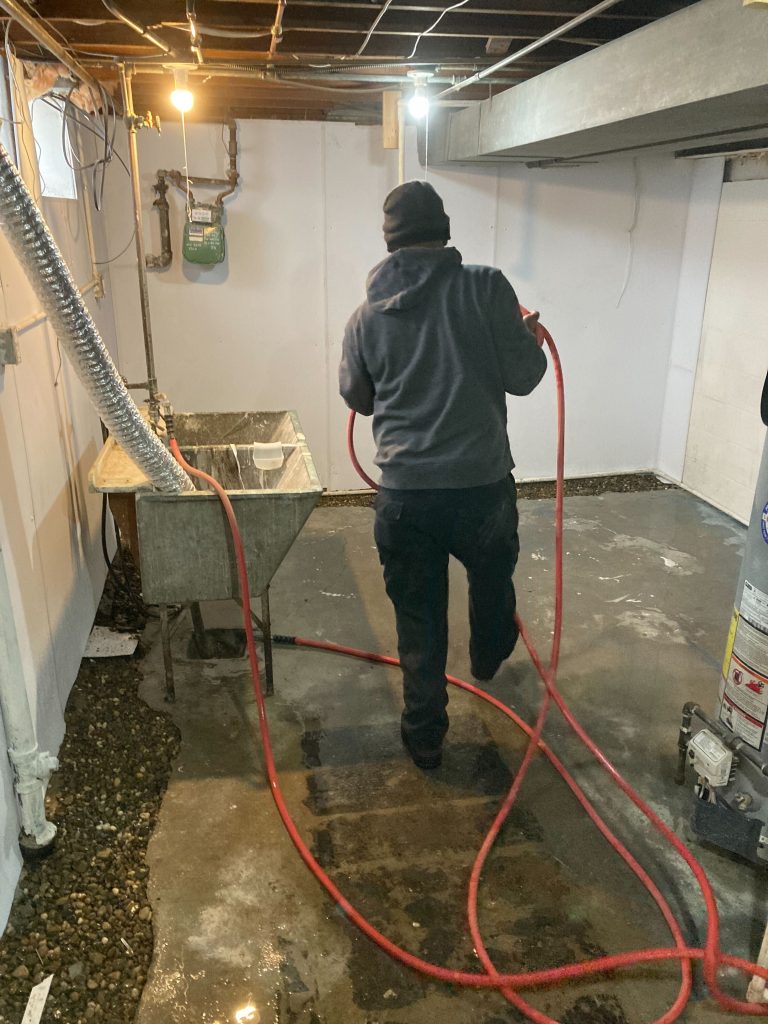
One homeowner’s experience saw a minor rainstorm causing major flood damage due to clogged gutters. The water had nowhere to go, leading to a flooded basement and thousands of dollars of damage.
Let’s look at four real-life examples of how clogged gutters can lead to basement flooding:
- Mr. Johnson, from Ohio, experienced a basement flood that resulted in a $15,000 insurance claim. His gutters were blocked by autumn leaves.
- The Smiths, a family in Maine, faced significant property value devaluation after recurrent flooding due to neglected gutters.
- Mrs. Davis, a homeowner in Florida, had to replace her entire basement floor and walls due to mold from persistent flooding caused by clogged gutters.
- Mr. and Mrs. Lee, in New York, were forced to evacuate their home for several weeks due to a flood, which was traced back to their clogged gutters.
These stories underscore the importance of maintaining your gutters. A little time spent on gutter maintenance can save a lot of heartache and money in the future.
Preventive Measures for Gutter Clogging
Regularly cleaning and maintaining your gutters is crucial to prevent disasters like basement flooding. If you’re neglecting this task, you’re setting yourself up for potential issues down the line.
But don’t worry, there are some preventive measures you can take to keep your gutters clear and flowing smoothly. One effective strategy is to explore gutter guard options. These devices are designed to keep debris out of your gutters, allowing water to flow freely away from your home.
They’re available in a variety of types and price points, so you’re sure to find one that suits your needs and budget.
Aside from installing gutter guards, it’s essential to perform seasonal cleaning. This means removing leaves, twigs, and other debris from your gutters in the fall and spring.
This task can be a bit tedious, but it’s a small price to pay for the peace of mind knowing your home is protected from potential flooding.
Regular Maintenance and Inspection Tips
Shifting from preventive measures, let’s now focus on maintenance and inspection tips for your gutters.
Regular gutter cleaning isn’t just a good idea, it’s essential. By neglecting this task, you’re risking water damage to your home and potential basement flooding.
Here are four simple tips to help you maintain your gutter system:
- Regular Cleaning: Clean your gutters at least twice a year. Remove leaves, twigs, and other debris to ensure smooth water flow. If left unchecked, this debris can lead to clogged gutters.
- Seasonal Checks: Especially important during fall and spring, seasonal checks can help you spot any issues before they become major problems. Don’t let the leaves fall and just sit there; clean it up!
- Professional Inspection: Occasionally, it’s worth having a professional check your gutters. They might spot issues you’ve missed.
- Gutter Guards Installation: Consider installing gutter guards. They can significantly reduce the amount of debris that gets into your gutters, making your cleaning job easier.
Frequently Asked Questions
What Materials Are Commonly Used to Make Gutters?
You’re probably wondering about common gutter materials.
Well, you’ll often see gutters made of vinyl, aluminum, steel, or copper.
Vinyl’s popular due to its cost-effectiveness and easy installation.
Aluminum’s lightweight, rust-resistant, and easy to work with.
Steel’s incredibly sturdy, and copper, while pricey, provides a classic, elegant look.
Whatever material you choose, remember gutter maintenance is vital to prevent issues like blockages or leaks.
How Often Should I Replace My Homes Gutters?
You should generally replace your home’s gutters every 20 years, depending on their material.
But, be mindful of the gutter lifespan. Notice if they’re sagging, leaking, or if water overflows from the top, these are replacement signs.
If you’re constantly unclogging them, that’s another hint.
Don’t wait until they’re completely broken down, it’s better to replace them sooner to avoid any potential damage to your home.
What Are the Signs of a Potential Basement Flooding?
You’ll notice signs of potential basement flooding like a musty smell, peeling paint, or mold growth.
Water stains on the walls or floor are also a clear warning. If you’re seeing dampness, it’s crucial to act fast.
Water damage can quickly escalate, compromising your home’s structure and creating a perfect environment for toxic mold.
Don’t wait until it’s too late. Regularly inspect your basement for these signs and take immediate action.
Does Home Insurance Typically Cover Basement Flooding Caused by Clogged Gutters?
Typically, home insurance policies don’t cover basement flooding caused by clogged gutters. It’s considered a maintenance issue, your responsibility.
However, some policies may offer coverage if you’ve added specific water damage endorsements.
It’s always best to check your insurance policy’s coverage limits and exclusions. If you’re unsure, contact your insurance agent.
Don’t assume you’re covered, or you may be stuck with a hefty repair bill.
Are There Professional Services for Gutter Cleaning and Maintenance?
Yes, there are professional services for gutter cleaning and maintenance.
They’ll ensure your gutters are free from debris and functioning properly. Regular gutter maintenance can prevent clogs, which helps avoid water damage to your home.
These professionals have the right tools and knowledge to safely clean and repair gutters.
Conclusion
So, don’t underestimate the importance of clean gutters. They’re your home’s first line of defense against basement flooding. When ignored, they can lead to costly repairs and health hazards. Stay proactive. Regularly clean and inspect your gutters to ensure they’re free from debris and functioning properly. It’s a simple step, but it’s crucial in maintaining the safety and integrity of your home. After all, it’s better to be safe than sorry.