Leeds General Infirmary is getting a precision-engineered extension that is being constructed just yards from life-saving surgeries.
Leeds General Infirmary is getting a precision-engineered extension that is being constructed just yards from life-saving surgeries.
Project: MRIHCT (children’s hybrid cardiac theatre and intra-operative MRI facility)
Client: Leeds Teaching Hospitals NHS Trust
Main contractor: Bam Construction
Contract value: £4.6m
Contract type: Design and build
Enabling works start date: November 2017
Main works start date: January 2018
Main works completion date: December 2018
Clinical go-live completion date: February 2019
“This is basically where they do magic.”
Bam’s construction manager Matthew Garnett gestures to the live hospital wards and theatres, where the doctors and surgeons of Leeds General Infirmary are saving lives on a regular basis.
Just yards from these busy facilities, Bam is delivering a new children’s hybrid cardiac theatre and intra-operative MRI facility.
The project will effectively extend the fourth floor of the hospital’s Clarendon Wing. Expanding this theatre complex will improve the care provided to young patients with complex congenital heart disease, as well as those undergoing neurosurgery.
“It’s an odd situation,” explains project manager Dan Marsh, with considerable understatement. “You’ve quite literally got just a studwork partition between us and a cardiac theatre where they are doing life-changing operations on children while we’re working.”
Their reverence is understandable, with both men having had children either delivered or treated at the hospital.
The new hybrid cardiac theatre their teams are creating will allow cardiac surgeons and cardiologists to perform surgery at the same time, thereby reducing treatment time for young patients.
The intra-operative MRI scanner meanwhile will enable scans to be conducted during neurological surgical procedures. For example, surgeons will be able to see straight away how much of a brain tumour has been removed, rather than having to scan at a later date to discover that additional procedures may be required. All of this will result in patients requiring fewer general anaesthetics and surgical procedures.

MRIHCT Leeds General Infirmary Bam 1739
To deliver these valuable improvements, Bam is overcoming a vast array of challenges to build a stilted operating theatre and MRI scanning unit more than four storeys up.
As CN stands on Bam’s side of the partition that separates site from hospital, the sounds of workers and their equipment fills the air. It then emerges that the clinical liaison for our tour won’t be able to join us, as she is busy with a paediatric operation just on the other side of the divide – further emphasising the close proximities involved.
“We had to source a particular partition system to give the fire and acoustic rating to enable us to work here, and for them to carry out their procedures on the other side,” Mr Garnett says.
Mr Marsh adds: “We have a procedure in place where they can call us on the emergency ‘bat-phone’ and say, ‘We’re at a particularly tricky point and you need to stop works immediately’. We generally answer within two rings.”
Metal no-go zone
Before construction could really get under way, main contractor Bam had to focus on some critical design issues, as well as enabling works. The first issue was that the existing MRI unit is on the second floor, very close to where operatives might be working.
“On this floor, the magnetic gauss fields [generated by the MRI] extend beyond the line of the wall”
Matthew Garnett, Bam Construction
“The building has been designed so that these floors are not affected by what we’re doing,” Mr Garnett explains. “On this [second] floor, the magnetic gauss fields [generated by the MRI] extend beyond the line of the wall, so construction is being carried out in such a way that we don’t send large metallic objects into the field because that creates artefacts – poor-quality images – on the scans.”
It’s not just large steel members that must be kept at a sufficient distance, Mr Marsh adds. “We don’t send operatives into the area of the gauss field, because it can prevent any active implant – a pacemaker, for instance – from working properly.”
To get around this, the site team has erected a buffering aluminium scaffold to prevent workers from putting disruptive metallic objects within the area that would interfere with the MRI scanning. While providing access, it’s a strict permit-to-work area with checks made on workers’ active medical implants.
Emergency MRI shutdown
Not only did the design need to keep both people and metal away from significant areas in the heart of the project, another issue also had to be tackled before main works could begin.
“If they turn off the MRI in an emergency, they quench the magnet with helium, which is then discharged externally through pipes [into the atmosphere outside the building],” Mr Garnett says.
“There are a number of pipes that come out of the wall, and if you were in that zone, you can imagine the effect helium that’s super-chilled at -270 deg C would have on you.”
This meant that the first job the team undertook was to extend the four quench pipes to run further around the Clarendon Wing’s exterior, so that they could vent outside of the construction zone, while also installing a fifth pipe to allow the trust to fit a new MRI scanner in the future.
Mr Marsh explains that there is no time for a siren or other warnings when they quench, as an emergency with an MRI unit can unfold quickly. “It can be a potentially life-or-death situation within the MRI room,” he says.
“The magnets are so strong that if you were to take a metallic object in there, it becomes a projectile – it goes like a bullet to the magnet. There have been instances where something has gone in the room and someone has become trapped [between the object and the magnet] and you can’t physically move that object, so that’s why they have to quench.
“It’s not your average hazard.”
Perhaps the most visually striking element of the scheme, though, is the set of eight raking columns up to 17 m long, which, along with the slightly off-centre plant core, support the structure independently from the Clarendon Wing.
The raking reasoning
There is method in this apparent madness, as the hospital’s IT department is located on the ground floor of the existing wing. Beneath the ground, running directly under the new extension, is the main bank of IT cabling for the hospital.
“The reason that we’ve got these circular raking columns is that we’ve dotted them around the existing services so that we’re not affecting them,” Mr Marsh says. These are fixed to pads atop mass-filled fibre mix concrete foundations that have gone to depths of up to 4.5 m.
MRIHCT Leeds General Infirmary Bam offset lifting 2
Floor slabs being lifted in the new structure
“The biggest challenge here was having to sink these 4-5 m down, with all these services immediately adjacent,” Mr Garnett adds.
In cases where the corners of a square foundation would have projected into the buried services, the corners have a chamfered profile to prevent interference, and in these cases, the design allows for the foundation to sit slightly off-centre below its pad. “That’s why we have the raking columns, as the foundations are positioned where they can actually go and the columns then go up at whatever angle [is required],” Mr Garnett says.
With the columns installed onto the foundations, there was a period during which they were unrestrained at the top, meaning operatives had to tie them back to the unfinished core with metal tirfors positioned at 45 degrees to prevent the columns rolling the foundations.
“There have been various meetings with the chief pilot to make sure there were no issues with the cranage and the helicopter’s path”
Matthew Garnett, Bam Construction
“There was a lot of involvement from different temporary-works engineers to get us to a point where we were confident that there wasn’t going to be any movement,” Mr Marsh says. “It would be bad enough if that didn’t go correctly in a big open field, but when you’re surrounded by a hospital, it could go through the wall of the [adjacent] Jubilee building or the Clarendon Wing, which is just unthinkable.”
It required a degree of planning to crane in the columns, since the hospital’s helipad is nearby and there was the potential for the flight path to cross the site, depending on the direction of the prevailing wind. “There have been various meetings with the chief pilot to make sure there were no issues with the cranage and the helicopter’s path,” Mr Garnett says.
MRIHCT Leeds General Infirmary Bam 1756
Eight raking columns support the fourth floor structure that extends out from the Clarendon Wing
But even the most careful planning sometimes has to be changed. A late design issue from Phillips, the equipment provider and fitter for the hybrid cardiac theatre, meant the steel structure required “beefing up with large pieces of heavy-duty steel and a back-to-back Unistrut frame to support their kit”, Mr Marsh says.
“In doing that, it closed the ceiling void that the ducting was supposed to run through, so it now needs to go up through the roof and back down again into the theatre.”
Precision movement joints
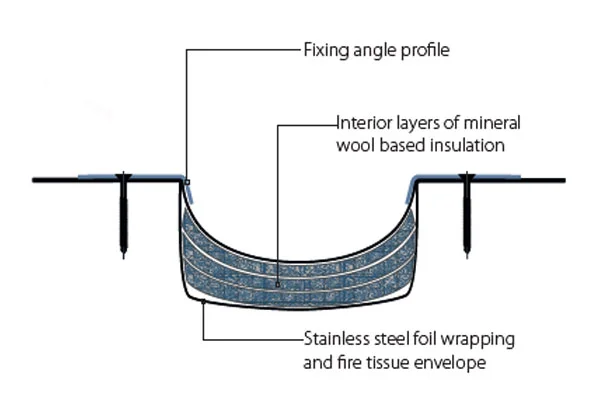
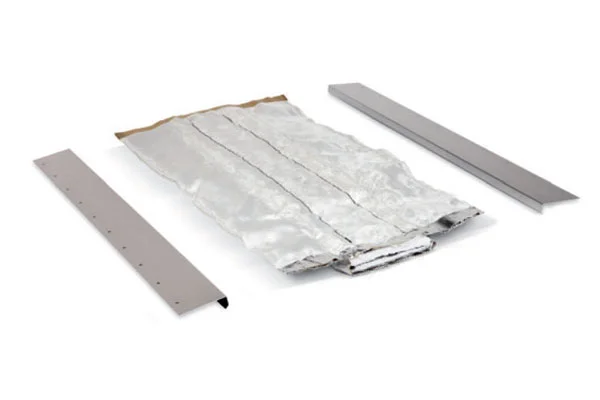
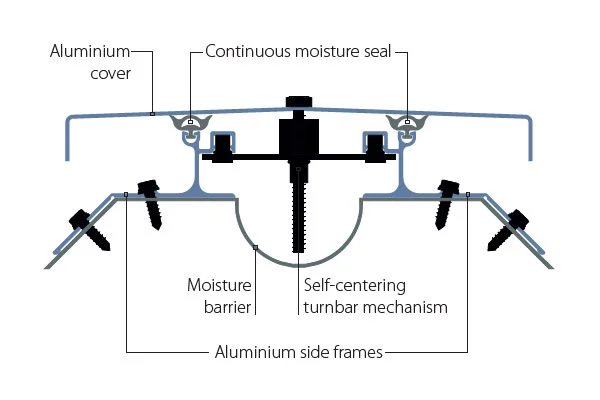
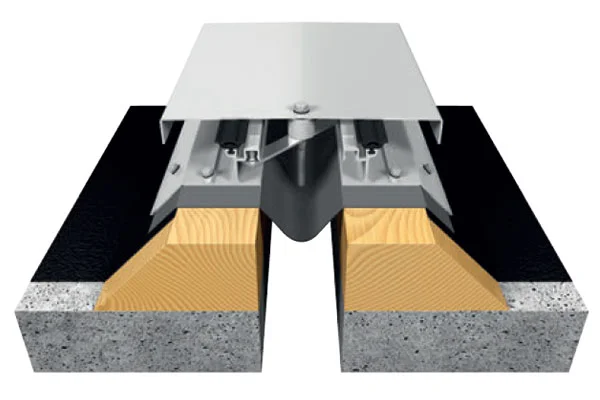
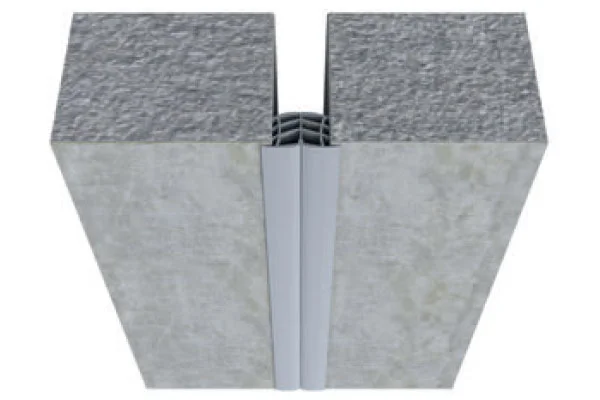
The floor – and more importantly the movement joint – connecting the Clarendon Wing to the new building has required some special attention. “People are going to be brought through [the two entrances between the two structures] on trolleys and that needs to be the smoothest transition possible,” Mr Marsh explains.
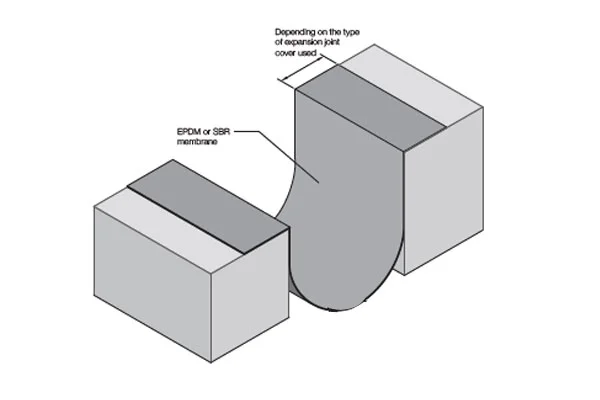
Bam scoured the market for the most suitable movement joint that eradicated the need for recesses or small grooves, which would raise the risk of collecting dust or bacteria – a paramount consideration for a sterile environment.
For the same reason, water-ingress prevention needed to be thorough. “We’ve ended up going with a modern take on a traditional system, which is essentially forming a valley, as you would do in a tiled roof, but using a single-ply membrane, plastic guttering and a waterproof flexible Compriband tape that can go from 15 to 36 mm, so there are three methods of stopping water,” Mr Marsh says.
It’s been anything but a straightforward job – one that’s kept the team on its toes. “Every aspect has had a difficulty,” Mr Garnett says.
But with the new facilities set to go live in just a few months, the incredible care Bam has taken with this project will soon enable Leeds General Infirmary to take even better care of its patients.