Skip to content
If major seismic upgrades are not performed on the 1985-built Cambie Street Bridge, this vital piece of transportation infrastructure could see significant damage even in a moderately powerful earthquake, such as a seismic event with a magnitude measuring between 5.0 and 6.0.
That was the finding of a 2019 technical study, and the City of Vancouver is now addressing the identified high risk by implementing a multi-phase plan to upgrade the structure to meet a much higher seismic building code.
In a new City staff report released today, the municipal government is looking to spend up to a total of $217.5 million on the bridge’s seismic upgrades, making it one of the City’s most expensive capital projects in recent memory.
The first phase of work was completed in 2022 at a cost of $3.5 million, including localized seismic foundation upgrades on the south side of False Creek, and various rehabilitation work such as expansion joint repairs, concrete repairs, and stair repainting.
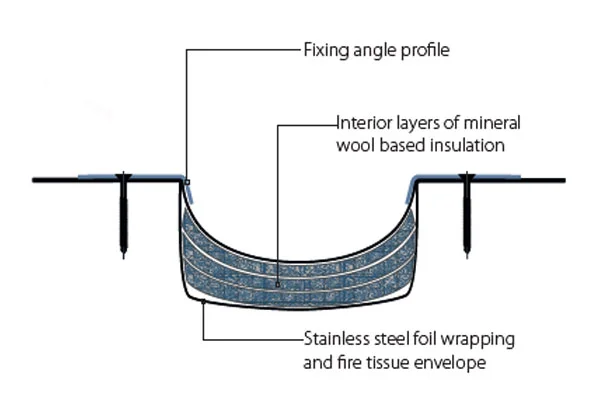
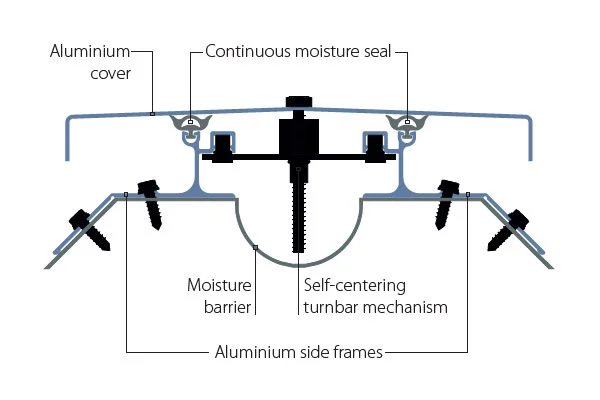
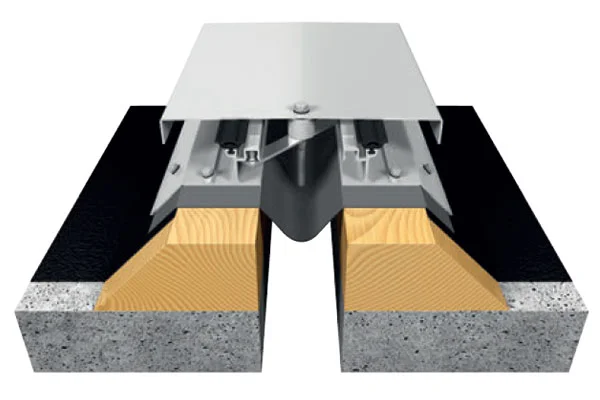
Significant lane closures are currently in place on the bridge for expansion joint seal repairs, which began in November 2024 and are expected to be completed by July 2025.
City Council previously approved $33.5 million for the second phase of seismic upgrades over the coming years, focusing on the downtown Vancouver peninsula segment of the bridge and the rehabilitation of the south end of the bridge. City staff are now looking for City Council’s final approval to increase the second phase’s budget by $35 million from $33.5 million to $68.5 million, which would enable more work to be done, including the seismic upgrade of the south approach, 2nd Avenue off-ramp, and the bridge span directly above the waterway.

Cambie Street Bridge during the Vancouver Sun Run. (Daniel Chen/YouTube)
This comprehensive seismic upgrade of the Cambie Street Bridge, costing over $200 million, will strengthen 10 foundations, modify 65 piers and six abutments, rehabilitate the pedestrian/cycle staircase, replace ramps, repave the entire bridge deck, and relocate utilities to facilitate structural work.
City staff are seeking to have the Government of Canada cover 40% of the project’s total eligible costs, with the municipal government submitting an application of $84.4 million to the federal Disaster Mitigation and Adaptation Fund (DMAF).
For the second phase, the municipal government will contribute $22 million and TransLink will provide $21.7 million. The aim is to have the federal DMAF grant cover the remainder of $24.8 million.
Future phases of the seismic upgrade will cost $149 million, which require additional City Council approval at a later date. This includes $62.8 million from the municipal government, $26.6 million from TransLink, and $59.6 million from DMAF.
The bridge is eligible for TransLink funding as the crossing falls under the region’s Major Road Network classification.

Cambie Street Bridge in Vancouver. (Kenneth Chan/Daily Hive)
City staff state that these investments will bring the Cambie Street Bridge up to an excellent seismic standard, with a level of performance nearly equivalent to today’s modern bridge code for an exceptionally powerful once-in-2,475-year seismic event. The bridge’s drastically improved seismic resilience will significantly reduce potential earthquake damage, allowing emergency vehicles to use the bridge shortly afterward and lowering repair costs for its full reopening.
Structures are now designed for optimal seismic performance based on three different earthquake frequencies — the probability of withstanding the magnitude of an earthquake happening once in 475 years, once in 975 years, and once in 2,475 years. The latest building code standards require all new buildings and structures to be designed for the once-in-2,475-year earthquake event.
Between 1970 and 1985, the building codes required seismic performance for once-in-100-year earthquakes. The previous once-in-475-year standard was in practice from 1985 to 2005, until the current once-in-2,475-year standard was adopted.
The 2019 technical study estimated that replacing the Cambie Street Bridge would cost $400 million. Due to recent market price escalations and other factors, this figure is now likely much higher.

Aerial of False Creek South in the 1970s, with the previous Cambie Street Bridge also depicted. (City of Vancouver)
In 2019, following the release of the technical report, the municipal government indicated that lessons learned from major earthquakes elsewhere in the world after the 1980s — including the Los Angeles/Northridge, Kobe, and Christchurch earthquakes — have led to a better understanding of how structures respond to seismic waves and advances in seismic building codes.
This includes a performance-based approach to design instead of strength-based design, a review and change to the earthquake return period, increased soil liquefaction potential, increased understanding of how to predict the interaction between the soil and the bridge, and improved detailing requirements to both steel and concrete structures.
Cambie Street Bridge is one of three crossings over False Creek to downtown Vancouver, which are all owned and maintained by the municipal government. Over the past two decades, extensive seismic upgrades have also been completed on the far older Burrard Street Bridge and Granville Street Bridge.
Replacing a previous 1911-built swing-span crossing with four vehicle lanes, the current Cambie Street Bridge was built just before the Expo ’86 World’s Fair.
Cambie Street Bridge has five vehicle lanes — three vehicle lanes in the northbound direction, and two vehicle lanes in the southbound direction. A previous sixth vehicle lane, the third southbound vehicle lane, was converted into a protected bike lane in 2018.
The 870-metre-long bridge sees an average of about 55,000 vehicles per day.

Cambie Street Bridge in Vancouver. (Kenneth Chan/Daily Hive)
Conversely, previous technical studies on the Dunsmuir and Georgia viaducts indicated that while a major seismic upgrade is feasible, the high cost of doing so would still not bring it anywhere near the once-in-2,475-year seismic code standard. Both viaducts, built in the early 1970s, are not expected to perform well for the lowest measurement of a once-in-475-year seismic event.
The City is still contemplating the demolition of the Dunsmuir and Georgia viaducts as a key component of the Northeast False Creek Plan, but warns that it would need to begin to make significant reinvestments in the structures over the coming years to keep in a good and safe condition, if the viaducts are not demolished. The demolition plans have stalled, as much of the funding cover the costs depends on the revenue generated by the area’s major residential developments. Furthermore, the cost of demolition and the construction of a new replacement surface road network have now likely escalated.
As of this month, the two developers of Northeast False Creek’s two main development sites — Concord Landing and the Plaza of Nations — have indicated they are moving forward with their projects, which will see new concept proposals with increased height and density.